



Favorites

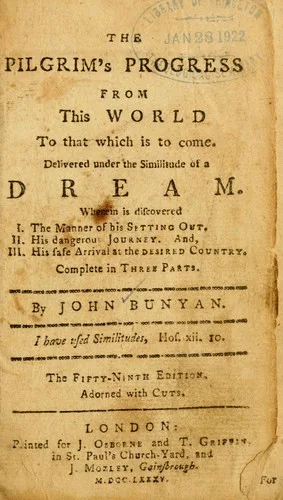 Oct 20, 2026I put off reading this for the longest time after I saw it in the Book of Lists as the most boring book in the English language. Not so. For a Christian reader, this is one of the most insightful allegories of the spiritual life ever written. The characters and adventures will make immediate sense. Some passages made me extremely uncomfortable. You can always tell the difference between a Christian author who's been there and one who saves his religion for Sundays. I found it entertaining and inspiring. Boring indeed! Even for an atheist it's interesting for the myriad of idioms that entered the English language through Pilgrim's Progress - Vanity Fair, Slough of Despond, etc.
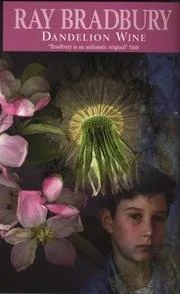
Dandelion Wine 1957
Oct 20, 2026If you appreciate poetry. If you were ever a 10-year-old boy in the midwest. This is the best book ever written in the English language.[return][return][return]As long ago as I can remember having a favorite book, it's been Dandelion Wine. Martian Chronicles was good sci-fi and Farenheit 451 was a very important book in my life. But Dandelion Wine walks many paths. It's first appeal to me was through the youth of it's hero - the Dennis-the-Menace-like Douglas Spaulding and his well-described childhood frights of abandoned ravines and people hiding in closets. As I grew up and began to admire styles - Ray Bradbury's was the best. No one has ever walked the fine line between poetry and prose any better. His sentences are delicious. For the sheer pleasure of reading something that's been well written, no one else is as satisfying. Now, I'm old and nostalgic. I love the torture and sense of regret in works like Winesburg, Ohio and Spoon River Anthology. My favorite book? Still Dandelion Wine. But now I read it as a chronicle of a long spent childhood. The similarities I have with the hero are now painful reminders that fictional characters don't have to age but I do and I have. But there is still a hope suggested by Bradbury that the memories of my own life can be pressed and bottled, to be enjoyed again when they've been forgotten as my own Dandelion Wine.
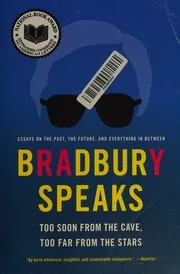
Bradbury Speaks: Too Soon from the Cave, Too Far from the Stars 2005
Oct 20, 2026You wouldn't read this if you weren't already a fan. So, ignore this if you're looking for fiction It's a collection of essays and other unpublished odds and ends but it's pure uninhibited Bradbury. I've attended a couple of his lectures so I have a passing idea of what he's like in person and this is dead-on. He's very passionate about people with imagination. He roots out the brilliance in all arts like a pig after truffles. Nothing gets in his way of experiencing the best that humanity has to offer and nothing gets in his way of telling you about it. I'm from a much later age as the author so a lot of his analogies to film and literary figures was lost on me. But the sincerity isn't, and I believe every word he says. It's good stuff. He appreciates the past heights of our culture but it doesn't sour him that they are so far behind us. His voice still shines with enthusiasm for life. It's upbeat stuff that will send you back out to the mines to try again. The joy is not in the finding. The joy is in the hope that the fantastic is still out there, waiting for you to arrive. Very inspiring. If you've wished you could face life like Douglas in Dandelion Wine, here's a practical guide.
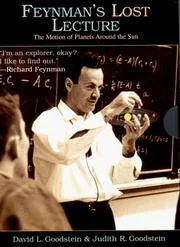
Feynman's Lost Lecture: The Motion of Planets Around the Sun 1996
Oct 20, 2026The title is irresistable. But, like most of my "reading Feynman" projects, it's more work than I thought it would be. He is, after all, a physicist. But, it's not a bad lecture and it comes with a story about how it was reconstructed. So, it's another labor of love for a man who makes us proud to be human. It's approximately the same level of material that's in Six Easy Pieces. I think I would've liked it better if I'd heard it before SEP. As it is, it was a lot of money for "just one more lecture". I'd say, "Get it if you're considering getting SEP". It's a taste of what you're getting yourself into.
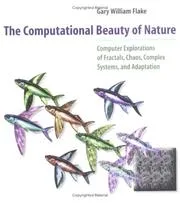 I feel a strange draw towards two poles. I love the highly technial man-made achievements and I love the completely unspoiled "nature of nature". This book sythesizes the two extremes beautifully. As our computers push the envelope of mathematics, we are better able to sythesize and understand the structure and appearance of natural things. This book added to my appreciation of nature by showing me the level of computation required to simulate it. At the same time, it added to my appreciation of science by tying it to the emotional response that I feel when I see beauty in nature. Very little of this is really share-able in a high school classroom. The kids love the fractals and this book helps explain the practical applications of fractals. But fractals weren't even in the CA teaching standards in the first place, so it's all kindof extra-curricular. But, it's a beautiful book. Beautiful in the way that "Eternal Golden Braid" was beautiful. And much more concise.
The Language of Mathematics: Making the Invisible Visible 1998
Oct 20, 2026Not bad - sort of an introduction to the major themes of mathematics. It has some history but it doesn't get bogged down by trying to stay chronological or include every historical detail. It sort of "whets the appetite" for studying math beyond the textbook. It's good. It was fun. It just didn't grab me. I think I wanted more detail. I felt like it was little too popularized or "dumbed down". And yet, I didn't feel it was "sparkly" enough to appeal to students. Entertaining but not practical for classroom use.