Your Media Library Is a Context Window Now
A personal library is durable AI memory: the books, films, and albums you've rated become standing context an AI reasons from. Why that beats chat memory and spreadsheets.
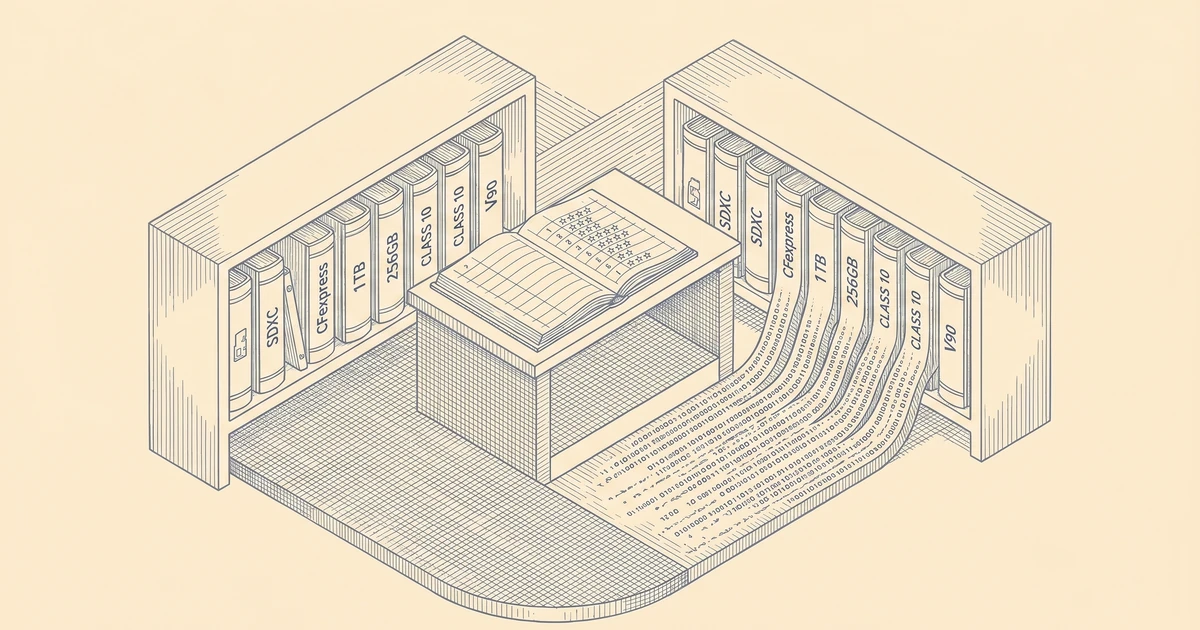
A context window is the span of text an AI model can hold in mind at once, its working memory for a single conversation. Your personal library is a larger and more durable version of the same thing: the books, films, albums, and shows you have rated, finished, abandoned, and annotated over years. When an AI can read that library directly, it stops guessing at your taste and starts reasoning from it. A personal library MCP is the connection that makes this possible, turning a static collection into standing context an AI can load every time you talk to it.
Most people already keep this memory. It sits scattered across apps that cannot talk to each other, locked away from the one tool that could actually use it.
What a context window is, and why your library is one
A model’s context window is measured in tokens, and it resets when the chat ends. Whatever you taught an assistant about yourself on Tuesday is gone by Friday, so you explain your taste again, and again, and the assistant keeps recommending the same three popular titles to everyone who asks.
Your library does not reset. Every rating you leave, every note about why a book landed or a film fell flat, is a sentence in a much longer description of who you are as a reader and viewer. The problem has never been that the description doesn’t exist. The problem is that nothing could read it.
A protocol changes that. MCP (the Model Context Protocol) lets an AI connect to an outside source of structured data and treat it as part of its working memory. Point that connection at your media collection and the collection becomes context: not a list the AI was handed once, but a place it can look every time you ask a question.
What your library remembers
Picture a collection a few hundred items deep.
It holds Klara and the Sun, Kazuo Ishiguro, rated five stars, with a note about a narrator who observes far more than she understands. A few rows down sits The Remains of the Day, also Ishiguro, also five stars, flagged for the same quiet unreliability, the sense of a person revealing what they will not admit. The film shelf has Blade Runner 2049, watched twice, with a line about memory you cannot trust. The TV shelf has Severance, abandoned halfway through the first season, noted as “great premise, lost me in the middle.” The music shelf has To Pimp a Butterfly, played to death one summer and never quite left.



From those five entries alone, a shape is already legible. A pull toward characters who do not fully know themselves. Memory as a recurring subject, treated as something fragile rather than fixed. A high bar that the abandoned show failed to clear. A willingness to sit with difficulty when the work earns it.
A blank-slate assistant sees none of this and offers you a bestseller list. An assistant reading the library above can tell you that the new literary novel everyone is praising has a narrator built on exactly the device you keep rating highly, and that you will probably love the first half and resent the ending, the same way you did with Severance. That is not a luckier guess. It is the difference between recommending to a stranger and recommending to someone whose shelves you have read.
What to look for in a taste-memory layer
Not every place you store what you have watched and read works as durable context. A few things separate a real memory layer from a list that happens to exist:
- Durability. It has to persist across sessions, devices, and years. Memory that expires at the end of a conversation is not memory.
- Cross-media reach. Taste does not stop at one format. The reader above connects a novel to a film to an album. A layer that only knows your books can only ever see a third of you.
- Readable by the AI itself. A beautiful database the assistant cannot open is decoration. The data and the reasoning have to meet.
- Judgment, not just a checkmark. A five-star rating says you liked it. A note saying “lost the thread in the middle” says why, and the why is what makes the next recommendation sharp.
- Yours and private. This is an intimate record. It should answer to you, not feed a public feed or a recommendation engine selling something.
The approaches below each get some of these right and miss others.
ChatGPT memory
What it is: the built-in memory in a chat assistant, which saves a handful of facts it picks up as you talk.
It is genuinely useful for continuity. Tell it you are vegetarian or that you prefer short answers, and it remembers. For taste, though, it captures fragments: a few authors you mentioned, a film you brought up last week. It does not hold hundreds of titles, your ratings, or the notes that explain them, and it summarizes rather than stores. You end up with a thin sketch of your taste instead of the record itself.
A Notion or spreadsheet database
What it is: a structured table you build and maintain by hand.
This can be a wonderful memory layer for you. Every column you want, every note you care to write, fully yours. The catch is the gap between the table and the AI. The assistant cannot open your spreadsheet mid-conversation and reason over it, so the richest record of your taste sits one wall away from the only tool that could put it to work. (For more on this tradeoff, see Achriom vs Notion for media tracking.)
Goodreads and Letterboxd exports
What it is: the history you have already built inside single-medium trackers, available as CSV.
These are real, valuable records, and the export matters: it means your years of logging belong to you. As context, the limit is in the name. Goodreads knows your books and nothing else. Letterboxd knows your films and nothing else. Neither can see that the novel you loved and the film you rewatched are doing the same thing, because neither knows the other exists.
Starting fresh every session
What it is: the default. You re-explain your taste at the top of each conversation.
It is free and it works, in the sense that the assistant has something to go on for the next ten minutes. The cost is paid every single time: the cold start, the generic suggestions, the slow climb back to the context you already established yesterday. Over months, that is hours spent reintroducing yourself to a tool that forgets you on purpose.
A personal library MCP (Achriom)
What it is: your full cross-media collection, connected to an AI librarian through MCP, so the library becomes context the assistant reads directly.
Achriom keeps your books, films, albums, TV, and anime in one private library with your ratings and notes attached. The librarian reads across all of it. Ask what to watch tonight given the novel you just finished, and the answer draws on the whole collection rather than one shelf. Because the connection runs over MCP, the app lives inside ChatGPT: you talk to your librarian where you already talk to an AI, and it arrives already knowing your taste. Imports from Goodreads and Letterboxd bring your existing history across, so the memory starts deep instead of empty.
The honest limit: Achriom is built for depth and reasoning across your own collection, not for streaming availability, public reviews, or social feeds. It is a memory layer, not a catalog browser.
Quick comparison
| Approach | Durable | Cross-media | AI can read it | Holds your notes | Private |
|---|---|---|---|---|---|
| ChatGPT memory | Partly | Yes | Yes | Fragments only | Yes |
| Notion or spreadsheet | Yes | If you build it | No | Yes | Yes |
| Goodreads / Letterboxd | Yes | One medium each | No | Limited | Optional |
| Starting fresh each session | No | Only what you retype | Yes | No | Yes |
| Personal library MCP (Achriom) | Yes | Yes | Yes | Yes | Yes |
Which approach should you use?
If you only want the assistant to remember a few preferences: built-in chat memory is fine, and you already have it.
If you love maintaining your own database and reason over it yourself: keep your Notion or spreadsheet. Just know the AI cannot reach into it.
If your history lives in one tracker and one medium is all you care about: Goodreads or Letterboxd already does that job well. Export occasionally so the record stays yours.
If you want an AI that reasons across everything you read, watch, and listen to, starting from what you actually love: a personal library MCP. Achriom is the one built for this, and people often keep their single-medium trackers alongside it, logging on one side and thinking on the other.
The honest answer
Your taste has always been data. Years of ratings, half-finished shows, albums that defined a season, notes you wrote to no one. What changed is that an AI can finally read it, in place, every time you ask. The model’s own context window forgets you when the chat closes. A library connected over MCP does not.
That is the whole idea behind a personal library MCP: stop reintroducing yourself to the machine, and let the record you already built do the talking.
For the connection itself, see how the MCP link works for books and movies. For what you can do with it once it is reading your library, see what you can ask your AI librarian and how to find patterns in your media collection.
Common questions
What does “your media library is a context window” actually mean?
A context window is the working memory an AI holds during a conversation, and it normally resets when the chat ends. Your media library is a far larger, permanent version of that memory: years of ratings and notes describing your taste. When an AI can read the library directly through a protocol like MCP, your collection functions as standing context, so the assistant reasons from what you love instead of starting blank every time.
What is a personal library MCP?
MCP, the Model Context Protocol, is a standard way for an AI to connect to an outside source of structured data and use it as part of its working memory. A personal library MCP points that connection at your own media collection, so an AI librarian can read your books, films, albums, and shows along with your ratings and notes, and reason across all of it during a conversation.
How is this different from ChatGPT’s memory feature?
Chat memory saves a handful of facts it notices as you talk, which is useful for preferences but thin for taste. It does not hold hundreds of titles, your ratings, or the notes explaining why something landed. A personal library MCP connects your full collection, so the AI reads the actual record rather than a short summary of it.
Can’t I just keep my collection in a spreadsheet or Notion?
You can, and it is a fine record for you. The gap is that the AI cannot open your spreadsheet mid-conversation and reason over it. A personal library MCP closes that gap: the same kind of structured collection, connected so the assistant can actually read and use it while you talk.
Do I have to rebuild my library from scratch?
No. Achriom imports from Goodreads and Letterboxd, so your existing books and films come across in one step, ratings included. The memory layer starts deep rather than empty, and you add other media as you go.
Is my library private if an AI is reading it?
Yes. Achriom is private by default: no public profile, no followers, no shared feed. Your collection is an intimate record, and it answers to you. The librarian reads it to help you, not to publish it or feed a recommendation engine.