Albums That Sound Like a Murakami Novel
Seven albums that capture the atmosphere of Haruki Murakami's fiction: late-night solitude, jazz-tinged melancholy, and the feeling that ordinary life is slightly out of place.

Some links below are affiliate links. As an Amazon Associate, Achriom earns from qualifying purchases. For books we prefer Bookshop.org, which supports independent bookstores.
Seven albums capture the atmosphere of a Murakami novel. They share his emotional territory: late-night solitude, beauty that arrives alongside a faint sense of loss, and the feeling that ordinary life contains something just underneath the surface.
Murakami’s fiction is saturated with music. His narrators cook pasta at midnight and listen to Bill Evans. They drive through Tokyo at 3 a.m. with Miles Davis on the stereo. Before he was a novelist, he ran a jazz bar in the city. The music in his books is never decoration. It is the texture of consciousness itself, the way a specific sound can carry a feeling that words can’t quite reach.
These seven albums work the same way.
What You’re Listening For
Before the list, it helps to name the quality you’re listening for.
Murakami’s atmosphere holds several things in balance at once. There is melancholy, but it belongs to someone who still finds the world beautiful. There is solitude, but it doesn’t read as loneliness. There is mystery of a particular kind: not the puzzle-solving kind, but the kind that suggests parallel realities exist just underneath the familiar one.
Music that captures this tends to be cool rather than hot. It holds tension without releasing it. It moves slowly and pays attention to silence. Jazz does this particularly well, which is why so much of Murakami’s fictional soundtrack is jazz. The quality shows up in other places too.
Waltz for Debby: Bill Evans Trio

No album is more directly connected to Murakami’s fiction than this one. Recorded live at the Village Vanguard in 1961, you can hear the clink of glasses and the murmur of the audience underneath the piano. That ambient noise is part of why the recording works: it places you inside a specific moment, private and public at once.
Bill Evans plays with a particular kind of restraint. Every note has space around it. The trio listens to each other, responds, pulls back. The result is music that sounds like interior monologue, the same quality Murakami achieves with first-person narrators who observe everything and reveal themselves slowly.
The song “Waltz for Debby” itself appears in Murakami’s work. The live recording captures why: it has the quality of a memory that is still happening.
Kind of Blue: Miles Davis
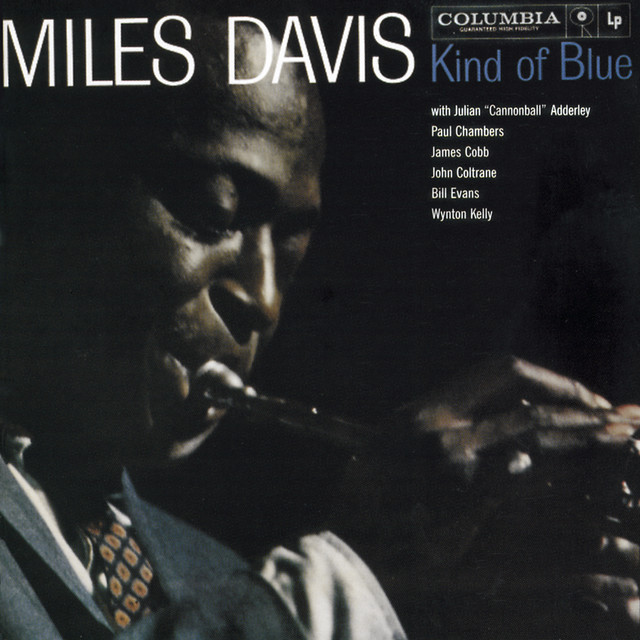
The most listened-to jazz album ever recorded, and the one that most clearly defines the cool, spacious aesthetic running through Murakami’s fiction. Miles Davis recorded it in 1959, and it still sounds like nothing else from that year.
What makes it Murakamian is the pacing. Nobody rushes. The solos build through patience rather than intensity. There is a stillness at the center of even the faster tracks, a quality of watching something from a slight distance rather than being inside it.
Murakami’s narrators often have this quality. They are inside their own lives, but watching from somewhere adjacent. Kind of Blue captures that stance.
A Love Supreme: John Coltrane
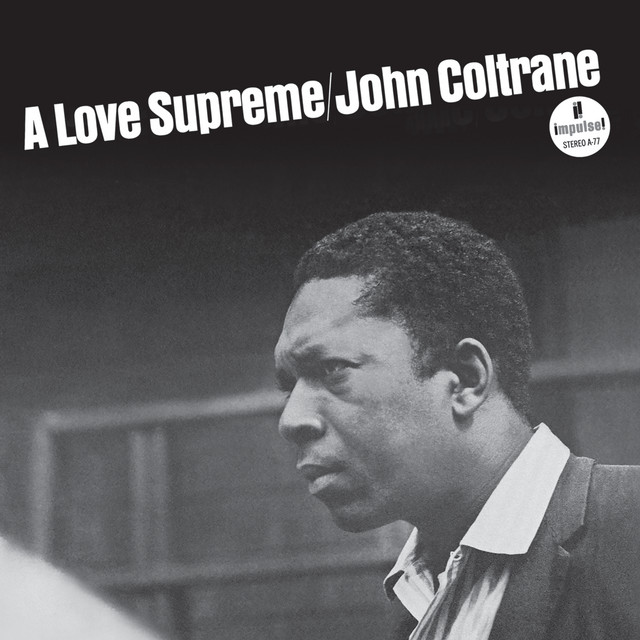
Coltrane’s 1965 masterpiece is more intense than the previous two albums, but it shares something crucial with Murakami: the sense that ordinary experience can open into something vast.
A Love Supreme is a four-part suite conceived as a spiritual offering. Coltrane described it as a document of his search for the transcendent. The album doesn’t feel remote or theological, though. It feels intimate and urgent, like someone who has looked at the world long enough that the surface has become transparent.
Murakami’s novels do something similar. The supernatural in his books arrives quietly, through wells and cats and women who appear and disappear. A Love Supreme has that same quality of the threshold between ordinary and extraordinary.
Hejira: Joni Mitchell
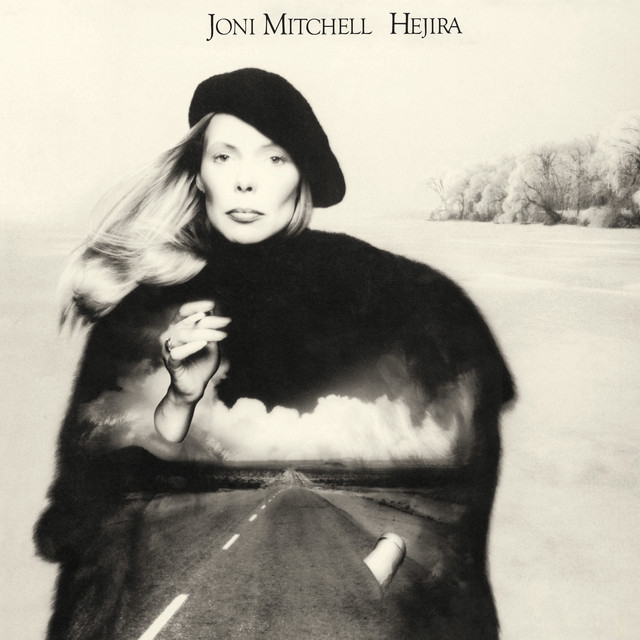
Joni Mitchell’s 1976 album belongs in a different tradition entirely, but it captures something specific to Murakami: the wandering narrator who examines her own interior life through travel and loss.
The album was recorded after a cross-country road trip Mitchell took alone. Jaco Pastorius’s fretless bass runs under everything, giving the music a floating, unmoored quality. Mitchell’s voice circles back to the same themes from different angles, which is exactly what Murakami’s narrators do.
Hejira is also an album about memory and what it does to you over time. A character in a Murakami novel might listen to this at 2 a.m. in an empty apartment, watching rain on the window, and feel precisely understood.
Pink Moon: Nick Drake
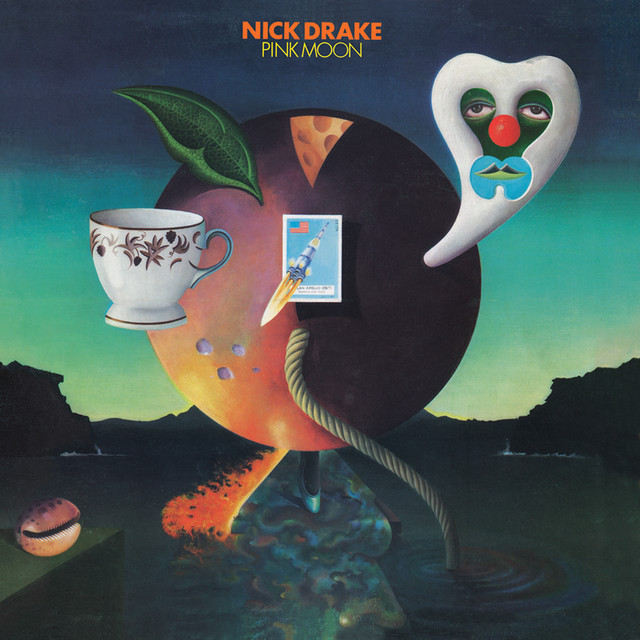
The sparest album on this list. Nick Drake recorded Pink Moon in two nights in 1972, just guitar and voice, and died two years later. The album’s quietness has a specific weight.
What connects it to Murakami is the quality of interiority. Drake sounds like someone who has stepped slightly to the side of the ordinary world and can see things from there that aren’t visible from inside it. His outsider status isn’t dramatic. It is matter-of-fact, almost gentle.
Murakami’s protagonists often occupy a similar position. They hold jobs, cook meals, move through the city. They are tuned to a slightly different frequency than everyone around them.
Spirit of Eden: Talk Talk
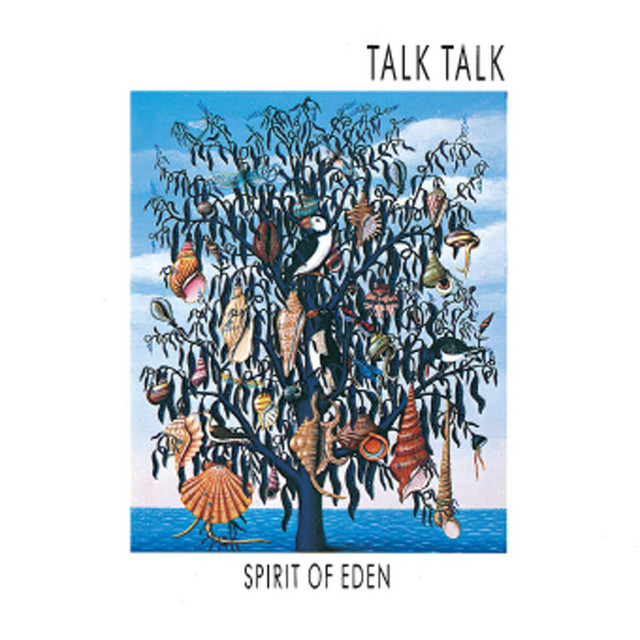
Talk Talk’s 1988 album is one of the stranger recordings in British pop history. The band spent months in a darkened studio improvising with guest musicians and assembled something that resembles neither their earlier work nor anything else from the era.
Spirit of Eden is slow and quiet, with moments of sudden intensity that subside without warning. Long stretches of near-silence give way to bursts of feeling. The album resists being understood on first listen. You have to be patient with it.
Murakami’s longer novels reward the same patience. The Wind-Up Bird Chronicle moves with a similar rhythm: ordinary life in extended passages, punctuated by events that seem to happen in a different register entirely.
Untrue: Burial

The most contemporary album here, and perhaps the most surprising choice for Murakami readers. Burial’s 2007 album is electronic music built from samples, rain sounds, and fragmented vocals that sound like they’ve been pulled from half-remembered songs.
The atmosphere is unmistakably Murakamian. Urban loneliness. The sensation of something missing without knowing what it is. Voices that seem to be trying to communicate through interference. The city as a space of private experience rather than a social one.
Murakami set many of his novels in Tokyo, and his Tokyo is a city of late-night bars and empty streets and people who live inside their own interior worlds while surrounded by crowds. Untrue is a portrait of exactly that city, translated into sound.
Want all of it in one place? Achriom tracks your music alongside your books, films, TV, and anime, with an AI librarian that finds the threads between them. That is the part no single-format tracker can do.
Try Achriom free →Where to Start
| Album | Artist | Year | The Murakami Quality |
|---|---|---|---|
| Waltz for Debby | Bill Evans Trio | 1961 | Intimate restraint, private-in-public |
| Kind of Blue | Miles Davis | 1959 | Cool distance, suspended tension |
| A Love Supreme | John Coltrane | 1965 | The ordinary turned transcendent |
| Hejira | Joni Mitchell | 1976 | Wandering narrator, memory and loss |
| Pink Moon | Nick Drake | 1972 | Quiet interiority, the outsider stance |
| Spirit of Eden | Talk Talk | 1988 | Slow revelation, patience required |
| Untrue | Burial | 2007 | Urban solitude, fractured voices |
Waltz for Debby is the clearest entry point. It is the most directly connected to Murakami’s fiction, and it establishes the sound most efficiently. From there, Kind of Blue extends the jazz thread with more space and less intimacy. A Love Supreme takes that tradition somewhere more searching.
Hejira is the natural bridge if you want to move beyond jazz. It shares the wandering interiority without requiring any prior knowledge of the genre. Pink Moon and Spirit of Eden are for the moments when you want something quieter still. Untrue arrives at the same place from the opposite direction: urban and electronic rather than acoustic and spare, but the solitude is the same.
What connects all seven albums isn’t genre or era. It is the quality of attention they bring to their material, and the emotional space they leave open for the listener to inhabit. Murakami’s novels work the same way. They don’t instruct you on what to feel. They create conditions in which feeling becomes possible.
If your Achriom library includes any of his novels, your AI librarian can extend this list further, finding music that shares specific qualities of his work or your particular response to it.
Common Questions
What kind of music does Haruki Murakami write about?
Murakami’s fiction is saturated with jazz, particularly the cool and post-bop traditions. His narrators listen to Bill Evans, Miles Davis, John Coltrane, and Thelonious Monk. Classical music and rock appear too, but jazz is the dominant thread. The music is never decorative. It shapes the emotional texture of scenes.
What’s the connection between Murakami and jazz?
Before becoming a novelist, Murakami ran a jazz bar in Tokyo called Peter Cat. His immersion in the music runs deep enough that specific albums and tracks appear throughout his work, not as background detail but as emotional markers. A character putting on Kind of Blue signals something particular about their state of mind.
Are there albums Murakami specifically mentions in his books?
Yes. Bill Evans’s playing and recordings appear in Norwegian Wood and other works. Kind of Blue and the broader Miles Davis catalog are referenced across multiple novels. A Love Supreme and Joni Mitchell’s music are mentioned by name. His characters carry this music the way other characters carry memories.
What makes an album sound like Murakami?
The Murakami sound combines several qualities: late-night solitude, melancholy that doesn’t tip into despair, beauty that coexists with loss, and the sense that something is slightly off-kilter beneath a calm surface. Music that holds tension quietly without resolving it fits that frame.
Where should I start if I want music that matches Murakami’s atmosphere?
Waltz for Debby by the Bill Evans Trio is the most direct entry point. It is woven into his fiction, and the recording’s intimacy (live at the Village Vanguard, with ambient noise from the audience) creates the same quality of private feeling in a public space that runs through his novels. From there, Kind of Blue extends the sound and A Love Supreme deepens it.
Can Achriom help me find music based on books I’ve read?
Yes. Add the books you love to your Achriom library and ask your AI librarian to find music that shares their atmosphere, themes, or emotional register. The librarian works across formats, so a Murakami shelf can generate music recommendations the same way a playlist can suggest a novel.