What People Who Love Stoner Also Watch and Hear
Films, albums, and books that appear most often alongside John Williams' Stoner in readers' libraries, based on Achriom library data.

Some links below are affiliate links. As an Amazon Associate, Achriom earns from qualifying purchases. For books we prefer Bookshop.org, which supports independent bookstores.
People who finish Stoner tend not to talk about it right away. They sit with it. Then they start quietly rearranging what else they love to fit around it.
That pattern shows up in library data. Among Achriom users who have John Williams’ novel in their collection, The Remains of the Day appears alongside it in more than seven out of ten libraries, the highest co-occurrence rate we’ve measured for any pair of literary novels. Both books follow quietly exceptional men whose emotional restraint costs them the lives they might have had. Readers seem to find them together instinctively, often without knowing why.
But the cross-media pattern runs deeper than that one pairing. Stoner readers build libraries that share a specific emotional frequency across formats.
What connects these works
The through-line isn’t genre or era. It’s a particular relationship to time and regret. These are works about people who are fully present within their constraints, who find meaning in careful attention, and who don’t get rescued by plot.
Stoner doesn’t have a revelation. Neither does Paterson, or Pink Moon, or most of what appears alongside it in these collections. The satisfaction comes from being inside the experience fully, not from having it resolved. Understanding that is useful if you’re trying to find what to read or watch next: you’re probably not looking for what happens. You’re looking for what it feels like to be inside a life like that one.
Films
The Remains of the Day
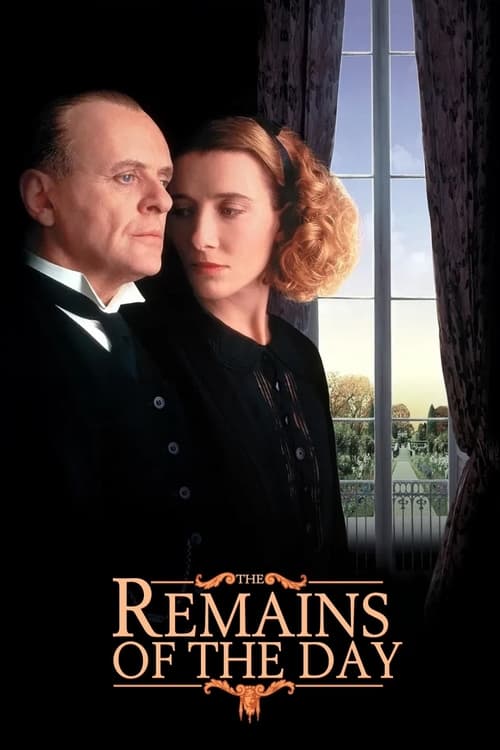
The 1993 James Ivory film shares its source novel’s DNA so completely that it belongs in both the books section and here. Anthony Hopkins plays a butler whose lifelong devotion to duty has foreclosed every other possibility. The restraint, the missed moments, the final devastating drive through the English countryside: it is Stoner transposed to postwar England and shot in the same shade of grey light.
Wild Strawberries
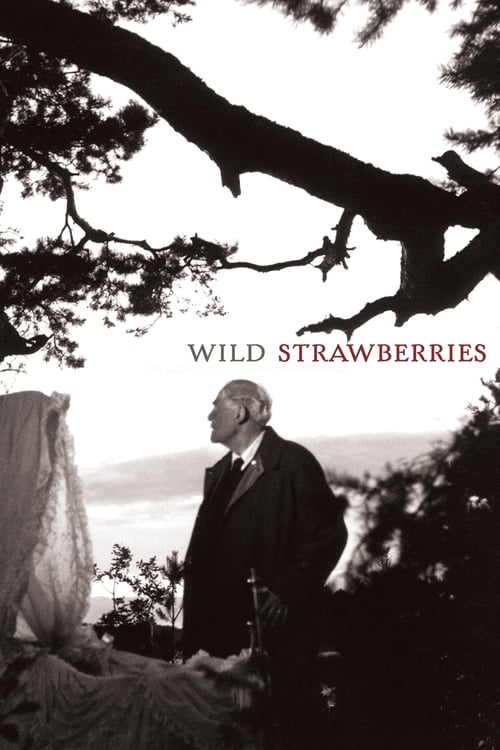
Ingmar Bergman’s 1957 film gives a Swedish professor a single long car ride in which to reckon with the emotional failures of his life. It predates Williams’ novel by eight years and arrives at a similar verdict: a life of the mind, pursued at the expense of the heart, leaves a specific kind of loneliness. The final scene offers something close to peace. Stoner is less generous, which is part of why readers who love Williams tend to find Wild Strawberries later, as a companion rather than a substitute.
Paterson

Jim Jarmusch’s 2016 film follows a New Jersey bus driver who writes poetry in a small notebook and asks nothing more of the world than to keep doing that. Jarmusch argues, as Williams does, that an ordinary life attended to carefully has as much depth as any dramatic one. Paterson doesn’t want to be famous. He wants to write the next poem. That disposition shows up alongside Stoner in our library data with remarkable consistency.
Albums
Pink Moon
Nick Drake recorded Pink Moon in two nights in 1972, stripped of almost everything: no orchestration, barely any production. It has the quality of Williams’ prose, austere, precise, and somehow more present for what’s been removed. Drake died two years later at 26. His posthumous audience found him in the same way readers found Stoner: decades late, and with the feeling he had been waiting for them.
Blue
Joni Mitchell’s Blue (1971) is the canonical record of a particular kind of self-examination. Confessional without being indulgent, formally beautiful while being raw, it’s an album that doesn’t soften what love costs or what choices foreclose. Stoner readers gravitate toward it for reasons that track closely to why they love Williams: both artists are completely honest about disappointment, and neither reaches for consolation the situation hasn’t earned.
Carrie & Lowell
Sufjan Stevens’ 2015 record is about grief, childhood, and an Oregon landscape that never offered what the narrator needed. It’s the most recent album in this cluster and the one that carries the strongest American literary quality, the same writing about place and accumulated loss that Williams does throughout Stoner. Stevens made it for himself, and you can tell. That privacy is part of what makes it land.
Books
The Remains of the Day
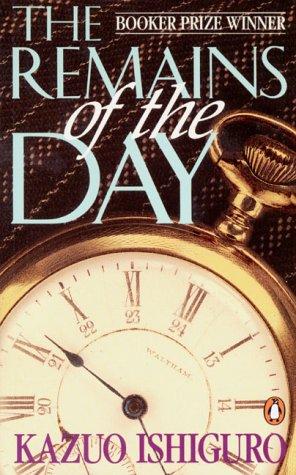
Kazuo Ishiguro’s 1989 novel is the standout co-occurrence. Stevens the butler narrates his life with the same combination of precision and avoidance that characterizes Stoner. Both novels pivot on a question their protagonists won’t fully ask themselves until it’s too late. The difference is that Ishiguro gives his character a single afternoon by the sea to almost understand what he gave up. Williams doesn’t offer even that.
Norwegian Wood
Murakami’s 1987 novel carries a different geography and sensibility, but arrives at a similar ache: the specific grief of early adulthood, of people who were forming you who are now gone. Stoner readers tend to have read Norwegian Wood, or to read it immediately after, drawn by the same quality of loss that can’t be argued away or resolved.
Tinkers
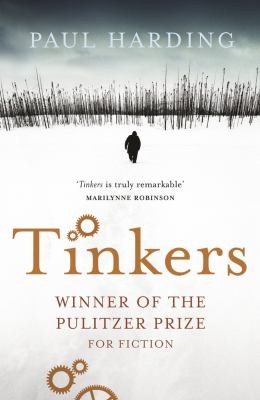
Paul Harding’s 2009 Pulitzer winner covers the last days of a clock repairman in rural Maine and the generations of American life receding from him. It shares Stoner’s Americana and its formal economy: Harding does more in 191 pages than most novels do at twice the length. It’s the least-known title in this cluster and consistently the one readers say they’re glad they found.
Want all of it in one place? Achriom tracks your reading list alongside your films, music, TV, and anime, with an AI librarian that finds the threads between them. That is the part no single-format tracker can do.
Try Achriom free →At a glance
| Work | Format | Why it appears |
|---|---|---|
| The Remains of the Day | Book | Closest emotional parallel; top co-occurrence in our data |
| The Remains of the Day | Film | Same source, same suppressed longing |
| Wild Strawberries | Film | Academic regret, life’s end reckoning |
| Paterson | Film | Ordinary life as worthy subject |
| Pink Moon | Album | Austerity, posthumous discovery |
| Blue | Album | Honest reckoning with what love costs |
| Carrie & Lowell | Album | American landscape, accumulated grief |
| Norwegian Wood | Book | Youth, loss, ache of early adulthood |
| Tinkers | Book | Americana, formal economy, quiet accumulation |
What this tells you about your taste
If most of these are already in your library, your sensibility has a clear shape: you prefer restraint over drama, you read and watch for precision of feeling rather than plot, and you tend to find work that was undervalued at the time of release.
That sensibility travels well across formats, which is part of why Stoner readers build such coherent cross-media libraries. The same quality you love in Williams, the attention to ordinary life, the refusal to condescend to it, shows up in Jarmusch’s films, in Nick Drake, in Ishiguro. The formats differ but the register is the same.
It’s also a sensibility that doesn’t announce itself. None of these works are easy to recommend to someone who hasn’t already been prepared for them by the others.
The honest answer
Stoner is the kind of book that reorganizes how you read. After a few hours inside Williams’ prose, you become impatient with books that announce their importance. The works in this list share that quality: none of them are trying to impress you. They are simply being completely themselves, and trusting you to notice.
If you haven’t read Stoner and you’re arriving from one of these other works, start with the novel. It will explain a lot about why you love the rest of it. If you finished Stoner and want to stay inside that frequency a little longer, any entry in this list will hold you.
Common questions
Does Stoner have a companion novel worth reading?
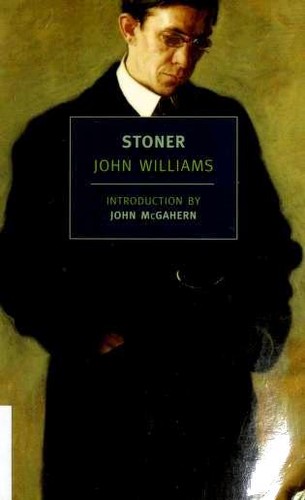
John Williams wrote four novels: Nothing But the Night (1948), Butcher’s Crossing (1960), Stoner (1965), and Augustus (1972), which won the National Book Award. Butcher’s Crossing is the next Williams novel most Stoner readers reach for, a spare Western about a bison hunt, different in register but built from the same controlled prose.
Why did Stoner take so long to find its audience?
The novel sold modestly in 1965 and went out of print. It was rediscovered in Europe first, particularly in France and the Netherlands, where it became a steady bestseller in translation during the 2000s. American readers caught up largely via word of mouth and a New York Review Books reissue in 2006. The delay fits the novel’s subject: things of real quality sometimes take time to be seen.
Is there a film adaptation of Stoner?
No feature film has been completed as of 2026, though the rights have changed hands multiple times. The novel’s power is largely internal. Stoner’s emotions surface through what he does not say and does not do, which makes adaptation genuinely difficult. The 1993 film of The Remains of the Day remains the closest cinematic equivalent.
Where do people who love Stoner tend to gather online?
The r/books and r/TrueBook communities on Reddit both have long threads on Stoner. Literary Hub has published several essays on its rediscovery and the novel’s peculiar cultural afterlife. Among reading apps, Achriom users who’ve added Stoner tend to cluster around the other titles in this list, so browsing their public libraries is a reasonable way to find what to read next.
What makes Stoner different from other quiet literary novels?
Most novels about disappointed academics or unrealized lives reach for irony or distance. Williams doesn’t. He takes Stoner completely seriously and asks the reader to as well. That refusal to protect itself with cleverness is what makes the book so unusual and so difficult to summarize. You have to read it to understand why people talk about it the way they do.