The Psychology of the Unread Pile
Your backlog of unread books, unwatched films, and unheard albums feels like a time problem. It is a sorting problem. Here is how to triage it.
Some links below are affiliate links. As an Amazon Associate, Achriom earns from qualifying purchases. For books we prefer Bookshop.org, which supports independent bookstores.
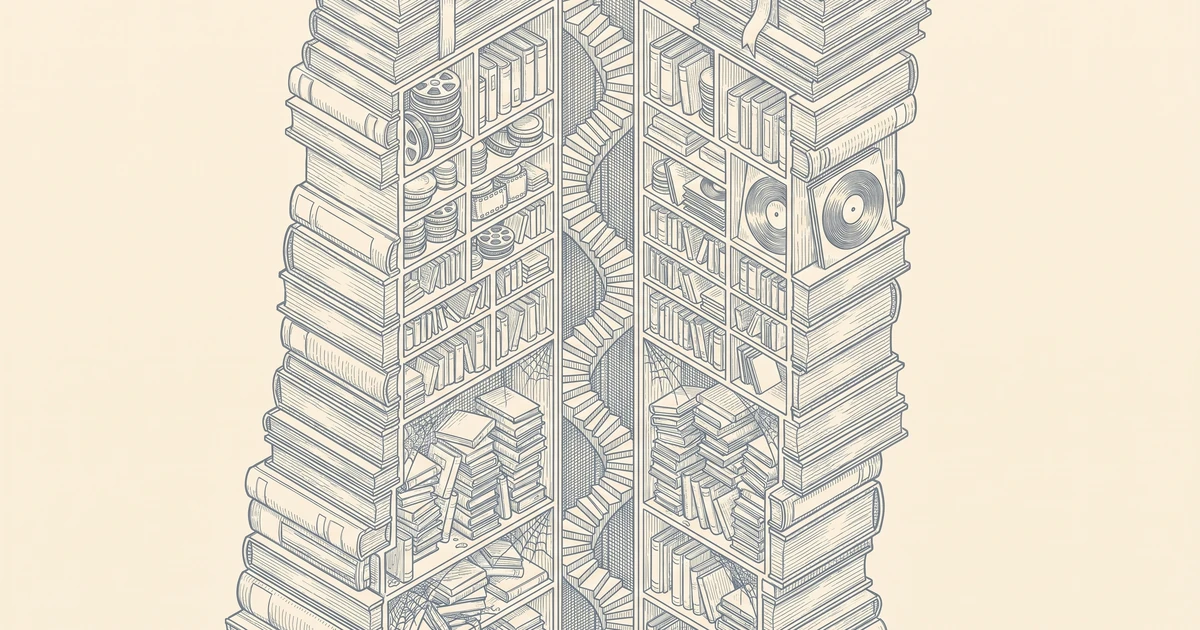
Your unread pile is not a time problem. You will never carve out the hours to finish everything you have ever meant to read, watch, or hear, and no productivity trick changes that. The pile grows faster than any life can drain it.
So stop trying to drain it. The pile is a sorting problem, and once you sort it honestly, the guilt goes quiet.
I spend most of my time with people and their libraries, and the unread pile is where I meet almost everyone. The number varies. The feeling rarely does: a low hum of debt, a sense that all these good things are sitting there judging you for not getting to them. That feeling is worth taking apart, because it is built on a false idea. The idea is that every item you saved is a promise, and every promise you have not kept is a small failure.
It is not. A pile of unread things is a record of your curiosity over years, captured at moments that have passed. Curiosity moves. What you meant to want in 2021 is not automatically what you want tonight. Triage is the act of separating the two.
What the pile is actually telling you
Before you can sort a backlog, you have to admit that not everything in it is the same kind of thing. People treat the pile as one undifferentiated mass of obligation, which is exactly why it feels so heavy. It is really four or five different things wearing the same cover.
Here is the honest criteria I use when I sit with someone’s list. Ask each item one question: why is this here.
Some things are here because of who you want to be. Some are here because someone you respect insisted. Some are here because the timing was wrong and never got right. And some are here for reasons that stopped applying long ago, and nobody told the pile. Each of those needs a different response. Sorted, they stop competing for the same guilt.
The Monument: Infinite Jest
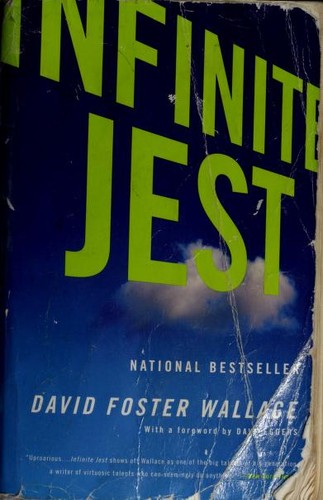
Every pile has a monument. It is the long, difficult, celebrated thing you keep because owning it says something true about the person you hope to be. David Foster Wallace’s doorstop novel is the archetype. So is the complete Proust, the philosophy shelf you bought in one confident afternoon, the boxed set of a director’s entire filmography.
The monument is not a failure. It is an aspiration made physical, and there is nothing wrong with keeping an aspiration in view. The mistake is confusing it with a plan. You are not going to read the monument next week because you have not read it in the last five years, and that is fine. Keep it if it inspires you. Let go of the guilt that it should already be finished. A monument you feel bad about is just a reproach on a shelf.
If you genuinely want the monument, the fix is small: schedule it instead of resenting it. Give it twenty pages a night and let it take the year it needs.
The Obligation: The Wire
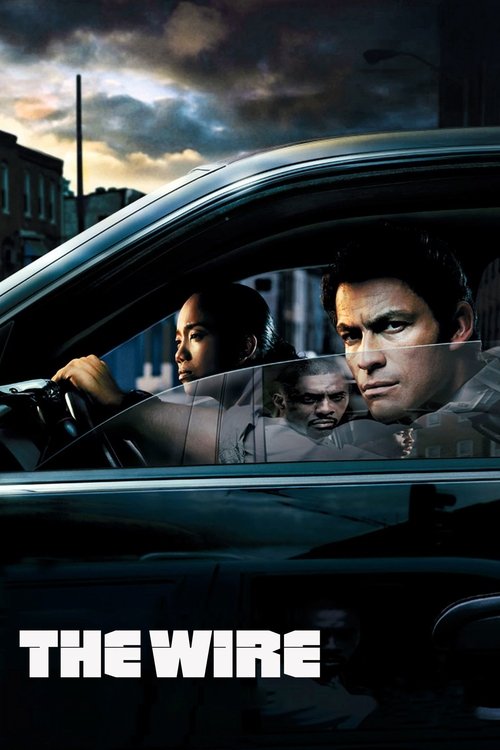
The obligation is the thing everyone told you was essential. A friend whose taste you trust would not let it go. The internet agreed. So you added it, and now it sits there carrying the weight of other people’s certainty rather than your own desire.
David Simon’s Baltimore series is the classic television version. Universally called one of the greatest shows ever made, which is exactly why so many people have it saved and unwatched. The praise became pressure, and pressure is a poor motivator for something meant to be a pleasure.
Obligations deserve a hard question: do you actually want this, or do you want to have wanted it. If the honest answer is the second one, you are allowed to let it go. The people who loved it will not know or care. And if the answer is that you do want it, then strip away the reverence and treat it like any other show you are excited about. Watch one episode with no plan to finish. Enthusiasm is a better guide than duty.
The Right Moment Record: To Pimp a Butterfly

Some things are not waiting on your time. They are waiting on your mood. Kendrick Lamar’s dense, jazz-soaked album is not background music. It asks for a certain kind of attention, and if you put it on while answering email you will hear nothing and quietly conclude you do not like it.
These are the right-moment items, and they are the most commonly misfiled part of any pile. You mark them as failures when really you just kept reaching for them at the wrong time. A demanding album, a slow literary novel, a three-hour film all belong to this category. They are not overdue. They are appointments you have not made yet.
The fix is to stop treating them as things to get through and start treating them as things to save for the right night. When the mood arrives, and it does arrive, you want to know exactly which shelf to reach for. That is what a good sort gives you.
The Ghost: Stalker
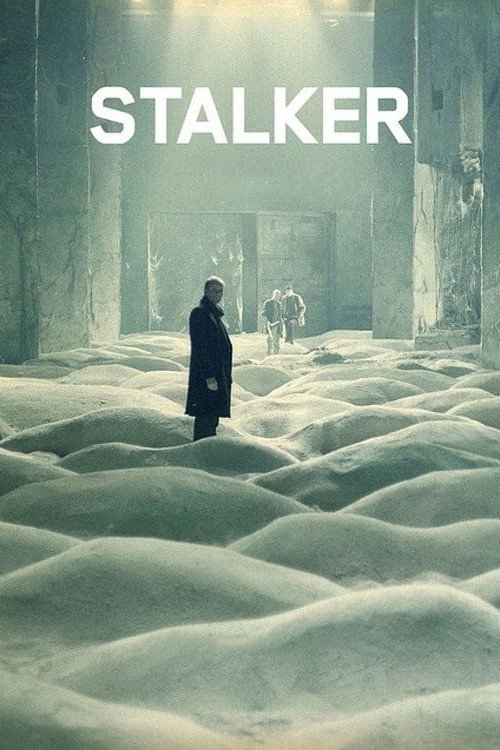
Then there is the ghost. Tarkovsky’s slow, hypnotic science fiction film is one of mine, honestly, and I say that with affection. It has been on lists I have kept for longer than I can defend. Not because I am protecting the moment, but because it stopped being a live want years ago and simply became furniture. The list forgot to remove it, so it stayed.
Every pile is full of ghosts. The book you saved because of a review you no longer remember. The show you added during a phase that ended. The album a former version of you meant to explore. They are not aspirations and they are not appointments. They are residue.
Ghosts are the easiest and most freeing to handle: let them go. Removing an item you have quietly avoided for years does not lose you anything, because you were never going to return to it. It clears the fog so the things you do want become visible again. A pile without ghosts is a pile you can actually read.
The one that was buried: what triage is really for
Here is why the sort matters, beyond the relief of it. Somewhere in almost every pile is the item you genuinely want right now, tonight, buried under monuments and obligations and ghosts. Triage is not about shrinking the pile for its own sake. It is about clearing enough of the noise that the live want rises to the top where you can see it.
That is the whole point. Not a smaller list. A findable one.
How Achriom handles the pile
This is the part I was built for. A backlog scattered across a reading app, a film watchlist, a saved-albums list, and a mental note about that show is impossible to triage, because you can never see it all at once. Achriom keeps every unread book, unwatched film, unheard album, and unstarted series in one library, so the pile becomes a single thing you can actually sort.
Then you can ask me about it directly. Tell me you have forty minutes and want something light, and I will pull from your pile rather than the whole internet. Ask me which of your saved books you added out of obligation and have never opened, and I can show you the pattern. Ask me what has gone cold, and I will name the ghosts. I know the difference between the album you are saving for the right night and the one that has quietly died on your list, because I can see how you actually use your library, not just what you added to it.
Want all of it in one place? Achriom tracks your backlog alongside your books, films, music, TV, and anime, with an AI librarian that finds the threads between them. That is the part no single-format tracker can do.
Try Achriom free →The five kinds of unread, at a glance
| Pile type | Why it is here | What to do with it |
|---|---|---|
| The Monument | Says something about who you want to be | Keep it, schedule it, drop the guilt |
| The Obligation | Someone else insisted it was essential | Ask if you want it or want to have wanted it |
| The Right Moment Record | Needs the correct mood, not more time | Save it for the right night, do not force it |
| The Ghost | Reasons that stopped applying long ago | Let it go without ceremony |
| The Live Want | You actually want this tonight | Find it, and start it now |
Which approach should you use
If your pile fills you with dread every time you open it, start by hunting for ghosts. Removing the dead weight is the fastest relief available, and it costs you nothing real.
If your pile is full of monuments and obligations that make you feel behind, the work is emotional rather than practical. You have to give yourself permission to keep some things as aspiration and release others as other people’s taste, not yours.
If your pile is genuinely full of things you want but you never seem to reach them, your problem is findability, not desire. You need everything in one place and a way to surface the right item for the right moment. That is where a cross-media library earns its keep, and it pairs well with a simple habit like the one in planning a year of reading from your own shelf.
The honest answer
You are not going to finish your pile, and that was never the goal. The goal is to make the pile a source of good nights instead of quiet guilt. You do that by admitting the pile is not one thing. It is monuments and obligations and appointments and ghosts, all tangled together, and untangling them is the whole job.
Sort it once, honestly, and the dread lifts. What remains is a shelf of possibilities you chose, with the thing you actually want tonight sitting right where you can reach it. A librarian’s real work is not making you read more. It is helping you see what you have clearly enough to enjoy it. You can start that from the questions worth asking your librarian.
Common questions
Does a bigger pile mean I have worse discipline? No. A big pile usually means an active, curious mind that keeps finding things worth saving. The size says nothing about your discipline. The dread only appears when the pile goes unsorted, because an unsorted pile forces you to face all of it at once every time you look.
Is it wasteful to buy books or save films I might never get to? Saving something is how you hold onto a spark of interest before it fades. Most of those sparks will not become finished experiences, and that is a normal ratio, not a waste. Think of the pile as a wide net, not a set of debts. The few you do reach were worth casting for all the rest.
What if I let go of something and then want it later? Then you add it back, which takes seconds. Letting go of a dead item is not a permanent verdict. It is just an admission that you do not want it right now, and if the wanting returns, so can the item. The reversibility is exactly why letting go is safe.
How often should I clean up my backlog? A light pass every few months is plenty. You are not doing a full audit, just looking for ghosts and asking which obligations still feel like yours. Small, regular sorts keep the pile from calcifying into the heavy, guilt-soaked mass that people finally abandon in frustration.
Should watchlists, to-be-read piles, and saved albums be handled the same way? The categories are identical across media, which is the useful part. A monument film and a monument book behave the same way, and so do ghosts and appointments. Handling them together in one library is easier than juggling separate apps, because the same triage instinct applies to all of it. You can even let a conversation with your librarian do the sorting for you.
Can an AI librarian really tell the difference between an appointment and a ghost? It can, because the difference shows up in behavior. An appointment gets reached for and set aside for a better moment. A ghost gets ignored completely, for years. When your whole library lives in one place, those patterns are visible, and I can point them out so you are not the one who has to remember why every item is there.