Your Media Tracker Logs Everything and Understands Nothing
Media trackers log what you finish. AI librarians reason across what you love. Here is what separates them, and how to pick the right tool.
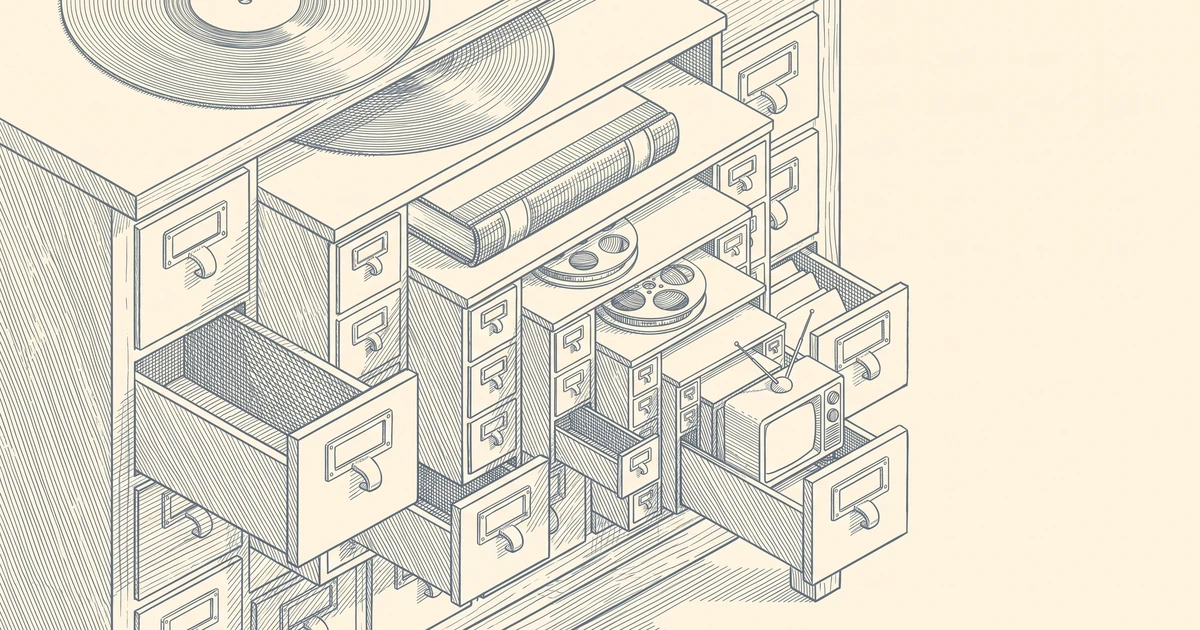
Most people looking for a media tracker want to answer one question: did I finish this? A tracker is good at exactly that. It holds your list, records your ratings, and tells you what is waiting on the shelf.
An AI librarian does something different. It holds that same list and then reasons across it. You can ask why you tend to love certain films, what book matches the tone of a show you just finished, or where your taste in music overlaps with your taste in fiction. The log becomes a conversation.
The difference sounds abstract. In practice, it changes everything about what the tool is actually useful for.
What separates a tracker from an AI librarian
Not every media tool is the same thing. Here are the five dimensions that matter most when choosing between them.
Format coverage
Most media trackers are built for one format. Letterboxd is film and nothing else. Goodreads is books. AniList covers anime and manga. Trakt handles film and TV together, which is broader than most, but still leaves out books, music, and anime.
Format coverage matters when your taste does not stay in one lane. If the novels you love tend to share a sensibility with the films you rate highest, a single-format tracker cannot see that. The pattern exists in your library. The tool just does not look.
What you can ask
A tracker answers questions about lists: what did I log, how did I rate it, what is in my backlog. That is genuinely useful. But the questions most people actually want answered are harder.
What should I read next, given everything I have rated highly? Which albums feel like this novel I just finished? I keep returning to a particular mood in films. What is that mood and where else does it show up? A tracker stores the data. An AI librarian can take a question like that and work with it.
Community versus personal insight
The big trackers have strong communities. Letterboxd has a culture around it. Goodreads has reading challenges and friend feeds. If you want to see what friends are watching, or what a critic you follow is reading, community-first tools deliver that well.
Personal insight is a different pull entirely. If what you want is to understand your own taste, the community layer does not help much. An AI librarian that knows your specific library can do things a community feed cannot.
Cross-format connections
The most interesting patterns in a media collection tend to be cross-format. Someone who loves Haruki Murakami’s Norwegian Wood often has a taste for a particular kind of melancholy that also shows up in the films, albums, and TV they rate highly. A tracker that only holds books cannot see that the same reader consistently rates certain albums four or five stars. An AI librarian that holds all of it can name the thread.

Arcade Fire’s The Suburbs and Norwegian Wood are not obviously related. But they pull from the same ache. A well-built cross-media library can surface that connection because both live in the same place.

What “done” means
For trackers, the primary status is finished or not finished. You have seen it, read it, or you have not. An AI librarian can hold more nuance. You can track what you abandoned and why, what you want to return to, what you have read twice, what you gave five stars but would never recommend to anyone. Those distinctions matter for understanding taste. They are invisible in a pure log.
Letterboxd
Letterboxd is the best film-tracking tool available. The diary format, the review culture, the lists, the community around watching. For serious film watchers it is a genuine home, with a personality that most productivity apps never develop.
Its limits follow its focus. Letterboxd is film-only. There is no books, no music, no TV in the main product. The AI features added in recent versions help with film discovery but do not reach across formats. If film is your primary medium and you want to be part of a watching community, Letterboxd is hard to beat on its own terms.
Goodreads
Goodreads has over 150 million users and an enormous social layer. Reading challenges, friend activity, community reviews, reading groups. For tracking a book backlog and connecting with other readers, it works.
The platform has moved slowly since Amazon acquired it. The app feels dated compared to current standards. Discovery has improved somewhat, but the core product is still a database with a social layer built on top. No AI reasoning, no cross-format tracking, no way to connect your reading to anything else you consume. If you loved Normal People as a TV series and want to know whether the Sally Rooney novel would land the same way for you, Goodreads cannot help with that. It does not know you watch TV.

Trakt
Trakt is the tracker for TV and film power users. It connects with streaming apps and media servers to scrobble playback automatically. The stats go deep: total episodes watched, hours by genre, viewing pace over time, ratings distribution. For people who want granular data on their watching habits, Trakt goes further than most.
It does not do books, music, or anime. The interface is utilitarian in a way that assumes you already know you want it. There is no AI reasoning layer, though the data model is richer than most trackers and the integrations make it worth the learning curve for the right person.
AniList
AniList is the standard for anime and manga tracking. Highly customizable lists, a detailed scoring system, a strong seasonal community, and charts that track new releases across the year. For dedicated anime watchers it handles the format better than any generalist tool.
Like the others, AniList stays in its lane. The focus shows in the feature depth, which is a genuine strength if anime is your primary medium. If you want to track anything else alongside it, you are maintaining a separate tool for each format.
Achriom
Achriom tracks books, films, TV, music, and anime in a single library. The tracking layer works the same as a dedicated tool: log what you finished, rate it, add things to your list.
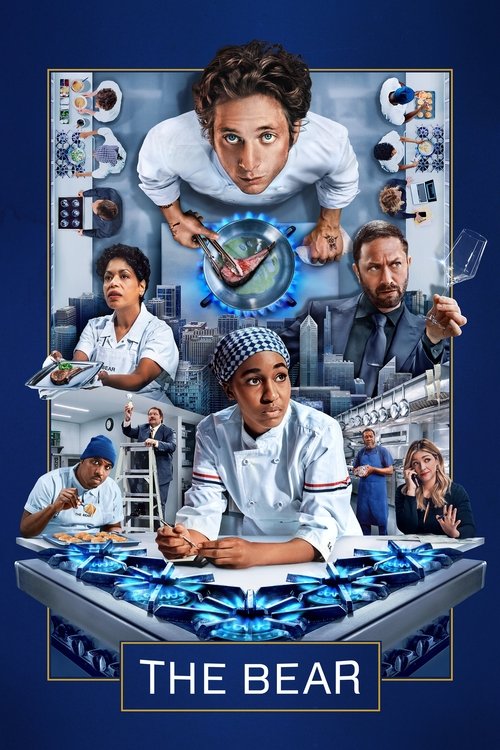
The difference is what you can do with the library once it exists. Achriom’s AI librarian can reason across the whole collection. Ask it what connects the films you have rated highest and it will tell you. Ask it to find the book that matches the tone of a TV show you just finished, a series like The Bear or Normal People. Ask it what you should read next given your specific reading history, not a generic popularity ranking. The answers come from your actual library.
The AI librarian lives in ChatGPT, which means you ask questions in a conversation rather than clicking through filters. It is a genuinely different experience from searching a database.
Want all of it in one place? Achriom tracks your films alongside your books, music, TV, and anime, with an AI librarian that finds the threads between them. That is the part no single-format tracker can do.
Try Achriom free →How they compare
| Letterboxd | Goodreads | Trakt | AniList | Achriom | |
|---|---|---|---|---|---|
| Formats covered | Film | Books | Film + TV | Anime + manga | Books, film, TV, music, anime |
| AI reasoning | Limited | None | None | None | Full |
| Cross-format connections | No | No | No | No | Yes |
| Community | Strong | Strong | Moderate | Strong | Growing |
| Auto-scrobbling | No | No | Yes | No | No |
| Free tier | Yes | Yes | Yes | Yes | Yes |
Which should you use
Use Letterboxd if film is your primary medium and you want to be part of a watching community. The culture is strong and the format-specific features go deep.
Use Goodreads if tracking your reading backlog and connecting with other readers is the goal. The book database is unmatched for metadata and community size.
Use Trakt if you want detailed TV and film stats, especially if you want automatic tracking through a media server or streaming app.
Use AniList if anime and manga is your main focus. The customization and community depth there is better than any generalist tool for that format.
Use Achriom if your media consumption crosses formats and you want to understand your taste, not just log it. If you are the kind of person who notices that the fiction you love and the films you love tend to share a particular sensibility, and you want a tool that can name that sensibility for you, Achriom is built for that.
The honest answer
Trackers and AI librarians are solving different problems. One stores the log. The other interprets it.
For most people with broad taste, the gap shows up when they try to find what to consume next. A tracker can surface what is in the watchlist. An AI librarian can reason about which thing in the watchlist fits the mood, the moment, or the thread running through everything you have loved lately.
Tracking records what you finished. Understanding tells you what it means.
Common questions
Do I have to give up my existing tracker to use Achriom?
No. Achriom imports from Goodreads, Letterboxd, and other trackers, so you can bring your existing library over rather than starting from scratch. Many people use Achriom alongside a single-format tracker for its community features while using Achriom for cross-format reasoning.
Can an AI librarian replace a dedicated tracker like Letterboxd?
For the community and social layer, not completely. Letterboxd has a culture that took years to build: the reviews, the lists people follow, the film criticism ecosystem around it. Achriom does not replicate that. If community is central to why you use Letterboxd, you will likely want to keep it. If you use it primarily to track your own watching, Achriom covers that and adds cross-format reasoning on top.
How does an AI librarian actually know my taste?
It reads your library. The ratings you have given, the things you have marked as favorites, the notes you have added, the patterns across what you have logged. Achriom’s AI librarian has access to your actual collection when you ask it a question, so it is reasoning from your data rather than returning generic recommendations.
What happens if I track across five formats? Does it get overwhelming?
Most people find the opposite. Having one place for everything makes the library feel more complete rather than more chaotic. The AI librarian works better with more data, so a fuller library means more accurate pattern-reading across formats.
Is there a meaningful difference between AI-powered discovery on a tracker and a real AI librarian?
The AI features being added to trackers like Letterboxd are mostly recommendation engines: based on your ratings, here are more films you might like. That is useful. An AI librarian that can answer open-ended questions about your specific collection is a different kind of tool. You can ask it things that are not on a dropdown menu and get answers grounded in your actual history.
What if I mostly consume media in one format?
Single-format trackers work well for that. If books are your primary medium, Goodreads or The StoryGraph will serve you well and have deeper book-specific features. Achriom is most useful when your taste cuts across formats, or when you want to have a real conversation about your collection rather than just browse a list.