How to Discover New Music Based on Books You Love
Your reading taste can unlock new music. Here's how to find albums that share DNA with your favorite novels, even when the connection isn't obvious.
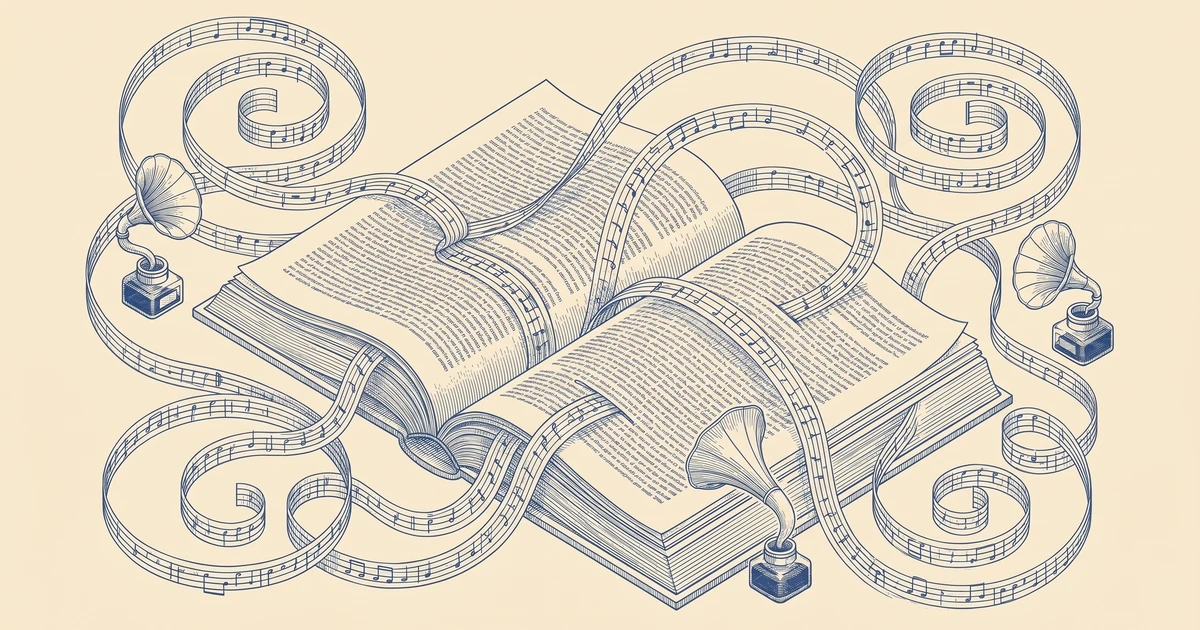
You love a certain kind of book. Atmospheric, maybe. Or propulsive. Melancholic, cerebral, chaotic, meditative.
What if that same quality existed in music you haven’t found yet?
The connection between books and albums isn’t obvious. There’s no “readers who liked this also listened to…” algorithm. But the connection is real, and learning to find it opens up new worlds.
The Mood Transfer
The most direct path from book to music is mood.
Think about how a book feels, not what it’s about. Is it restless or settled? Dark or bright? Dense or sparse? Fast or slow?
Now look for albums described the same way. A slow, melancholic novel might pair with ambient music or folk. A chaotic, high-energy book might connect to post-punk or hip-hop.
The genre doesn’t matter. The mood does.
The Era Match
When and where was the book set or written? Music from that time and place might resonate.
Reading Beat Generation literature? Try bebop jazz from the same era. Working through Victorian novels? The Romantic composers were their contemporaries. Diving into 1970s New York fiction? The punk scene was happening at the same time.
Historical alignment isn’t arbitrary. Creators in the same moment often respond to the same cultural forces.
The Author’s Soundtrack
Some authors are explicit about their musical influences. Haruki Murakami writes jazz and classical references into his novels. Nick Hornby wrote a whole book about music. Zadie Smith’s playlists are public.
Search for “[author name] favorite music” or “[author name] playlist.” You might find curated lists, interviews, or essays about what they listen to while writing.
The Adaptation Path
If a book has been adapted into a film, the soundtrack is a direct musical interpretation of the story. Even if you haven’t seen the movie, the composer’s response to the source material can be revealing.
This also works in reverse. Albums have influenced films that were adapted from books. The connections spiral outward.
The Thematic Link
Some books and albums explore the same themes from different angles.
A novel about isolation might pair with an album about the same feeling. A book exploring a specific city might connect to music from that scene. A story about memory could rhyme with music that plays with nostalgia.
The surface connection doesn’t need to exist. The thematic resonance does.
Using AI to Find Connections
This is where Achriom shines.
Add your books and albums to the same library, rate them honestly, and then ask:
- “What music might I like based on my favorite books?”
- “What albums share themes with [specific novel]?”
- “Find me music with the same mood as my 5-star rated books.”
The AI can see across your entire library and find connections that aren’t obvious. It analyzes the qualities you respond to, not surface-level genre markers.
An Example Chain
Say you love The Secret History by Donna Tartt. It’s atmospheric, dark, intellectual, set among classics students. What music might share that DNA?
- Classical music the characters might have studied (Baroque, Greek-influenced compositions)
- Dark atmospheric rock with literary pretensions (early Radiohead, Talk Talk)
- Chamber pop with intellectual density (Sufjan Stevens, Joanna Newsom)
- Gothic folk that matches the darkness (Nick Cave, Current 93)
None of these are obvious recommendations from “people who liked this book.” But they share something essential with the reading experience.
Your bookshelf is a map to music you haven’t found yet. You just have to learn to read it.