The Novels Hiding Inside Denis Villeneuve's Films
Five of Denis Villeneuve's most celebrated films have a direct literary source. These are the books behind Arrival, Dune, Enemy, Incendies, and Blade Runner 2049, and why reading
Some links below are affiliate links. As an Amazon Associate, Achriom earns from qualifying purchases. For books we prefer Bookshop.org, which supports independent bookstores.
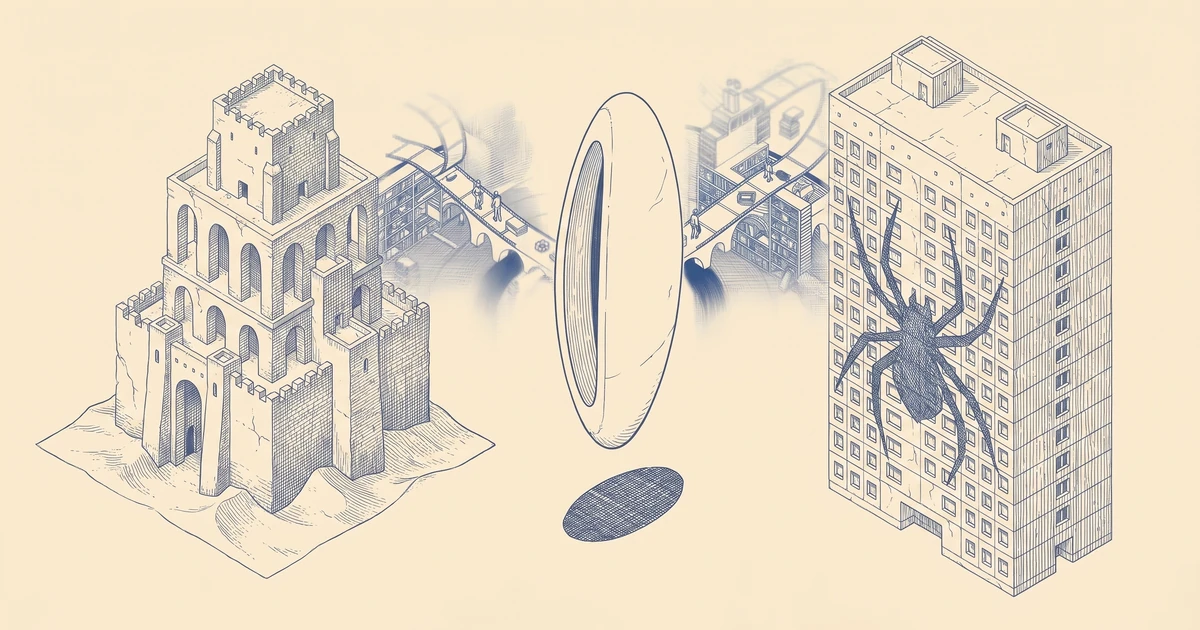
Five of Denis Villeneuve’s most celebrated films have a direct literary source. Arrival adapts Ted Chiang. Dune adapts Frank Herbert. Enemy comes from José Saramago. Incendies from a Wajdi Mouawad play. Blade Runner 2049 builds on Philip K. Dick’s original question, even if it adapts a different film.
Reading those books doesn’t translate the films into prose. A good adaptation is its own thing. But going back to the source material changes how the films sit in memory, and in several cases the books extend the experience in directions the screen couldn’t follow.
What Connects These Works
Before going film by film, it helps to name what Villeneuve consistently finds in literary material.
He is drawn to writers who treat consciousness as the main subject. The exterior events, the arrival of alien ships, the desert war, the double walking through the city, are a frame for an interior experience. A character’s perception changes, or fractures, or deepens into something they can’t come back from.
The books he adapts tend to work the same way. They use speculative premises to ask questions that couldn’t be asked otherwise. What would time feel like if you perceived it differently? What is identity once you can no longer locate its edges? What does it mean to survive something that should have ended you? The science fiction and tragedy are not the point. They are the tools.
Arrival: Stories of Your Life and Others
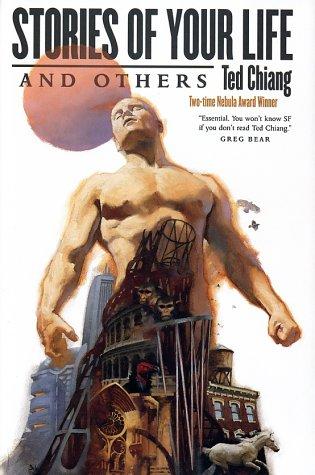
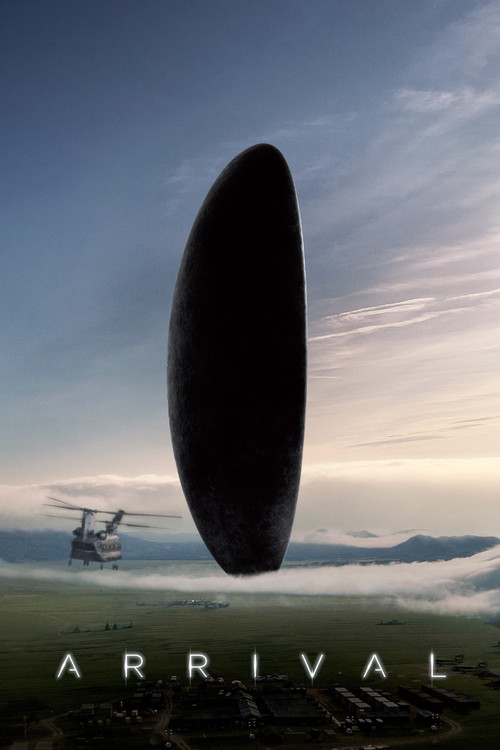
Arrival (2016) is based on “Story of Your Life,” a novella by Ted Chiang collected in his 2002 volume. A linguist tasked with communicating with alien visitors discovers that learning their language alters how she experiences time. The film follows this premise faithfully.
The collection is the better place to start than tracking down the single story. Chiang’s other pieces work the same structural territory: “Exhalation” asks what happens when the medium of thought itself is finite; “Hell Is the Absence of God” takes religious certainty to its logical, terrible conclusion; “Understand” follows a mind that has been accelerated past the limits of ordinary experience. Each piece takes one premise and follows it to its furthest point.
Chiang writes like an engineer who became a humanist. His prose is spare and exact. The emotional weight arrives through the logic, not despite it. That quality, the feeling that a devastating emotion is also a proof, is precisely how Villeneuve directs.
Dune: Frank Herbert’s Novel
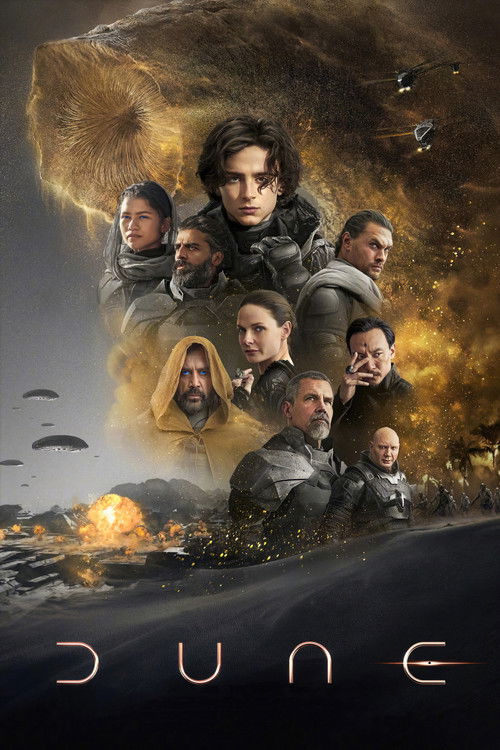
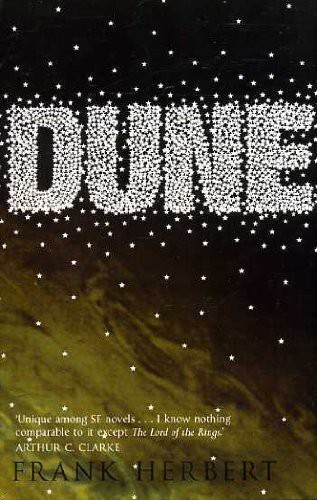
Frank Herbert’s 1965 novel is one of the most influential works in science fiction, and one of the most resistant to adaptation. Villeneuve spent years building toward the project, treating both films as a single unit and leaving out large portions of the novel’s interior architecture.
That architecture is what the book offers that the films cannot. Herbert’s Paul Atreides is a thinking character. He notices the political and ecological structure of everything around him from childhood. He understands what he is being shaped into, and the novel’s most important subject is the cost of that understanding. The book is a meditation on how a person becomes a symbol, and on what is lost in the transformation.
Villeneuve’s adaptation preserves the surface. The thought underneath lives mostly on the page. The novel also engages directly with colonialism and the hero myth in ways the films suggest but don’t fully develop. Herbert wrote it partly as a critique, and the critique is more legible in prose.
Enemy: The Double
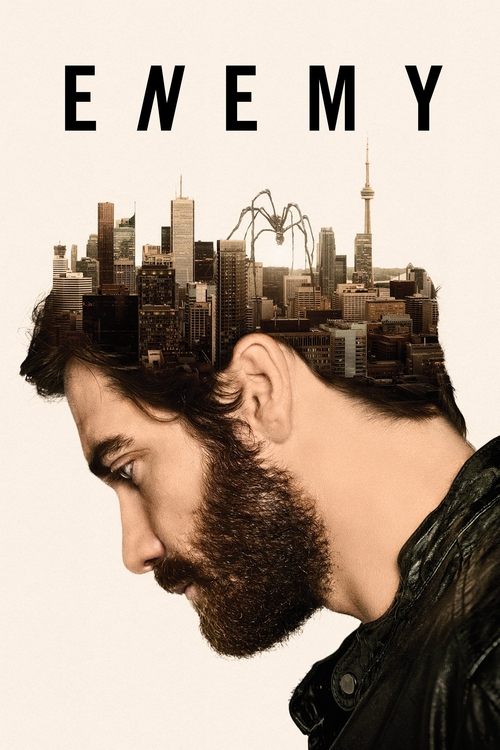
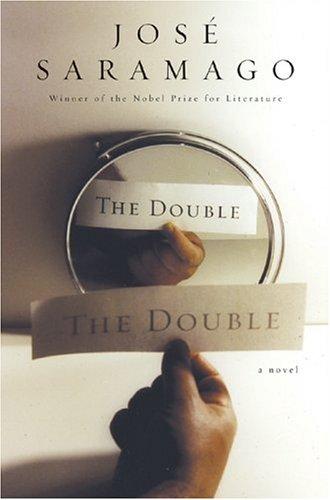
Enemy (2013) is adapted from The Double, a 2002 novel by the Portuguese writer José Saramago. A history teacher discovers that an actor is his exact physical duplicate. The encounter begins a slow collapse of identity.
Saramago’s prose is the first thing to meet. Long, unbroken sentences with minimal punctuation, dialogue embedded in paragraphs rather than set apart, a narrator who addresses the reader with a slightly ironic distance. The style is an acquired taste, but it earns its difficulty. Form mirrors content here. A prose that doesn’t stop for breath enacts something about consciousness, about the way thought circulates when it refuses to quiet.
Enemy preserves the existential core and converts it into atmosphere. Villeneuve’s Toronto becomes a city of identical apartment blocks and yellowish light, a space where duplication feels architecturally inevitable. Saramago’s Lisbon is different: bureaucratic, claustrophobic, both mundane and quietly menacing. The novel and the film are in genuine conversation with each other. Neither one contains the other.
Blade Runner 2049: Do Androids Dream of Electric Sheep?
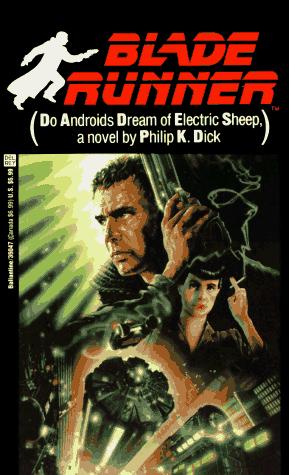
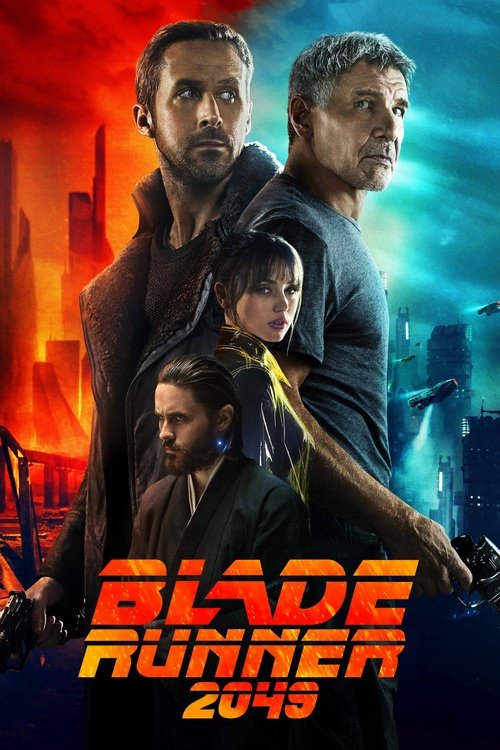
Blade Runner 2049 (2017) is a sequel to Ridley Scott’s 1982 film, which was adapted from Philip K. Dick’s 1968 novel. Villeneuve didn’t adapt the novel directly. The relationship is more oblique than the others on this list.
Dick’s novel asks a question that both films pursue in different forms: what makes something alive, and who has the authority to decide? His version takes place in a post-nuclear San Francisco where authentic animals are nearly extinct and owning one is a marker of status. His protagonist buys a goat. That detail, modest and specific, concentrates the novel’s concern with authenticity in a way neither film quite achieves.
Do Androids Dream of Electric Sheep? reads faster than it sounds. Dick is not a prose stylist in the way Saramago is. He moves. The philosophy arrives sideways, embedded in plot and dialogue. The questions accumulate quietly enough that you can finish the novel before realizing what it was actually asking. Reading it after watching Blade Runner 2049 reframes what Villeneuve was doing with Officer K: not just a new plot, but a return to Dick’s original question from a later angle.
Incendies: The Play
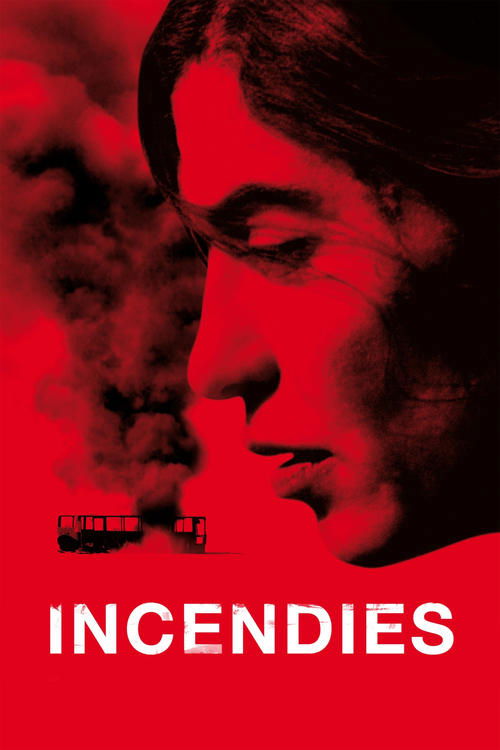
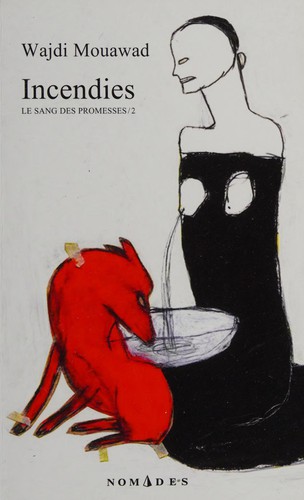
Incendies (2010) is based on a play rather than a novel. Wajdi Mouawad’s Incendies (2003) is part of a tetralogy by the Lebanese-Canadian playwright. Two Canadian siblings discover after their mother’s death that they have a father and a brother they didn’t know existed. They travel to a fictionalized Middle Eastern country to find them.
The play reads like a novel. The structure is theatrical: parallel time periods, secrets traveling across decades and continents, tragedy in the classical sense where the worst thing that can happen is also the truest. Mouawad’s language is heightened and deliberate in ways that stage writing allows and prose sometimes doesn’t.
The film strips back the poetry and replaces it with landscape, with the physical fact of heat and rubble and displacement. The architecture of the story, its formal symmetry, its withheld information, remains intact. Reading the play after watching the film is worth doing because the theatrical conventions make visible what the film aestheticizes. The structure becomes audible, not just felt.
Want all of it in one place? Achriom tracks your films alongside your books, music, TV, and anime, with an AI librarian that finds the threads between them. That is the part no single-format tracker can do.
Try Achriom free →Where to Start
| Film | Book | Author | What the book adds |
|---|---|---|---|
| Arrival | Stories of Your Life and Others | Ted Chiang | The logic behind the emotion; the rest of the collection |
| Dune | Dune | Frank Herbert | Paul’s interior voice; the ecological and political critique |
| Enemy | The Double | José Saramago | A prose style that enacts its own subject |
| Blade Runner 2049 | Do Androids Dream of Electric Sheep? | Philip K. Dick | The original question in its original form |
| Incendies | Incendies (play) | Wajdi Mouawad | The formal architecture the film aestheticizes |
Arrival is the most direct entry point. The Ted Chiang collection is short, varied, and immediately rewarding. If Villeneuve’s method of building enormous emotion from precise intellectual premises is what draws you to his films, the rest of the collection will hold you.
Dune is the longest investment and the most necessary for understanding what the films are doing. Herbert’s novel is the iceberg. Two films cover its surface. The thought underneath is still mostly in the book.
Enemy and The Double form the most demanding pairing. Saramago’s prose takes patience. The experience of finishing the novel and rewatching the film is unlike anything else on this list. They are the same work done twice, in different registers, and neither one wins.
Do Androids Dream of Electric Sheep? can be read in a long afternoon and works best as a companion to rewatching rather than a prerequisite. Incendies (the play) is for readers who finished the film and wanted more language, more formal height, more clarity about how the story is constructed.
What connects these books is not genre or era. It is the quality of attention each writer brings to the question of a person under pressure, and the willingness to follow that question further than plot requires. Villeneuve finds these writers because they are already doing, in prose, what he wants to do with a camera.
If your Achriom library includes any of these films, your AI librarian can extend this list further, finding novels and collections that share specific qualities of Villeneuve’s work or your particular response to it.
Common Questions
Is Arrival based on a novel?
Arrival is based on “Story of Your Life,” a novella by Ted Chiang. It was published in his 2002 collection Stories of Your Life and Others, though the story appeared first in 1998. The film adapts the plot closely while expanding the emotional register through cinematography and score. Reading the full collection is a better entry point than seeking out the single story.
What is Dune based on?
Dune (2021 and 2024) is based on the 1965 novel of the same name by Frank Herbert. Herbert wrote five sequels; Villeneuve has indicated his adaptation focuses on the first novel and its direct continuation, Dune Messiah. The novel won both the Hugo and Nebula Awards and has remained in print since publication. It is significantly denser with political theory and interior monologue than the films convey.
What books has Denis Villeneuve adapted into films?
His major literary adaptations include Ted Chiang’s “Story of Your Life” (Arrival), Frank Herbert’s Dune (Dune: Part One and Dune: Part Two), José Saramago’s The Double (Enemy), and Wajdi Mouawad’s play Incendies. Blade Runner 2049 is a sequel to Ridley Scott’s earlier adaptation of Philip K. Dick’s Do Androids Dream of Electric Sheep? rather than a new adaptation of the novel, but the film works in close conversation with Dick’s ideas.
Is Enemy based on a novel?
Yes. Enemy (2013) is adapted from The Double, a 2002 novel by the Portuguese Nobel laureate José Saramago. The original Portuguese title translates more literally as “The Duplicate Man.” Villeneuve relocates the story from Lisbon to Toronto and removes Saramago’s ironic narrator, but the plot’s central architecture remains intact.
What books feel like Denis Villeneuve films?
Writers who work in similar territory include Stanislaw Lem (Solaris), Jeff VanderMeer (Annihilation), Kazuo Ishiguro (Never Let Me Go), and Ursula K. Le Guin (The Left Hand of Darkness). None of these have been adapted by Villeneuve, but they share his interest in consciousness under pressure, slow revelation, and speculative premises used to examine what it means to remain a person under extreme conditions.
Can Achriom help me find books based on films I love?
Yes. Add the films you love to your Achriom library and ask your AI librarian to find books that share their atmosphere, themes, or structural approach. The librarian works across formats, so a film shelf can generate reading recommendations the same way a novel can point you toward its musical equivalent.