What to Read After Severance (Books That Hit the Same Notes)
Five books for fans of Severance on Apple TV+: institutional horror, split identity, slow reveals, and characters who don't understand what was done to them.

Some links below are affiliate links. As an Amazon Associate, Achriom earns from qualifying purchases. For books we prefer Bookshop.org, which supports independent bookstores.
If Severance left you sitting with a feeling you couldn’t name, these five books are the closest the shelves get: Never Let Me Go by Kazuo Ishiguro, The Employees by Olga Ravn, Piranesi by Susanna Clarke, Flowers for Algernon by Daniel Keyes, and The Trial by Franz Kafka.
None of them are about office jobs or memory surgery. What they share with Severance is something underneath that: characters who don’t fully understand what was done to them, reasoning carefully within a reality that was built for someone else’s purposes, finding something worth caring about anyway.
Last reviewed: June 2026.
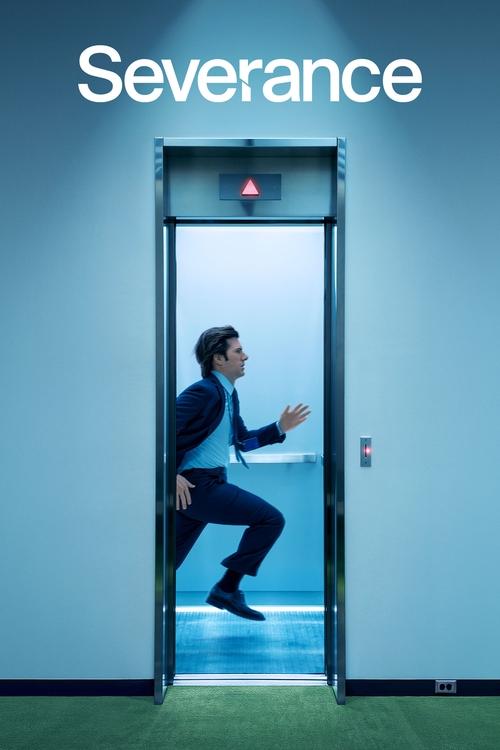
What these books share with Severance
Severance is built on several ideas that don’t often appear together, and the books that match it tend to hold them in the same tension.
The horror is institutional, not monstrous. Lumon is not a monster. It is a corporation with procedures, handbooks, wellness sessions, and a melon bar. The dread comes from the gap between the sincerity of its rituals and what those rituals are concealing. Books that work the same way: Never Let Me Go, The Trial, The Employees.
Characters don’t know the shape of their own situation. The innies don’t know what they produce or why. Mark Scout doesn’t know what he’s for outside the office. The most unsettling scenes in Severance are the ones where a character reasons carefully and correctly within a false set of premises. All five books do this, in different registers.
The split self is the real subject. Innie and outie are the show’s version of a question these books each take differently: what happens when a self is divided, altered, or made to inhabit only part of its own experience? Flowers for Algernon is literally about this. Never Let Me Go is structurally about it. Piranesi arrives at it from the puzzle-box end.
Dignity inside a closed system. The emotional texture that makes Severance more than a thriller: people doing small human things inside conditions they didn’t choose and can’t fully escape. Mark and Helly arguing about waffles. Kathy H. making deals. Piranesi leaving offerings for the dead. The books below have this quality.
Never Let Me Go (Kazuo Ishiguro)

Kathy H. narrates her life from a position of retrospective calm she can’t quite sustain. She grew up at Hailsham, an English boarding school with kindly teachers and strange rules, alongside her two closest friends, Ruth and Tommy. The novel tells their story across childhood, adolescence, and early adulthood. Gradually, across these three stages, you understand what Kathy, Ruth, and Tommy are and what they were created for.
The horror is that they already know, in some form, and have organized their lives around a kind of selective not-knowing. Ishiguro is precise about this mechanism: not denial exactly, more the way humans manage the knowledge of their own mortality, living in the foreground while keeping a particular understanding in the background where it can’t crowd out everything else.
What connects it to Severance is the administrative distance of the narration. Kathy H. describing her life sounds, at times, like a Lumon employee completing a self-assessment. The careful language, the slight formality, the way strong emotion gets routed through procedure. The horror lives in that gap between what the language is doing and what the experience underneath it actually is.
If Severance made you feel something you couldn’t quite name, Never Let Me Go will name it.
The Employees (Olga Ravn)
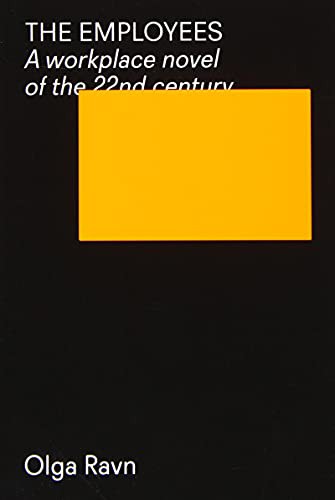
Olga Ravn’s novel (Danish original 2018, English translation by Martin Aitken, 2020) is 120 pages of numbered testimonies from the crew of a spaceship called the Six Thousand Ship. The crew members are writing reports to a Welfare Committee. They describe their feelings about objects that were brought aboard from a planet they visited: a ball of hair, a piece of yellow fabric, a substance that smells like something they can’t name. Some of the crew are human. Some are not. The novel never clarifies which.
The objects from the planet are quietly devastating. The crew members can’t explain what the objects mean to them. They only know that the objects make them feel things that the rest of the ship doesn’t. The novel is structured as a bureaucratic document, each testimony numbered and formatted, but the contents keep breaking through the format. Affect leaks through procedure. Longing leaks through the welfare form.
This is exactly what Severance does. The structure of Lumon is the structure of that ship: procedures and assessments and performance reviews inside which people keep trying to be people. The Employees reads like what you’d find if you opened Lumon’s internal documentation system and read what the MDR team had actually written.
If Never Let Me Go is the emotional core match, The Employees is the structural match. Start here if Severance worked on you through its form as much as its feeling.
Piranesi (Susanna Clarke)
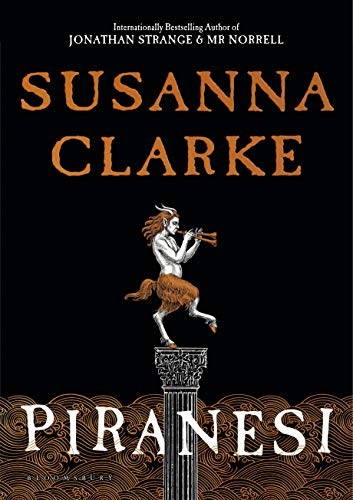
The narrator lives in a House of infinite halls. The halls are full of marble statues and tidal seas. He calls himself Piranesi, though he’s not sure why. He believes there are only two people in the world: himself and a man he calls “the Other,” who visits every Tuesday and Thursday and asks him questions about the House. Piranesi keeps meticulous journals. He leaves offerings for the thirteen Dead. He loves the House without reservation.
He doesn’t know what he doesn’t know.
The structure of Piranesi is the structure of Severance as a reading experience: you are given a character who is genuinely, carefully reasoning within a confined reality, and you see the shape of that confinement before the character does. The discovery, when it comes, doesn’t feel like a twist. It feels like understanding something you already half-knew, which is exactly how the best reveals in Severance land.
Clarke also does something the show does well: she makes you genuinely love the confined version of the character. Piranesi’s curiosity, his tenderness toward the statues, his faithfulness to the dead: these are real, not sad residue. The tragedy is that his full self can’t be the same person who loves the House so freely. That tension is the innie problem exactly.
Piranesi is shorter than the others on this list and warmer. It’s the one to read if you want the puzzle-box without the weight.
Flowers for Algernon (Daniel Keyes)
Charlie Gordon is thirty-two years old and intellectually disabled. He undergoes an experimental surgery that dramatically increases his intelligence. The novel is told as a series of “progress reports” Charlie writes for the scientists conducting the experiment: first in his own voice before the surgery, then in an altered voice as his intelligence climbs far above those of the people conducting the experiment, then as it declines.
The split-self problem that Severance dramatizes in terms of corporate memory surgery, Flowers for Algernon renders in terms of cognition. There are three or four Charlies across this novel, and none of them can fully inhabit the others’ experience. The early Charlie can’t anticipate what the later Charlie will feel. The later Charlie can’t reach back to protect the early Charlie. They can only leave notes.
That phrase: they can only leave notes. The innies and outies leave each other messages. They try to know each other across an impossible divide. The tragedy of Severance and the tragedy of Flowers for Algernon are structurally the same: a self divided against itself, each half unable to help the other.
Keyes’s novel is also a tear. The first-person format means you feel the changes from inside, and the writing itself changes as Charlie changes. It’s one of those books where the form and the content are completely fused, which is a thing Severance achieves in its best episodes.
If you found yourself more attached to the innies than the outies, this is the book.
The Trial (Kafka)

Josef K. is arrested one morning for reasons no one will explain. He goes about his life as a bank official, but the proceedings against him continue in the background: hearings in attic rooms, courts accessed through apartment buildings, a painter who claims to know how the legal system works, a priest in a cathedral who tells him a parable about a man waiting for admittance to the law. He tries to understand the system, to comply his way to a resolution, to find the rule that would make everything make sense. The system declines to be understood.
The Trial was unfinished at Kafka’s death in 1924 and published posthumously by Max Brod. The ending Kafka left is abrupt and strange, which seems right. The novel isn’t building to an answer. It’s building to the recognition that there is no answer, that the institution doesn’t operate on the basis of answers.
Severance made Kafka accessible to a lot of people who had thought they weren’t Kafka readers. The Break Room, the handbook procedures, the Overtime Contingency, the wellness check forms: that is Kafka rendered in production design. Lumon’s systems have the same quality as the legal system in The Trial: perfectly procedural, utterly without meaning, defended by people who believe in them with complete sincerity.
Reading The Trial after Severance feels like finding the source text for something you already loved. It’s colder than the others on this list, and it doesn’t give you characters to love in the same way. What it gives you is the architecture. It explains what Severance is actually about.
How These Books Compare
| Book | Tone | Split self | Institutional | Length | Closest match |
|---|---|---|---|---|---|
| Never Let Me Go | Quiet grief | Yes | Yes | 288 pp | Highest |
| The Employees | Cold, strange | Partial | Yes | 120 pp | Very high |
| Piranesi | Warm, eerie | Yes | Confinement | 272 pp | High |
| Flowers for Algernon | Intimate | Yes | Partial | 311 pp | High |
| The Trial | Cold, absurd | No | Yes | 264 pp | High (structure) |
Which to start with
For the closest emotional match to how Severance feels: Never Let Me Go. Same deferred horror, same administrative language covering something devastating, same attachment to characters you know are doomed by the institution they’re inside.
For the most structurally Severance-like book on the list: The Employees. Shortest, strangest, and the most directly corporate. The welfare-report format is Lumon’s internal documentation system as a novel.
For the puzzle-box version: Piranesi. Same experience of watching a character discover the edges of their reality. Warmer than the others. The one to start with if Severance worked on you because of its mystery as much as its feeling.
For the innie and outie problem specifically: Flowers for Algernon. Two people sharing a body, unable to help each other, leaving notes across a divide that won’t close.
For the institutional horror in pure form: The Trial. The one that explains where Lumon’s procedures come from. Colder and stranger than the show, but the DNA is there.
The honest answer
Severance is doing something specific: it’s making the conditions of ordinary working life into horror by taking them literally. The severed floor is just a job where you’re not yourself. The waffle party is just a workplace reward. The Break Room is just a disciplinary process.
The books that match it best are the ones that do something similar: they take an idea seriously, render it concretely, and then show you what it costs the people inside it. Ishiguro takes the idea of lives organized for someone else’s purposes and shows you three people who are not quite able to look at that directly. Kafka takes the idea of institutional procedure and removes the pretense that it serves the people inside it. Ravn takes the idea of the work report and fills it with what people actually feel while performing designated functions.
None of these books will explain Severance to you. They’ll do something better: they’ll give you different angles on the same set of questions, so that after reading them you understand more precisely what drew you to the show in the first place.
Track the thread in Achriom
These five books belong to the same territory: institutional life, divided selves, the question of what a person is when the conditions of their existence were designed by someone else. Severance lives there. So does a lot of literary fiction, a lot of speculative fiction, and a strand of European absurdism that runs from Kafka through the present day.
Achriom tracks all of it in one library. Add a book when you finish it, log the show that sent you to the shelves, and your AI librarian can surface the thread running through your specific taste. That cross-format connection is what a single-medium tracker can’t do.
Want all of it in one place? Achriom tracks your books alongside your films, TV shows, albums, and anime, with an AI librarian that finds the threads between them.
Try Achriom free →Related guides:
Common questions
What should I read after Severance?
Never Let Me Go by Kazuo Ishiguro is the closest match in emotional register: institutional control, characters shaped by what was done to them without their full understanding, slow revelation that reframes everything. For something shorter and stranger, The Employees by Olga Ravn is 120 pages of employee welfare reports from a spaceship that reads like Lumon’s internal documentation. For the puzzle-box experience, Susanna Clarke’s Piranesi. For the innie and outie split in pure form, Daniel Keyes’s Flowers for Algernon. For the Kafka source material that explains Lumon’s procedures, The Trial.
Is Severance based on a book?
No. Severance was created by Dan Erickson and is an original story. It draws on the Kafka tradition of institutional absurdism and has thematic echoes of Ishiguro’s work, but it is not adapted from a specific novel.
What genre is Severance?
Psychological horror crossed with workplace satire. It has elements of dystopian fiction, body horror, and mystery. The tone sits between Kafka and Black Mirror, with more emotional warmth than either. The Trial, Never Let Me Go, and Piranesi are the closest equivalents in fiction.
Is there a second season of Severance?
Yes. Season 2 aired on Apple TV+ in early 2025 and expanded the world of Lumon significantly. Both seasons are available on Apple TV+.
How many books are in Flowers for Algernon?
Flowers for Algernon is a single novel, not a series. Daniel Keyes published a short story version in 1959 and expanded it to novel length in 1966. The novel version is the one to read.
What is The Employees about?
Olga Ravn’s 2020 novel (translated from Danish by Martin Aitken) follows the crew of a spaceship called the Six Thousand Ship as they submit welfare reports to a committee. The reports describe their feelings about objects from an alien planet, their relationships with each other, and their inner states. The novel never clarifies which crew members are human and which are not. At 120 pages it is the shortest book on this list and among the strangest.