Books Like Verity to Read After the Movie
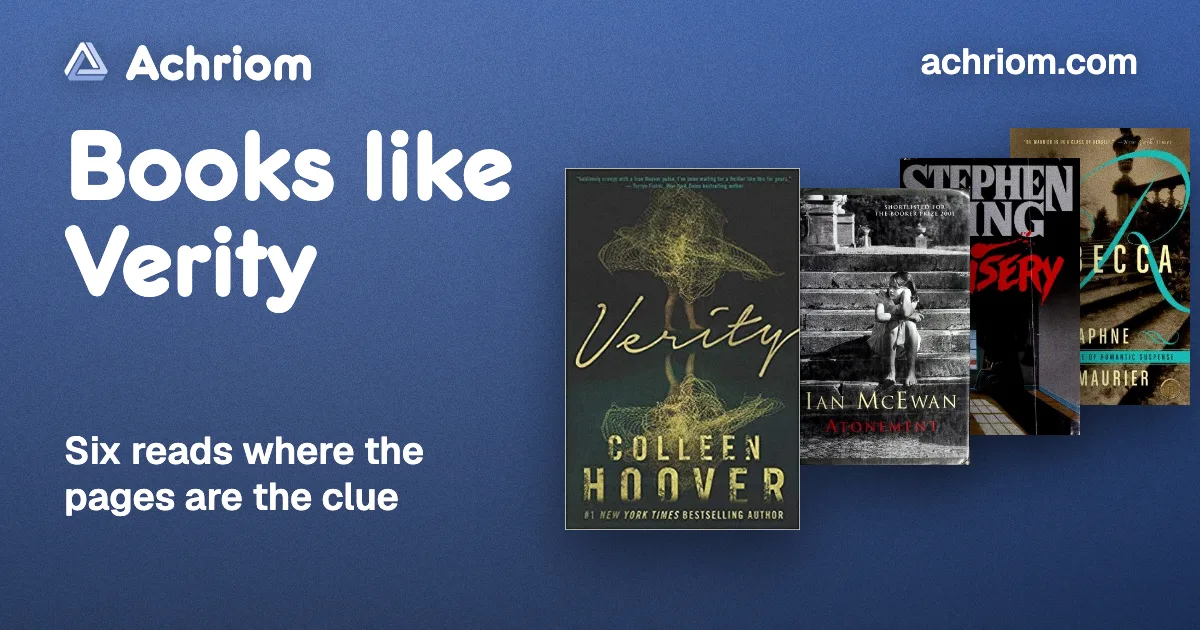
Six books like Colleen Hoover's Verity, picked for the manuscript at the center of it: a hidden confession, a writer's page you can't trust, and a house with a past.
Some links below are affiliate links. As an Amazon Associate, Achriom earns from qualifying purchases. For books we prefer Bookshop.org, which supports independent bookstores.
Start with Misery for a manuscript in the wrong hands, Atonement if it was the written account you couldn’t trust, and Rebecca for a woman living in a house that belongs to someone else’s memory. What these six share with Verity is a device, not a plot: a piece of writing that decides what you believe.
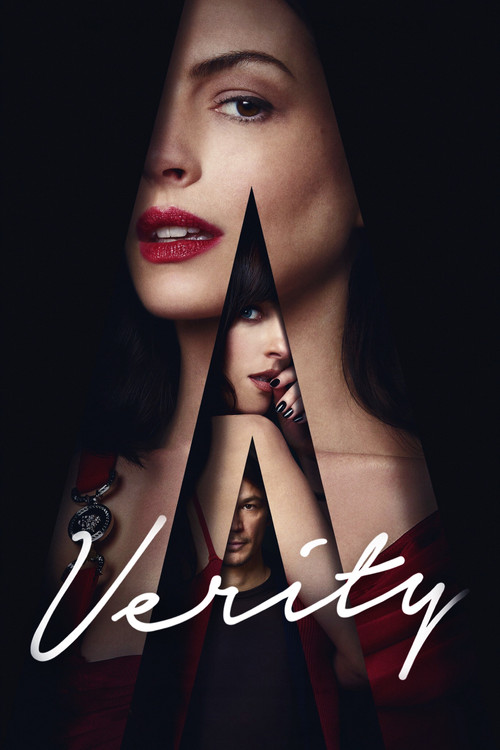
Michael Showalter’s film has been in theaters since October 2, with Anne Hathaway as Verity, Dakota Johnson as Lowen and Josh Hartnett as Jeremy. The screenplay is by Nick Antosca. If you came out of it wanting more, it helps to know what you liked. Lowen Ashleigh is hired to finish a bestselling author’s series, moves into the author’s house in Vermont, and finds an unpublished autobiography. Everything after depends on whether you believe those pages, and the film gives you good reasons to doubt them.
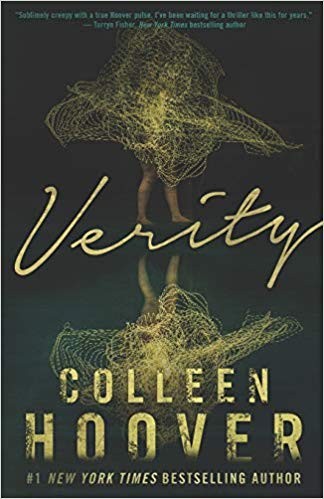
The film is based on Colleen Hoover’s novel of the same name, first self-published in December 2018 and listed on Achriom as the 2022 edition. The novel is on Achriom, next to the film.
The six picks below are chosen for how they use writing. Three put a manuscript at the center: read Misery, Atonement and The Turn of the Screw if the pages were what hooked you. Three are about a woman, a house and a version of events you are asked to take on trust.
When the Manuscript Is the Clue
In these three, a piece of writing carries the plot. The question is who wrote it, who is reading it, and what it was for.
Misery
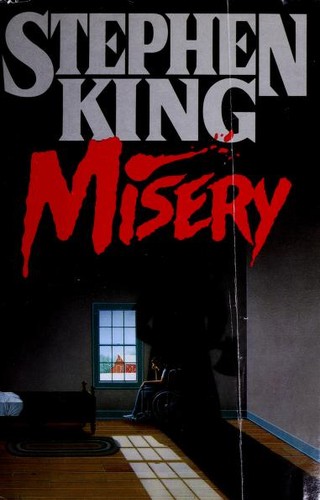
Stephen King’s novel opens with the author Paul Sheldon crashed in a Colorado snowstorm and rescued by Annie Wilkes, a former nurse who calls herself his number one fan. She won’t take him to a hospital. When she learns he has killed off Misery Chastain, the heroine of his bestselling series, she makes him burn the manuscript he just finished and write a new book that brings her back. It won the first Bram Stoker Award for Best Novel, in 1987.
This is the closest match on the list for the pages-in-the-wrong-hands feeling. Lowen finds Verity’s autobiography and reads it in secret. Paul writes Misery’s Return with Annie reading over his shoulder, and what he puts on the page is shaped by who is reading it. Both books are set in an isolated house, and in both a writer is being managed by someone with a stake in the ending. Read it for that, and for the fact that King’s villain is a reader.
Atonement
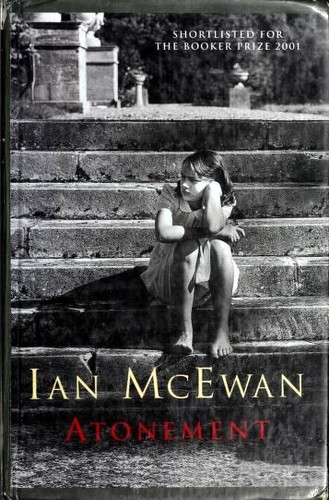
Ian McEwan’s novel begins in 1935 at the Tallis family’s country house, where thirteen-year-old Briony, an aspiring writer, misreads something she sees and acts on it. The book runs through the war and ends with a postscript set much later. It was shortlisted for the 2001 Booker Prize and won the 2002 National Book Critics Circle Award for fiction.
The book is presented as Briony’s own work, so the whole novel is a written account by someone with a reason to shade it. That is the same question Verity asks about its pages. McEwan’s version is quieter and more tragic than Hoover’s. Nobody is plotting in a kitchen. It is about what happens when the person who writes the story is also the person who caused it. If the “can I trust these pages” question was what you liked, this is where it gets most serious (on Achriom).
The Turn of the Screw
Henry James published this novella in 1898. On Christmas Eve, friends gather by a fire and one of them reads aloud a manuscript left by his late sister’s governess. In it she takes charge of two children at a country house called Bly and becomes convinced that the ghosts of two former servants are after them.
It is the oldest book here, and a novella rather than a full novel. What it shares with Verity is a woman alone in a house with a written account that cannot be checked. The story never settles whether the ghosts are real or the governess is imagining them. If you liked that Verity leaves you unsure of whom to believe, start here (Turn of the Screw on Achriom).
A House, a Woman, and a Version of Events
These three are less about pages and more about a voice you are asked to believe.
Rebecca
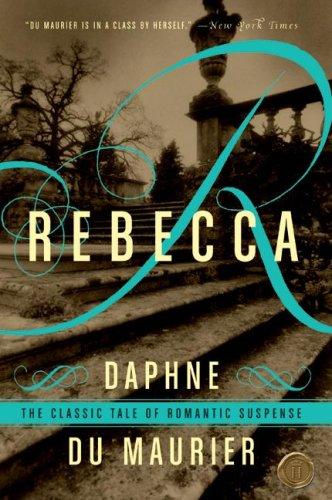
Daphne du Maurier’s 1938 novel follows a young woman, never named, who marries the wealthy widower Maxim de Winter and moves into Manderley, his Cornwall estate. The house is still dominated by his first wife, Rebecca, who died in a sailing accident, and the housekeeper, Mrs Danvers, makes sure the new wife feels it.
The line to Verity is the house. Lowen is a stranger living among another woman’s things, finishing her work and sleeping near her husband, and the house is full of another woman’s presence. Rebecca is the same arrangement a generation earlier and without the thriller pacing. Alfred Hitchcock’s 1940 film of it won the Academy Award for Best Picture, so you can pair the book with a second adaptation (Rebecca on Achriom).
The Silent Patient
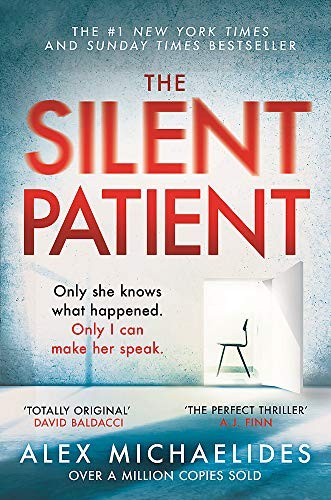
Alex Michaelides’s 2019 debut is narrated by Theo Faber, a psychotherapist who takes a job at a secure facility called the Grove to treat Alicia Berenson. Alicia hasn’t spoken since she killed her husband six years earlier. Her diary matters later in the story. It debuted at No. 1 on the New York Times Best Seller list.
It reads like a commercial thriller, which makes it the easiest on-ramp from Hoover: a central silence you want to break. The diary is the part that echoes Verity, a written account you read to understand a woman who won’t explain herself. Sony bought the film rights in July 2026, so it may be next in line for a screen version (on Achriom).
We Need to Talk About Kevin
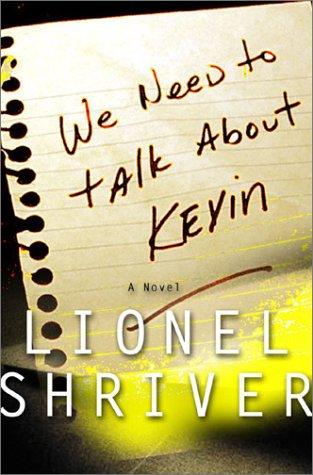
Lionel Shriver’s 2003 novel is told as a series of letters. Eva Khatchadourian writes to her husband, Franklin, about their marriage and their son Kevin, who at fifteen committed a school massacre. Eva has always felt unable to bond with Kevin and suspects he dislikes her, while Franklin dismisses her concerns. It won the 2005 Orange Prize, now the Women’s Prize for Fiction.
Of the six, this is the hardest to read and the one with the least in common with a beach thriller. The reason to include it is the mother’s voice. You get her version of a family, addressed to someone who can’t answer back, and you spend the book asking how much she is telling yourself as well. It deals directly with violence against children, so go in knowing that.
The Pick for Each Mood
For the closest feel: Misery. A writer, a manuscript and a reader who controls the ending.
For the best-written version of the question: Atonement. It earns its length.
For the easiest way in from Hoover: The Silent Patient. For something short and old: The Turn of the Screw.
For the house and the absent woman: Rebecca.
For the hardest read: We Need to Talk About Kevin.
If you want the same reading mood with more of the year’s unreliable voices, The Year of the Unreliable Narrator covers that ground. And if the film reminded you how many movies start as books, Movies You Love That Were Secretly Books First is a good next stop.
Log the Book and the Film Together
Log both in the same library. Achriom tracks books and films together, imports a Goodreads library so you don’t start from zero, and its librarian can answer questions about what you have logged. It is free, with 10 librarian messages a month.
If you’re coming from Goodreads, how to move your whole library to Achriom walks through the import, and the Goodreads alternatives comparison lays out the other options. Verity’s page is a good first entry.