What to Read After East of Eden (the Netflix Series and the Novel)
Six books for after East of Eden: two more Steinbeck novels, two about brothers and fathers, and two family sagas, for fans of the Netflix series and the novel.
Some links below are affiliate links. As an Amazon Associate, Achriom earns from qualifying purchases. For books we prefer Bookshop.org, which supports independent bookstores.
If East of Eden left you wanting more, start with Steinbeck’s The Grapes of Wrath, then follow whichever thread caught you: brothers and fathers in The Brothers Karamazov and Gilead, or a family followed across generations in One Hundred Years of Solitude and Pachinko. If you want a short Steinbeck first, Cannery Row takes an afternoon.
If you came from the Netflix series and haven’t read the novel, the section right below is for you.
The Series Is Not the Whole Novel

East of Eden came to Netflix on October 1, 2026, as a seven-episode series created by Zoe Kazan, with Florence Pugh as Cathy Ames. Per [Wikipedia](https://en.wikipedia.org/wiki/East_of_Eden_(2026_miniseries%29), it focuses on Cathy’s life. NPR’s review says it basically eliminates the Irish American family, the Hamiltons of the novel, and that Kate (Cathy’s name later in the book) narrates her own childhood where Steinbeck narrates it in the novel.
The novel is bigger and stranger. Steinbeck’s East of Eden came out in 1952, runs in four parts through the Salinas Valley from 1862 to 1918, and has Steinbeck himself turn up as a narrator. He called it his magnum opus. The 1955 film, directed by Elia Kazan (Zoe Kazan’s grandfather), covers only the fourth part. So you can watch the series and still not have read most of the book, and that is the gap this list starts from.
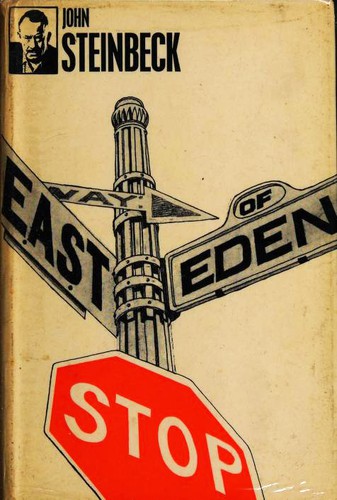
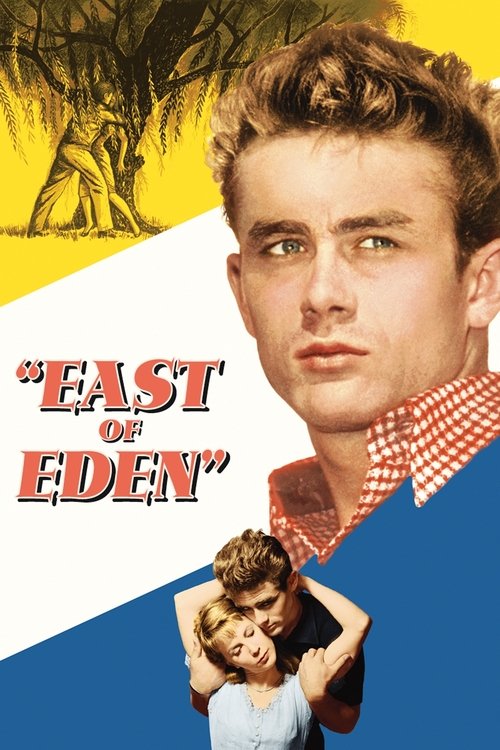
Four things carry over from the novel, and the books below share them.
Brothers who repeat an old story. Adam and Charles, then Cal and Aron, play out Cain and Abel again, and the characters know it.
A question about choice. The word timshel (“thou mayest”) is the book’s answer to whether you are born good or bad. The series uses the word too.
The land is a character. The Salinas Valley is described before anyone is introduced.
Long time. A family is followed until its habits become visible.
If you haven’t read the novel, read it first and then come back to this list.
More Steinbeck
Two books, one big and one small, so you can see the range of the man who wrote East of Eden.
The Grapes of Wrath
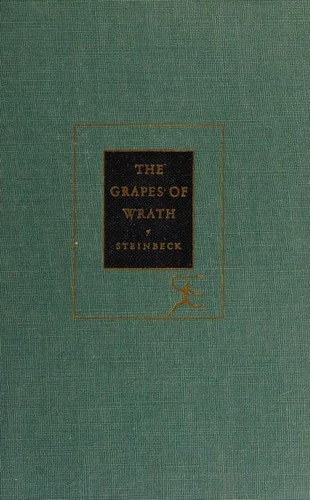
The Grapes of Wrath came out in 1939 and won the Pulitzer Prize for Fiction (listed under 1940). The Joad family leaves Oklahoma for California during the Dust Bowl, and Ma Joad, whose first name the book never gives, takes over after Pa is broken by losing the farm.
If you came to East of Eden for the way Steinbeck writes families, this is the other great example. The structure is worth knowing before you start: chapters about the Joads alternate with short interchapters about the wider country, including one about a land turtle crossing a dusty road. Steinbeck uses the same move in the opening pages of East of Eden, when he describes the valley before the people.
It runs 464 pages in its first edition.
Cannery Row
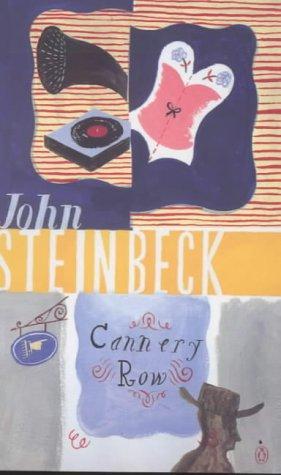
Cannery Row was published in 1945 and is set on a street of sardine canneries in Monterey, California. Doc, a marine biologist, is based on Steinbeck’s friend Ed Ricketts. Mack and a group of unemployed men decide to throw Doc a thank-you party, and it wrecks his lab and house. Critics were divided at the time, with some dismissing it as light whimsy and others finding it very funny.
It is the Steinbeck for when you want the same California at a smaller scale. Lee Chong, the grocer, draws on a real grocer named Won Yee. At 208 pages in hardback, it fits in an afternoon, and it shows the writer you’ve just spent a long novel with being funny.
Brothers and Fathers
If the part of East of Eden that stayed with you was Cal wanting his father’s approval, or the argument about whether we choose what we become, these two books go straight at it.
The Brothers Karamazov
The Brothers Karamazov was serialized from 1879 to 1880. A neglectful father, Fyodor Pavlovich, has three sons: Dmitri, an impulsive former officer who fights him over money and a woman; Ivan, an intellectual skeptic; and Alyosha, a monastery novice. The father is murdered, and Dmitri is arrested for the killing and for the theft of three thousand roubles. He is convicted and sentenced to twenty years of hard labour in Siberia, and the book becomes a trial and an argument about who is guilty of what.
The link to Steinbeck is the question. Ivan’s Grand Inquisitor, a prose poem in which a cardinal accuses a returned Christ of burdening humanity with free will, is the passage to start with. East of Eden asks about free will too, and answers with timshel. Reading Dostoevsky’s version of the question after Steinbeck’s makes both sharper. The Inquisitor chapter is the one to read if you read nothing else.
Gilead
Gilead was published in 2004 and won the Pulitzer Prize for Fiction in 2005. John Ames, a 76-year-old minister in a small Iowa town in 1956, writes a long letter to his seven-year-old son, with his heart failing. Jack Boughton, the prodigal son of his old friend Boughton, comes back to town. Ames is wary of him, and in the end offers him a blessing.
It belongs here for what it shares with East of Eden in miniature: fathers and sons, a prodigal who returns, a blessing that has to be given or withheld. Cal spends East of Eden wanting his father’s approval, and Ames’s blessing of Jack is the same gesture seen from the giving side. It is quiet where Steinbeck is loud, and one small Iowa town stands in for the Salinas Valley.
Families Across Generations
East of Eden is a saga: it follows a family until the patterns show. These two do the same, on a larger map.
One Hundred Years of Solitude
One Hundred Years of Solitude was first published in May 1967 in Buenos Aires. It follows seven generations of the Buendía family in the town of Macondo, which the patriarch José Arcadio Buendía founds. The family keeps reusing names: according to Wikipedia, “Aureliano” appears 22 times in the family tree and “José Arcadio” four.
Steinbeck’s Trasks do a smaller version of this. Adam and Charles, then Cal and Aron, keep playing out the same story, and the book knows it. García Márquez turns that idea up to its limit, where whole generations become the same person over again and the town itself ends.
Pachinko
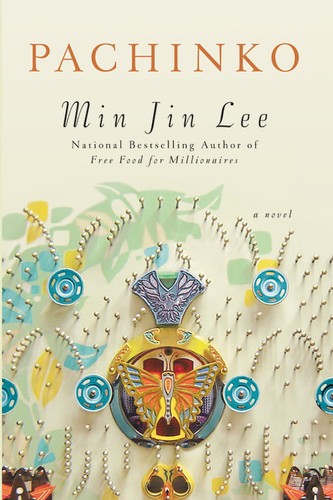
Pachinko by Min Jin Lee came out in 2017 and was a finalist for the National Book Award for Fiction. It follows a Korean family across four generations, from 1910 to 1989, beginning in the fishing village of Yeongdo near Busan and moving to Osaka. Sunja is at the center of the family it follows.
This one shares the shape of East of Eden: a family saga with a strong sense of place, and a long time span. Apple TV+ adapted it as a series in 2022, which gives you something to watch alongside.
Keep the Series and the Novel Together
This list crosses formats: a Netflix series, a 1955 film, a novel from 1952 and six books that answer it. Achriom tracks books, films, shows, albums, anime, podcasts and games, so the series, the film and the Steinbeck can sit side by side. It’s free to start with no card, and you can import from Goodreads, Letterboxd, Trakt and AniList.
If you’re choosing a place for the reading side of this, best book tracking apps compares the options honestly. If you came for the series first, what to read after House of the Dragon is another show-to-shelf list, and movies you love that were secretly books first covers the other direction.
Log the series, the film and the novel together. Achriom keeps your books next to your films, shows and albums. Free to start, no card.
Start free →How These Compare
| Book | Year | Best if you liked | Length note |
|---|---|---|---|
| The Grapes of Wrath | 1939 | Steinbeck’s families and the land | 464 pages, first edition |
| Cannery Row | 1945 | Steinbeck at his lightest | 208 pages in hardback |
| The Brothers Karamazov | 1880 | The free-will question and the brothers | Dmitri’s trial for his father’s murder |
| Gilead | 2004 | Fathers, sons and a blessing | A dying minister’s letter to his son |
| One Hundred Years of Solitude | 1967 | The repeating pattern | Seven generations |
| Pachinko | 2017 | The saga and the sense of place | Four generations |
Which to Read First
For the next Steinbeck: The Grapes of Wrath. Steinbeck’s scale again, with a different family and a different California.
For a Steinbeck in one afternoon: Cannery Row.
For the argument about choice: The Brothers Karamazov, starting with the chapter on the Grand Inquisitor.
For fathers, sons and a blessing: Gilead.
For the saga on a bigger map: One Hundred Years of Solitude or Pachinko. Pick Pachinko if you want something you can also watch on Apple TV+.
The Honest Answer
The series and the novel are not the same story. The series puts Cathy in the middle, and the book spreads its attention across two families, a valley and a good deal of Steinbeck himself. That is the reason to read the novel if you haven’t, and the reason this list leans on books that do what the novel does: follow a family long enough to see the pattern, then ask whether anyone can step out of it.
You don’t need all six. Read The Grapes of Wrath for the author, The Brothers Karamazov or Gilead for the question, and One Hundred Years of Solitude or Pachinko for the sweep.
Common Questions
Is the Netflix East of Eden the whole novel?
Not entirely. The Netflix series runs seven episodes and, per Wikipedia, focuses on the life of Cathy Ames. NPR’s review says it basically eliminates the Irish American family, which is the Hamiltons in the novel. The 1955 film covers only the fourth and final part of the book, so the novel is still the fullest version of the story.
What should I read after East of Eden?
Start with Steinbeck’s The Grapes of Wrath, then read The Brothers Karamazov for the brothers and the free-will question, or One Hundred Years of Solitude for a family followed across generations. Cannery Row is the short Steinbeck to read in an afternoon.
Is East of Eden a retelling of Cain and Abel?
Yes, openly. Adam Trask and his brother Charles, then Adam’s twin sons Cal and Aron, repeat the story of Cain and Abel. The novel’s answer is timshel, a word Lee explains as meaning “thou mayest”: you are neither forced into goodness nor doomed to sin.
What does timshel mean?
In the novel, the servant Lee explains timshel as the Hebrew word for “thou mayest”, meaning people have a choice. Wikipedia notes that no such Hebrew word exists as Steinbeck uses it, and that the verse it draws on, Genesis 4:7, has a similar form meaning roughly “you shall rule”.
Which Steinbeck novel should I read after East of Eden?
The Grapes of Wrath, if you want the big one: a family, the land and California, in a book that won the Pulitzer Prize. Cannery Row, if you want a short, funny novel set on the Monterey waterfront.