I Asked My Librarian to Plan a Year of Reading From My Shelf
Your AI librarian can plan a year of reading from books you already own. The real transcript: one prompt, a month-by-month plan, and the thread it found across the shelf.

Some links below are affiliate links. As an Amazon Associate, Achriom earns from qualifying purchases. For books we prefer Bookshop.org, which supports independent bookstores.
Yes, your AI librarian can plan a full year of reading from books you already own, with no new purchases. You connect Achriom inside ChatGPT, point it at your library, and it returns a month-by-month sequence built around length, mood, and the threads running through your shelf. Below is the real transcript: the single prompt I gave, the plan that came back, and why it ordered the books the way it did.
I own about forty unread books. Choosing one on a given Tuesday night is harder than it should be, so I handed the whole decision to my librarian and asked it to think in years instead of evenings.
The one prompt that starts it
Connect Achriom to ChatGPT (Settings, then Connectors), and your whole library becomes something the librarian can read and reason about. After that, the prompt is short:
Plan me a year of reading using only books already in my library. Sequence them by length and density, work around the seasons, and tell me about any threads you notice across the choices.
That is the entire protocol. No reading list to paste, no genre filters to set. The librarian already has the shelf, so it works from what is there rather than what a generic list thinks I should want.
What a plan from your own shelf has to get right
A year of reading is easy to generate and hard to follow. A few things separate a plan you keep from one you abandon by February:
- It pulls only from what you own. The point is to read the shelf, not to grow it. Every title comes from the library.
- It paces by length and density. A 700-page novel stacked on a dense one is how a plan stalls. Heavy and light should trade off.
- It finds the threads. Good sequencing puts books in conversation, so finishing one sets up the next instead of resetting you.
- It leaves room. Twelve months, eight anchored books. Space for a library hold that finally arrives, or a month when you read nothing.
- It re-runs. When life rearranges the year, you ask again and the plan adjusts. This is a starting order, not a contract.
The plan it gave me
The librarian came back with twelve months grouped into four movements, and a thread I had not named out loud: almost everything I own circles memory and who gets to tell the story. Here is how it sequenced the year, with its reasoning kept mostly intact.
Winter: The Remains of the Day and Gilead

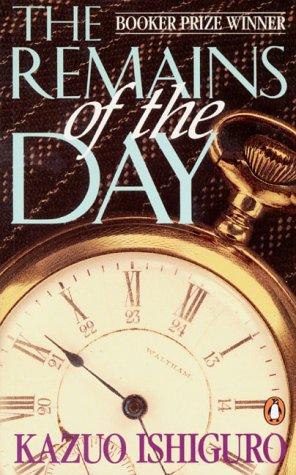
Start slow and interior. Both books are narrated by old men looking back, one an English butler, one an Iowa preacher, and both turn on what goes unsaid. Stevens in The Remains of the Day (Kazuo Ishiguro, ~260 pages) reveals more than he understands he is revealing. Gilead (Marilynne Robinson, ~250 pages) is a dying father’s letter to a young son, quiet and luminous. Two short, careful books are a gentle way to build a reading habit in the dark months.
Spring: Cloud Atlas and The Brief Wondrous Life of Oscar Wao
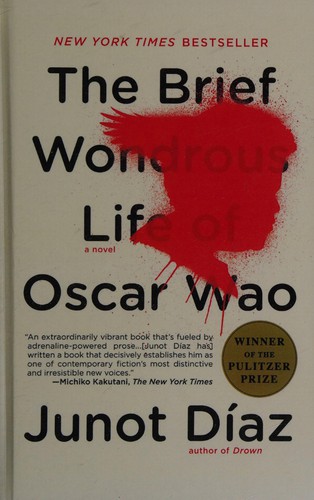

After two hushed narrators, two loud structures. Cloud Atlas (David Mitchell, ~510 pages) nests six stories across centuries and voices, the longest book of the year placed where energy returns. The Brief Wondrous Life of Oscar Wao (Junot Díaz, ~340 pages) follows it with footnotes, slang, and a family curse told across generations. Both books are about how stories survive being passed down, which keeps the thread running while the pace picks up.
Summer: Pachinko and Station Eleven
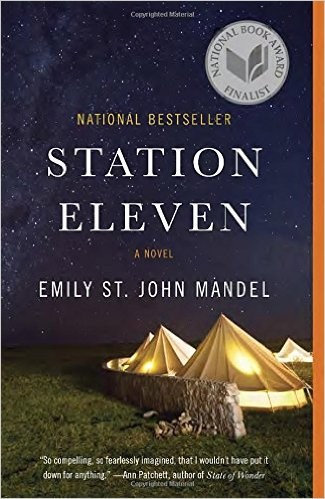

Long and propulsive, made for travel and porches. Pachinko (Min Jin Lee, ~490 pages) carries four generations of a Korean family through twentieth-century Japan, the kind of book you fall into on a long afternoon. Station Eleven (Emily St. John Mandel, ~330 pages) moves between a collapsed world and the one before it, asking what art is worth keeping. Summer reading that still earns its place on the shelf.
Autumn: Never Let Me Go and Beloved
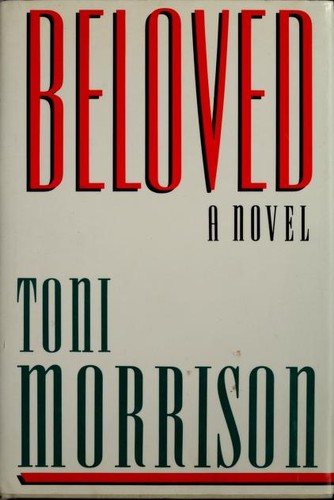

Close the year on memory and grief, the thread pulled tight. Never Let Me Go (Kazuo Ishiguro, ~290 pages) returns to the writer who opened the year, now with a narrator piecing together a childhood she only half wants to face. Beloved (Toni Morrison, ~320 pages) ends things where the thread has been heading all along: a past that refuses to stay buried. A heavy finish, but the year has been building toward it.
The year at a glance
| Months | Book | Why it lands here | Length |
|---|---|---|---|
| Jan / Feb | The Remains of the Day | Short, interior opening that sets the memory thread | ~260 pages |
| Mar | Gilead | Another quiet looking-back voice before the pace lifts | ~250 pages |
| Apr / May | Cloud Atlas | The longest book, placed where reading energy returns | ~510 pages |
| Jun | The Brief Wondrous Life of Oscar Wao | Loud, fast, still about stories passed down | ~340 pages |
| Jul / Aug | Pachinko | A long family saga for travel and slow afternoons | ~490 pages |
| Sep | Station Eleven | Propulsive but reflective, easing out of summer | ~330 pages |
| Oct / Nov | Never Let Me Go | Returns to the opening writer, deeper into memory | ~290 pages |
| Dec | Beloved | The heaviest book, where the thread has led | ~320 pages |
Four months stay open on purpose. They are for the holds that arrive late, the book a friend presses on you, or the weeks you read nothing and that is fine.
How to run this for your own shelf
The same prompt works differently depending on the reader you are:
If you own more than you read. Ask the librarian to plan only from unread titles and to favor the shorter ones early. Momentum from two quick wins in January does more for a reading year than ambition does.
If you read by genre. Tell it to alternate, so a heavy literary novel is followed by something propulsive. The librarian can pace mood as easily as length once you name the rhythm you want.
If you reread. Ask it to fold in two or three books you have loved before, spaced between new ones. It already knows your ratings, so it can pick rereads that rhyme with what comes next.
If you share a shelf. Have it build a plan you and a partner can read in parallel, choosing books that reward talking about them. The thread it finds becomes a conversation rather than a private one.
The honest answer
The librarian did not recommend a single book I did not already own. It read forty unread spines, named the one thread connecting most of them, and put them in an order that builds from quiet to heavy across the seasons. The work was never acquisition. It was sequencing, and that is the part a shelf cannot do for itself.
You can re-run the prompt any month the year drifts, and it adjusts around what you have actually finished. For more on how the librarian reads a whole collection, see 30 questions for your AI librarian. To try it on your own shelf, open Achriom.
Common questions
Can an AI really plan a reading year from books I already own?
Yes. Once your library is connected, the librarian works only from titles in it. You can tell it to use unread books, rereads, or both, and it sequences them by length, density, and the threads it finds across your taste. Nothing in the plan asks you to buy more.
Do I have to list my books first, or does it read my library?
It reads your library. After you connect Achriom inside ChatGPT, the librarian can see every book you have added, with your ratings and notes, so there is no list to paste. The shorter your prompt, the more it leans on what it already knows about your shelf.
What happens if I fall behind the schedule?
Nothing breaks. The plan is a starting order, not a deadline. When a month gets away from you, ask the librarian to re-plan from where you actually are, and it reshuffles the remaining books around the time you have left.
Can it plan around mood and season, not just length?
Yes. You can ask for lighter books in busy months, heavier ones over a long break, or a specific mood for a stretch of the year. The librarian paces feeling as readily as page count once you tell it the rhythm you want.
Does this work for more than books?
It does. The same library holds your movies, albums, TV, and anime, so you can ask for a year of films, a season of albums, or a mixed plan that moves across formats. The librarian reasons over all of it together.
Is my library private when the librarian reads it?
Yes. Achriom is private by default, with no public profile, followers, or shared shelf. The librarian reads your collection to plan and reason, and that library stays yours.