What to Read After Annihilation: Area X, Books Like It, and the Films
Finished Annihilation and want more? The honest guide to the Southern Reach reading order, the best books like it from Susanna Clarke, Han Kang, and Silvia Moreno-Garcia, and the
Some links below are affiliate links. As an Amazon Associate, Achriom earns from qualifying purchases. For books we prefer Bookshop.org, which supports independent bookstores.
The short answer: read the full Southern Reach trilogy if the film’s mystery hooked you (the book is stranger than the movie), Piranesi if you want another enclosed world with its own logic, Mexican Gothic if the body horror got under your skin, and watch Tarkovsky’s Stalker to see the template the whole genre is built on.
Annihilation has one of the most loyal afterlives in modern science fiction. People finish the Garland film or the VanderMeer novel and go looking for the same specific feeling: a landscape that seems to be thinking, a border past which the rules quietly stop applying, a narrator whose account you trust less with every page. The good news is that this is a whole tradition, and most of it never trended. This guide covers the books that continue the story, the books that share its nervous system, and the films on either side of it.
If you only saw the film: are the books worth it?
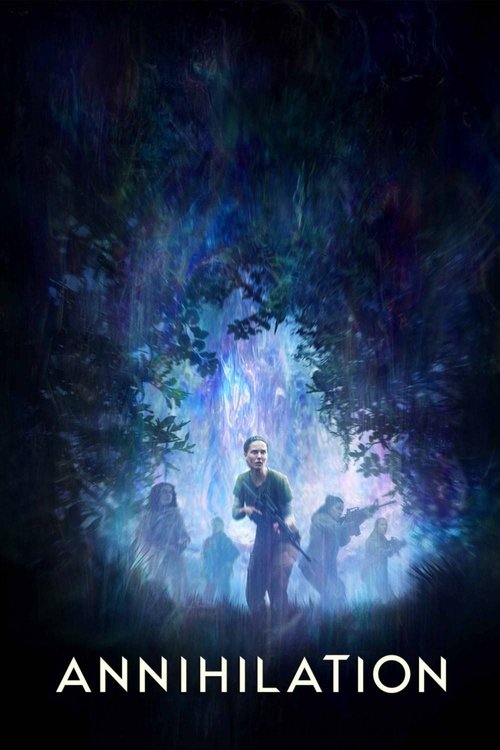
Yes, and knowing the film spoils almost nothing. Garland adapted the first novel loosely, working from his memory of reading it, and the differences start on page one. There is no Shimmer in the book; the border is invisible and you cross it under hypnosis. The characters have no names, only functions: the biologist, the psychologist, the surveyor, the anthropologist. The lighthouse is there, but the book’s true center is a structure the film never touches, a spiral tunnel into the earth that the biologist can only think of as a tower, with a sentence growing down its inner wall in living fungus.
The novel is also a different kind of scary. The film goes for awe and body horror; the book goes for contamination of the self. The biologist narrates in field-journal prose that starts clinical and slowly stops being trustworthy, and the question of what is happening to Area X becomes inseparable from the question of what is happening to her. It is short, around 200 pages, and most people read it in two sittings.
What made Annihilation worth following
Every recommendation below extends at least one of three threads.
Uncanny ecology. Nature in Annihilation is neither backdrop nor victim. It is an agent, maybe an intelligence, running a transformation whose purpose nobody inside the story can read. Moss, spores, and estuaries carry more menace than any monster.
The enclosed space with its own logic. Area X is a bounded world where cause and effect answer to different laws, and the story’s engine is a person mapping those laws from inside. The zone, the house, the room: the tradition keeps rebuilding this shape.
The narrator you cannot trust. The biologist is hypnotized, exposed, and changing, and her journal is our only evidence. The books below keep handing you narrators in the same condition. We wrote about why this device took over recent fiction in the year of the unreliable narrator.
Staying in Area X: the Southern Reach reading order
Read in publication order: Annihilation, Authority, Acceptance, then Absolution.
Authority: Jeff VanderMeer
The trilogy’s big swerve, and the book that filters out tourists. Instead of a twelfth expedition there is a desk: John Rodriguez, nicknamed Control, arrives to run the Southern Reach, the decaying agency that studies Area X, and finds an institution that has been staring at the anomaly so long it has started to rot in sympathy. The horror is bureaucratic, then it is not. If you have ever enjoyed fiction about sinister workplaces (we covered that vein in what to read after Severance), Authority is that mode played completely straight, with something breathing behind it.
Acceptance: Jeff VanderMeer
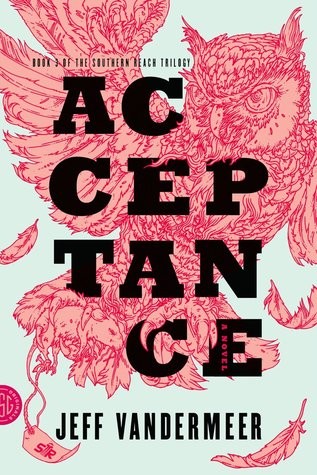
The payoff. Acceptance braids several timelines, including the lighthouse keeper’s life before the border came down, and answers the questions the first two books trained you to stop expecting answers to, while opening larger ones. It retroactively deepens Annihilation; the biologist’s story reads differently once you have seen it from the other side of the border.
Absolution: Jeff VanderMeer
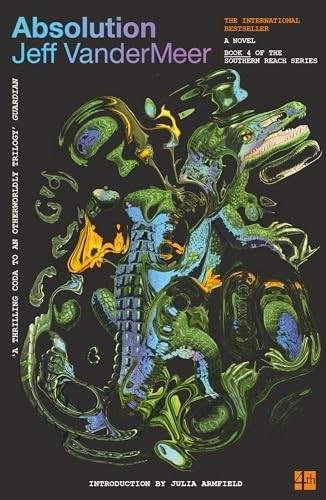
The fourth Southern Reach book arrived in 2024, a decade after the trilogy, and it is a gift specifically for people who finished Acceptance wanting more. It reaches back to the doomed biologists on the Forgotten Coast twenty years before Area X, and to the first expedition itself. Read it last. It assumes the trilogy the way a coda assumes the symphony.
Books like Annihilation: the broader tradition
Piranesi: Susanna Clarke
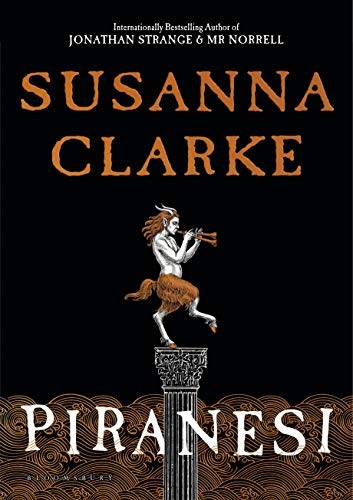
The enclosed uncanny space, rendered with wonder instead of dread. Piranesi lives in the House, an infinite sequence of marble halls where clouds fill the upper floors and tides sweep the lower ones, and he documents it in journals with the same devotion the biologist gives her transect. The journals are also the evidence of what has been done to his memory. It is the closest any novel comes to Annihilation’s structure, a mind and a world writing each other, and it won the Women’s Prize in 2021. Where VanderMeer’s transformation terrifies, Clarke’s consoles, and reading them together is the best argument for this whole subgenre.
The Road: Cormac McCarthy
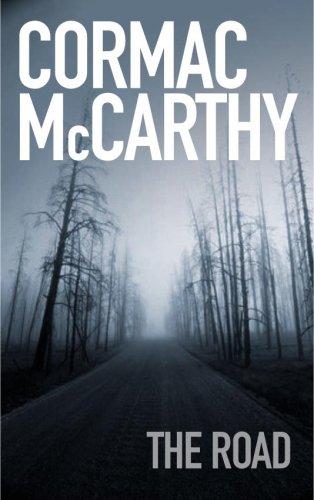
The inverse image. Area X is nature ascendant, erasing the human; The Road is nature extinguished, and the landscape is just as much an antagonist. A father and son walk through an ash-gray America where nothing grows, and the ecology’s absence exerts the same pressure Area X’s abundance does. McCarthy won the Pulitzer for it in 2007. Read it when you want the dread without the mystery, and the ending will still ambush you.
Mexican Gothic: Silvia Moreno-Garcia

The biological horror of a place, in gothic dress. In 1950s Mexico, Noemí Taboada visits her cousin at High Place, an English family’s moldering mountain mansion, and the house turns out to be less a building than an organism, with a fungal network in its walls and a family that has made an arrangement with it. It shares Annihilation’s core move: the moment you realize the setting has a metabolism. Faster and more fun than anything else on this list, and the horror is real.
The Vegetarian: Han Kang

The body as the territory being colonized. Yeong-hye stops eating meat after a dream, and her small refusal escalates until she is trying to leave the human category altogether, to live as a plant does. Told by three people around her rather than by her, so the center of the novel stays as unreadable as Area X. It won the International Booker in 2016, and Han Kang the Nobel in 2024. This is the pick if the film’s final act, transformation as something between horror and release, is the part you keep thinking about.
Roadside Picnic: Arkady and Boris Strugatsky
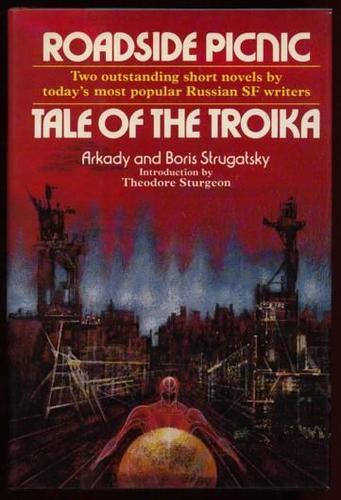
The 1972 Soviet novel that built the zone. Aliens visited Earth, stayed briefly, and left, and the areas they touched became Zones full of lethal, inexplicable artifacts. The title is the theory: the visit meant nothing, humanity is the ants picking through the trash after a roadside picnic. Stalkers sneak in to scavenge. It is short, bitter, funny, and the direct ancestor of Area X, and it pairs with the film below.
The watchlist: Stalker, Under the Skin, Ex Machina

Stalker: Andrei Tarkovsky
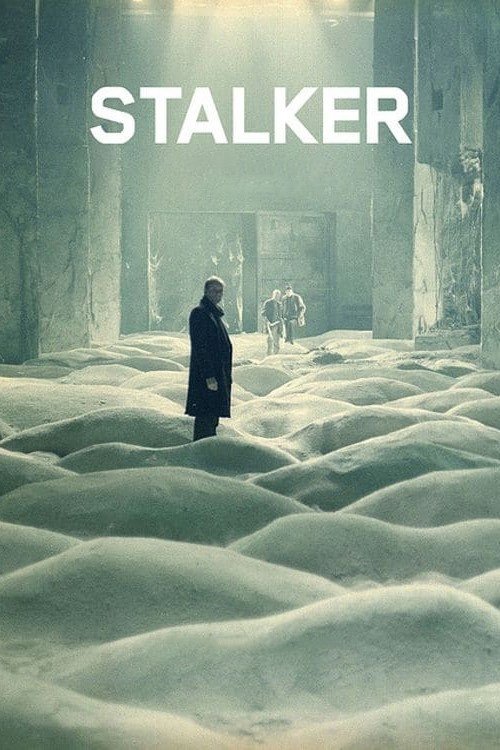
If you only take one recommendation from this page, this is it. Tarkovsky’s 1979 film adapts Roadside Picnic into something slower and stranger: a guide leads a writer and a scientist into the Zone, toward a room said to grant your deepest wish, through terrain filmed so patiently that damp grass and standing water become the most menacing images in cinema. Nothing attacks anyone. The Zone’s hostility is entirely a matter of attention, which is exactly the lesson Annihilation learned. Expect long takes and give it your patience; it is the template.
Under the Skin: Jonathan Glazer
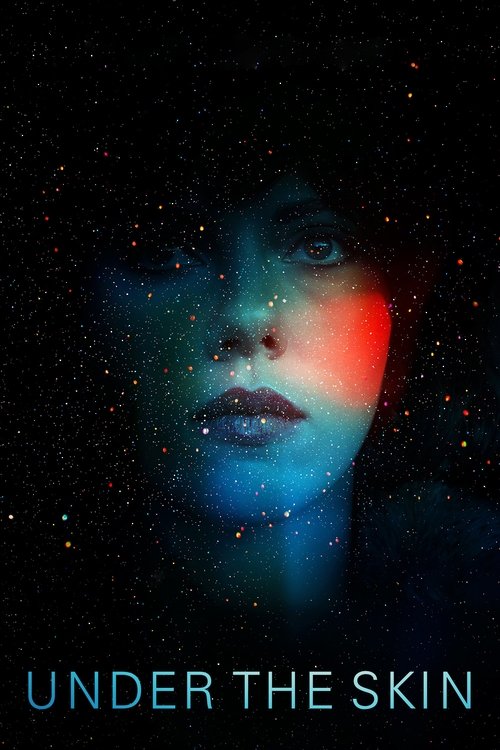
The uncanny gaze pointed the other way. Glazer’s 2013 film, loosely from Michel Faber’s novel, follows an alien in Scarlett Johansson’s shape driving through Glasgow, studying and harvesting men, many of them non-actors filmed unaware. Here the hostile intelligence surveying an ecosystem is the protagonist, and the ecosystem is us. It shares Annihilation’s confidence that you do not need exposition, and its final movement in the forest lands very close to VanderMeer’s territory.
Ex Machina: Alex Garland
Garland’s other enclosed zone. A programmer spends a week at a hidden estate testing Ava, an AI whose interiority he cannot verify, inside a house whose rules belong to someone else. It swaps ecology for intelligence but keeps the geometry: a bounded space, an entity studied through glass, an observer who does not realize the study runs both directions. Watching it after Annihilation makes it plain how much both films are the same experiment with different organisms.
One shelf for the whole rabbit hole
This particular obsession refuses to stay in one format. Within a month you can be four books into the Southern Reach, watching a 1979 Soviet film with subtitles, reading a Booker winner in translation, and arguing with a friend about whether Lena is still Lena. Most tracking apps make you scatter that across a book app and a film app that have never heard of each other, so the thread connecting Piranesi to Stalker lives nowhere.
Achriom keeps it on one shelf. Log the novels, the films, and whatever the soundtrack sends you toward, and the AI librarian reasons across all of it: it can tell you where you are in the Southern Reach order, notice that your recent shelf keeps circling contaminated landscapes, and pull the next book from that pattern instead of from a bestseller list. Everything exports back out whenever you want.
You are already crossing formats: four novels, three films, a Soviet classic, and a theory about an ending. Achriom is one library for your shows, films, books, albums, and anime, with an AI librarian that connects them and full export back out any time. Free to start, no card.
Build your Area X shelf →Ecology, enclosure, narrator: how they compare
| Work | Uncanny ecology | Enclosed space with its own logic | Can you trust the narrator? |
|---|---|---|---|
| Southern Reach series | The central subject | Area X and the agency watching it | No, and that is the point |
| Piranesi | Tides and statues, benign | The House, infinite and lawful | He trusts himself; you should not |
| The Road | Ecology by its absence | An open road that feels sealed | Yes, which makes it worse |
| Mexican Gothic | Fungal, in the walls | High Place, a house with a metabolism | Yes, but the house lies to her |
| The Vegetarian | The body as habitat | A family closing around one woman | Never hear from her directly |
| Roadside Picnic | Alien litter, lethal | The Zone, original recipe | A scavenger with motives |
| Stalker (1979) | Grass and water as menace | The Zone, filmed as faith | The guide believes; the film withholds |
| Under the Skin (2013) | Humans as the ecosystem | A van, a bothy, the sea | The narrator is the predator |
| Ex Machina (2014) | Intelligence instead of nature | One glass house, one week | Wrong observer entirely |
Which should you pick up first
- You saw the film and want the source: Annihilation the novel, then straight into Authority.
- You finished the trilogy years ago: Absolution, the 2024 return to Area X.
- You want the enclosed world without the dread: Piranesi.
- You want the biological horror turned up: Mexican Gothic, then The Vegetarian.
- You want landscape as pure antagonist: The Road.
- You want the roots of the whole genre: Roadside Picnic, with Stalker as its companion film.
- You want more Garland: Ex Machina, then Under the Skin for where that sensibility goes next.
The honest answer
Most people should take the short path: read Annihilation itself if you only know the film, push through Authority’s slow burn, and let Acceptance close the loop. That trilogy is the rare case where the follow-ups deepen the original instead of diluting it. From the broader tradition, pick by the thread that hooked you: Piranesi for the space, Mexican Gothic for the biology, The Road for the landscape, The Vegetarian for the body. And make an evening for Stalker before you finish the list. Every zone in this genre, Area X included, is walking in its footprints.
Common questions
Is Annihilation based on a book?
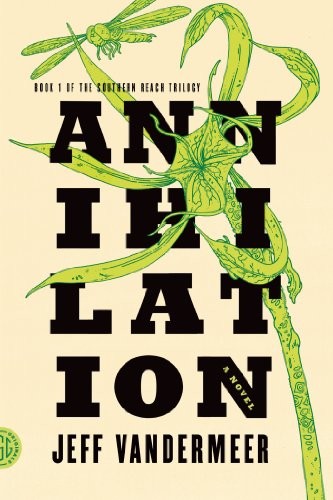
Yes, Jeff VanderMeer’s 2014 novel, the first of the Southern Reach series. Garland adapted it loosely, famously working from his memory of one read, so the film keeps the premise and the mood while changing the details and the ending almost entirely.
What happened at the end of the movie?
Lena discovers the returned Kane is a duplicate, confronts a double of herself grown from her blood in the lighthouse, and destroys it with a phosphorus grenade, collapsing the Shimmer. The closing shot of both survivors’ shimmering eyes leaves the real question open: what came back may no longer be what went in. The film treats transformation, rather than invasion, as its true subject.
How different is the film from the book?
Substantially. The book has no Shimmer and no named characters, its central image is a living tunnel with words of fungus growing down the wall, and its ending opens outward instead of resolving. They are best treated as two works sharing a premise, and knowing one barely spoils the other.
What order should I read the Southern Reach books in?
Publication order: Annihilation, Authority, Acceptance (all 2014), then Absolution (2024). Absolution is set earlier but written last, and it assumes you know the trilogy, so save it for the end.
Is Authority a slog?
It is slower and indoors by design, trading the expedition for the failing agency behind it. Readers who accept the shift tend to rank it higher on reread, and Acceptance pays off both books together. If you strictly want another expedition journal, skip ahead knowing you are leaving some of the architecture behind.
Do I need to watch Stalker before or after?
After works best. Once you know Area X, Tarkovsky’s Zone plays like the source code: a bounded stretch of overgrown land whose danger is never shown, only believed. It asks for patience with long takes, and it repays that patience more than anything else on this list.