What to Read After Cape Fear (Apple TV+, 2026)
Cape Fear started as a 1957 paperback. The reading list after the finale: John D. MacDonald's The Executioners, Patricia Highsmith, Tana French, and William Landay, plus the two
Some links below are affiliate links. As an Amazon Associate, Achriom earns from qualifying purchases. For books we prefer Bookshop.org, which supports independent bookstores.
The 2026 Cape Fear on Apple TV+ began life as a paperback. The direct move after the finale is to read the source: The Executioners by John D. MacDonald, the 1957 novel behind the 1962 film, the 1991 Scorsese remake, and now the series. After that, three books carry the same charge from different angles: The Talented Mr. Ripley by Patricia Highsmith, In the Woods by Tana French, and Defending Jacob by William Landay. Both earlier films belong on the watchlist too, and the Scorsese version is essential.
This is the rare franchise where reading after watching actually changes what you saw. Each adaptation quietly rewrote who the Bowdens are and what they did, and the novel is the baseline that makes those rewrites visible.
Below: what the source novel is actually like, how the two films diverge from it, and where to go when you have finished all of it.
What Makes a Book Feel Like Cape Fear
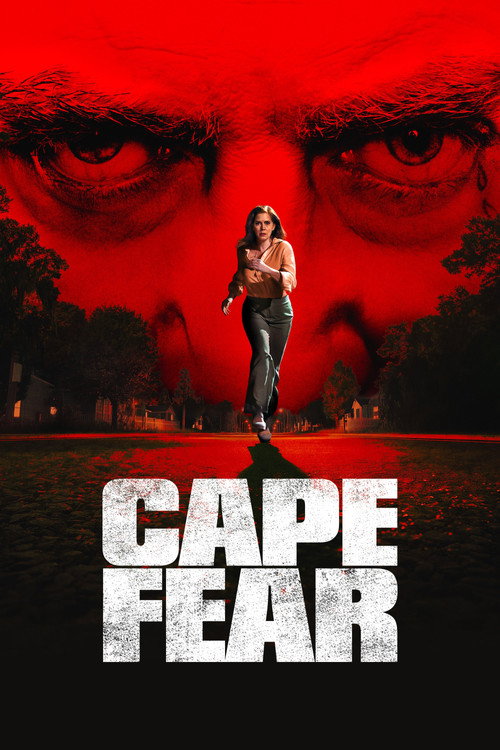
The series, created by Nick Antosca with Javier Bardem as Max Cady and Amy Adams as Anna Bowden, runs on a specific engine. A violent man is released from prison, blames a lawyer for the years he lost, and begins dismantling her family while staying carefully inside the law. The police can do nothing. The courts can do nothing. The horror is procedural: every institution the Bowdens trust works exactly as designed, and none of it helps.
The books that match it share a few load-bearing parts.
The threat is patient. Cady waited seventeen years. The books on this list are about menace that unfolds over months and years, and about what that duration does to the people living inside it.
The law is the battlefield. The antagonist is dangerous precisely because he understands the rules. Restraining orders, evidence standards, and burdens of proof become weapons pointed the wrong way.
The family is not clean. MacDonald’s Bowdens were innocent. Every adaptation since has made them less so, and the 2026 series belongs to that guiltier tradition. The best read-alikes put a secret inside the house before the danger arrives outside it.
The dread is intimate. These are not serial-killer procedurals. The threat knows the family. He has thought about them longer and harder than they have ever thought about anything.
The Executioners: John D. MacDonald
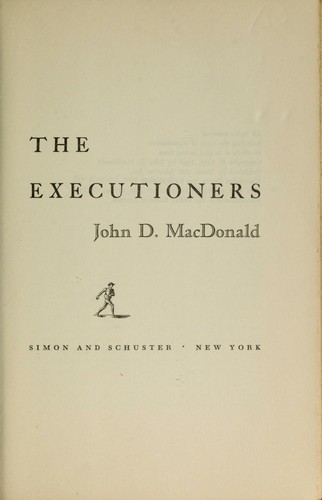
Start here. MacDonald was one of the great American paperback writers, best known for the Travis McGee series, and The Executioners is his suspense machine running at full efficiency. Sam Bowden is a lawyer whose testimony as a young Army lieutenant sent Max Cady to prison for a brutal assault. Fourteen years later Cady is out, and he begins circling the Bowden family: the dog first, then the children, then everything.
The novel will surprise viewers of any screen version. MacDonald’s Bowden is a witness, not Cady’s lawyer, and the family carries no hidden guilt. The book is about an ordinary, decent man discovering that decency has no purchase on someone like Cady, and that the law he serves was built to restrain people like himself rather than people like his enemy. The question the novel asks is how far a law-abiding man will go when the law stops working, and MacDonald answers it without flinching.
It is also fast. MacDonald wrote lean commercial fiction, and the book moves at roughly twice the speed of any adaptation. You can read it in two evenings, and the ending differs from every filmed version.
Cape Fear (1962): The Mitchum Version
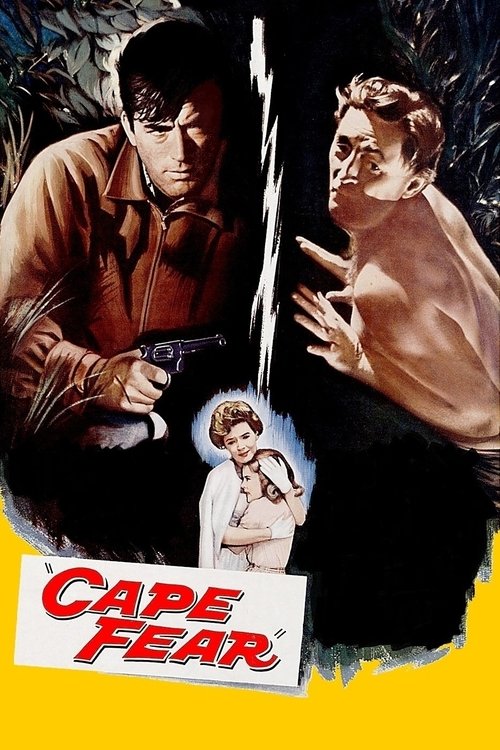
The first adaptation, directed by J. Lee Thompson, stars Gregory Peck as Sam Bowden and Robert Mitchum as Max Cady, with a Bernard Herrmann score that later versions kept because nobody could improve on it.
Mitchum is the reason to watch. His Cady barely raises his voice. He leans on cars, smiles at police officers, and radiates the calm of a man who has done the legal arithmetic and knows he cannot be touched. Every later Cady, including Bardem’s, is working from the template Mitchum set. The film had to soften the novel’s crimes to satisfy the production code of its era, which mutes some of the menace on paper, but Mitchum restores all of it through sheer presence.
Watched after the 2026 series, the film plays like the franchise’s clean-hands version: the last time the Bowdens got to be simply innocent.
Cape Fear (1991): The Scorsese Version
Scorsese’s remake is the canonical one, and it made the change that every version since has built on. Nick Nolte’s Sam Bowden is no longer a witness. He was Cady’s defense attorney, and he buried evidence that might have shortened his client’s sentence. Robert De Niro’s Cady spent his fourteen years inside learning to read, studying law, and preparing. When he tells Bowden he has come to teach him about loss, the film means it as a moral proposition and not only a threat.
The remake turns the story from siege into judgment. Cady is monstrous, but he is not wrong about what Bowden did, and the film refuses to let the family or the audience off that hook. Juliette Lewis’s scenes as the Bowden daughter remain some of the most unnerving material Scorsese has ever shot, precisely because Cady’s weapon in them is attention rather than violence.
The 2026 series descends directly from this version: the compromised lawyer, the self-taught jailhouse legal mind, the sense that the family’s nightmare is partly an invoice. Watching it after the finale is the fastest way to see what Antosca kept and what he inverted.
The Talented Mr. Ripley: Patricia Highsmith
If what held you was Bardem’s Cady himself, the charm laid over the violence, the patience, the way he is always somehow already there, Highsmith is where that feeling lives in fiction. The Talented Mr. Ripley (1955) follows Tom Ripley to Italy on a rich man’s errand and stays with him as envy curdles into imitation and then murder.
The Cape Fear films keep you standing with the family, looking at the predator. Highsmith moves you inside him and keeps you there for the length of a novel, until his logic starts to feel disturbingly like ordinary reasoning. The menace is the same species as Cady’s: unhurried, adaptive, protected for long stretches by the simple fact that respectable people cannot believe what they are looking at. There are four more Ripley novels after the first, and the sustained experience of a threat you cannot shake is the whole point of the sequence.
Highsmith also belongs to the same tradition of unreliable perspective we covered in the year of the unreliable narrator, if you want to follow that thread further.
In the Woods: Tana French
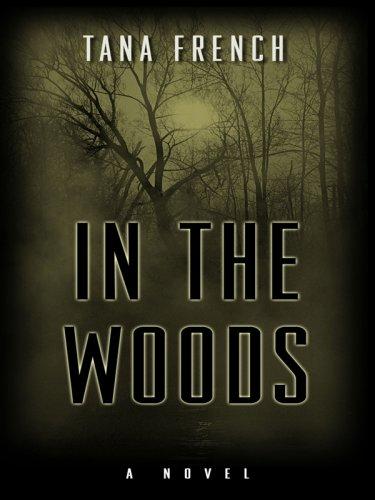
Tana French’s debut (2007) opens the Dublin Murder Squad series with detective Rob Ryan investigating a child’s murder in the same woods where, twenty years earlier, his two best friends vanished and he was found with blood in his shoes and no memory. He works the new case while concealing his connection to the old one.
The Cape Fear resonance is the investigative dread: the sense that the legal process, followed correctly, is steering everyone toward a truth that will destroy the person following it. French writes procedure the way MacDonald did, with real respect for how the machinery works, and then lets the machinery grind against the investigator’s own buried history. Her prose is the most atmospheric on this list, and the ending is famously uncompromising. Readers who need every question answered should know going in that French withholds on purpose.
Defending Jacob: William Landay
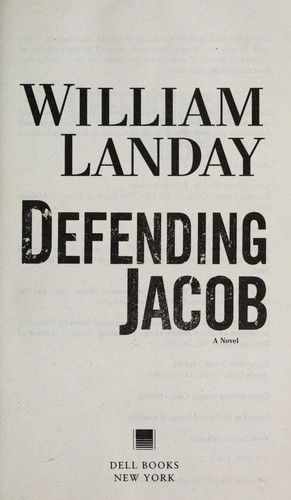
Landay, a former district attorney, wrote the closest thing on this list to the 2026 series’ structure. Andy Barber is an assistant DA whose fourteen-year-old son is charged with murdering a classmate. Andy’s legal expertise, the thing that has organized his whole life, becomes the toolkit he uses to protect his family, and the novel keeps asking whether protecting and concealing are different acts.
This is the courtroom-adjacent psychological siege in its purest form. The threat is not a man circling the house. It is the case itself, the slow public dismantling of a family by deposition and discovery, and the growing possibility that the family’s own secrets are load-bearing. Like the Scorsese film and the Antosca series, it is a story about a lawyer learning what the law feels like from the receiving end. The framing device, testimony before a grand jury, pays off in the final pages with one of the better gut-punch endings in the genre.
Where the Thread Goes in Achriom
One 1957 paperback produced two landmark films and a prestige series across seven decades, and each version changed who was guilty. That is exactly the kind of thread a single-format tracker cannot hold. Log the series in a TV app and the novel in a book app, and the connection between them lives nowhere.
Achriom keeps all of it in one library. Add The Executioners next to the 2026 series and both films, and your AI librarian can trace the lineage, tell you what each adaptation changed, and point you from Highsmith to French to Landay based on which part of the story gripped you.
The show, the two films, and the four books belong in one library. Achriom tracks your shows, films, books, albums, and anime together, with an AI librarian that finds the threads between them, and you can export everything back out any time. Free to start, no card.
Build your Cape Fear shelf →How They Compare
| Work | Antagonist | Legal threat or physical threat | Tone |
|---|---|---|---|
| The Executioners (1957) | Released convict, external | Physical, with the law useless | Lean, propulsive suspense |
| Cape Fear (1962) | Mitchum’s Cady, external | Physical, law as failed shield | Coiled studio-era menace |
| Cape Fear (1991) | De Niro’s Cady, invited by guilt | Both, law as Cady’s weapon | Operatic, morally loaded |
| Cape Fear (2026) | Bardem’s Cady, patient and legalistic | Both, stretched across ten episodes | Slow-burn prestige thriller |
| The Talented Mr. Ripley | Ripley, and you are inside him | Physical, hidden from the law | Cool, seductive, amoral |
| In the Woods | The past, wearing a new case | Investigative, self-incriminating | Atmospheric, melancholy |
| Defending Jacob | The case against the family | Legal, from indictment onward | Controlled, quietly devastating |
Which to Pick First
To see what every adaptation changed: The Executioners. Two evenings, a different ending, and the innocent-family version of the story that the films abandoned.
For the predator himself: The Talented Mr. Ripley. The Cady fascination, sustained for a full novel from inside the predator’s head, with four sequels waiting.
For investigative dread: In the Woods. The slowest burn on the list and the most beautifully written, if you can accept an ending that withholds.
For the family under legal siege: Defending Jacob. Structurally the closest to the 2026 series, written by someone who spent years on the prosecution side.
On the watchlist: the 1991 Scorsese film first, since the series answers it directly, then the 1962 original for Mitchum.
The Honest Answer
The 2026 series works because it understands what the franchise has always been about, which was never really Max Cady. It is about lawyers discovering that the law is a tool rather than a shield, and that someone with enough patience can pick the tool up from the other end. MacDonald posed the problem with an innocent family. Scorsese sharpened it with a guilty one. Antosca hands it to Amy Adams and lets it run for ten hours.
The novel is the essential read because it is the control group: the version where the Bowdens did nothing wrong and the terror worked anyway. Highsmith gives you the predator’s interior, French gives you the investigation as slow self-destruction, and Landay gives you the family on trial. None of them is a substitute for the show. Each one extends a nerve the show touched.
Common Questions
What is Cape Fear based on?
Every version traces back to The Executioners, a 1957 novel by John D. MacDonald. The 1962 film adapted it first, Martin Scorsese remade it in 1991, and the 2026 Apple TV+ series credits both the novel and the earlier films as source material.
Who is in the Cape Fear 2026 cast?
Javier Bardem plays Max Cady, Amy Adams plays attorney Anna Bowden, and Patrick Wilson plays her husband Tom. CCH Pounder, Jamie Hector, Lily Collias, and Anna Baryshnikov round out the ensemble. Nick Antosca created the ten-episode limited series, with Martin Scorsese and Steven Spielberg among the executive producers. It premiered June 5, 2026.
Is the 2026 Cape Fear a remake of the Scorsese film?
It is a new adaptation of the same source material, and it clearly builds on the 1991 film’s central idea of a compromised lawyer. The largest changes: the lawyer Cady blames is now Anna Bowden rather than her husband, and Bardem’s Cady served seventeen years for murdering his pregnant wife. The extra runtime turns the film’s two-hour siege into a season-long campaign.
How different is The Executioners from the movies?
Substantially. In the novel, Sam Bowden is a witness whose testimony convicted Cady, and the family is innocent. The defense-attorney-who-buried-evidence version began with Scorsese in 1991. The novel’s ending also differs from every filmed version, which is part of why it still reads as suspense rather than as a novelization of something you have already seen.
Do I need to watch the 1962 and 1991 films before the show?
No, the series stands alone. Watching the Scorsese film after the finale is the most rewarding order, since the series is in constant dialogue with it. The 1962 original earns its place with Robert Mitchum’s performance, the template for every Cady since.
Are the Ripley novels actually like Cape Fear?
They share the core menace: a patient predator the law cannot reach, hiding in plain sight among respectable people. The difference is that Highsmith writes from inside the predator. If the Bowdens’ fear is what gripped you, go to French or Landay first. If Cady himself did, go to Ripley.