What to Read After Midsommar
Five books about beautiful communities with monstrous cores, bodies as contested territory, and women who choose their people.
Some links below are affiliate links. As an Amazon Associate, Achriom earns from qualifying purchases. For books we prefer Bookshop.org, which supports independent bookstores.
If Midsommar left you unable to look at a flower crown the same way, these five books are where to go next: The Secret History by Donna Tartt, The Vegetarian by Han Kang, The Power by Naomi Alderman, White is for Witching by Helen Oyeyemi, and The Golden Bough by James George Frazer, the book the film’s ritual logic actually comes from.
Midsommar wears the costume of folk horror, and the costume is accurate. But the film is about grief, a relationship that should have ended a year earlier, and a community that offers Dani what Christian cannot: attention, mirroring, people who scream when she screams. The books that follow it best are the ones that understand the horror and the comfort are the same thing.
Below is what each book is, why it fits, and where to start. There is also a short list of films for when you want the tradition on screen, and if Hereditary is the Aster film that wrecked you, we keep a separate reading list for that one.
What Makes a Book Feel Like Midsommar
The obvious answer is folk ritual: maypoles, runes, a community with customs older than anyone’s memory. Plenty of books have those. The ones that feel like Midsommar share something more specific.
Grief is the doorway. Dani enters the film having lost her entire family. Her vulnerability is what the Hårga recognize and what they use. The best matches on this list begin with a loss, and the strange world the protagonist enters works on them because of it.
The community is genuinely beautiful. The Hårga are not hiding their nature behind a pleasant surface. The pleasantness is the nature. Books that fit are seductive on purpose: you understand why someone would stay, and that understanding implicates you.
A woman is at the center, and she changes. Midsommar is about a woman choosing her people, however horrifyingly. The passive, accommodating, over-apologizing Dani of the first act is gone by the last frame. The books here track that same arc: a woman everyone else reads as fragile becomes something the people around her cannot control or explain.
The ritual has a logic. Nothing the Hårga do is random. The horror comes from coherence, a complete system that makes perfect sense from inside. The books below take belief systems seriously enough to make them work on the reader.
The Secret History
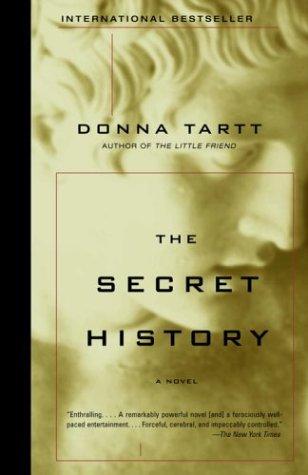
Donna Tartt’s 1992 novel follows Richard Papen, a California transfer student who talks his way into an exclusive classics seminar at a small Vermont college. The five students inside it are brilliant, wealthy, and beautiful in a way that functions like weather. They are also attempting to recreate a Dionysian rite, and by the time Richard understands what that cost, he is complicit in the death that follows.
This is the Hårga as a college clique. Tartt understands exactly what Aster understands: an enclosed community with its own language, aesthetics, and rituals is intoxicating, and the intoxication is the danger. Richard is Dani at the midsummer festival, so grateful to be included that he metabolizes each escalation as it comes. The murder arrives early (the prologue tells you), so the suspense runs the other way. You watch belonging do its slow work.
The book has no supernatural element and does not need one. The monstrous core is human, and the beauty around it is real, which is the whole problem.
The Vegetarian
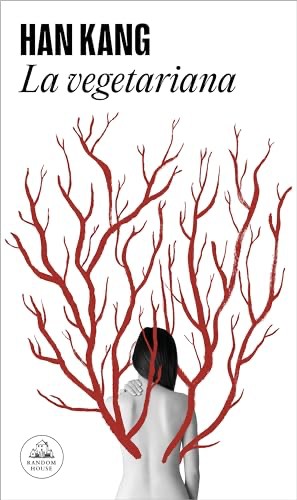
Han Kang’s novel (published in Korean in 2007, translated by Deborah Smith in 2015, and part of the body of work behind Han’s Nobel Prize) begins with a small refusal. Yeong-hye, an unremarkable Seoul housewife by her husband’s own description, stops eating meat after a violent dream. Her family responds as if she has declared war. Her husband is embarrassed, her father resorts to force, and the novel escalates from there through three sections, each narrated by someone other than Yeong-hye herself.
That structure is the point. Everyone speaks over her, interprets her, makes decisions about her body, and she keeps refusing, further and further, until she is refusing food, speech, and eventually the category of human. She wants to be a plant. The people around her call it madness. The novel leaves open whether it might be the only exit available.
This is the Dani book. A passive woman, read by everyone around her as a problem to be managed, transforms into something none of them predicted, and the transformation looks like destruction from the outside and something else from the inside. The body-as-territory horror here is quieter than anything in Midsommar and harder to shake.
The Power
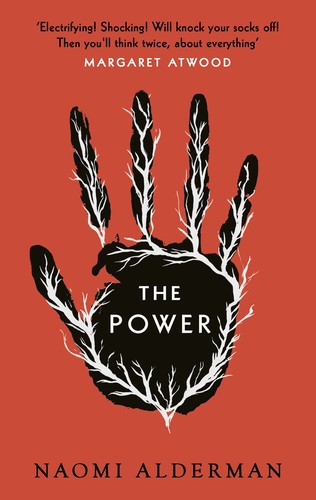
Naomi Alderman’s 2016 novel runs the inversion Midsommar’s ending only gestures at. Teenage girls worldwide develop the ability to deliver electric shocks from their hands, the ability spreads to older women, and the global order flips within a decade. Alderman tracks it through four characters: a foster kid who becomes a prophet, a London gangster’s daughter, an American politician, and the male journalist documenting what men’s lives become.
The connection to Midsommar is the ending’s charge. Dani’s smile is horrifying and satisfying at once, and the film refuses to resolve which. The Power stretches that exact ambivalence across an entire alternate history. Female power arrives, and it liberates, and then it does everything power does. Alderman is not writing a revenge fantasy. She is writing about what the fantasy costs, framed as a manuscript from the far future with correspondence that reframes everything.
Of the five books here, this is the fastest read and the one most likely to start an argument, which is a compliment.
White is for Witching
Helen Oyeyemi’s 2009 novel is British folk horror with a female center, built around a bed and breakfast on the cliffs of Dover that has opinions. Miranda Silver has pica, a compulsion to eat chalk and plastic, inherited along the female line along with the house itself. The house loved her mother, her grandmother, and her great-grandmother, and it loves Miranda the way the Hårga love Dani: possessively, with intent, in a language of care that is also consumption.
The house narrates some chapters. It is xenophobic, jealous of Miranda’s friends, and hostile to the Kenyan housekeeper and the Yoruba-British girlfriend who might take Miranda out of its reach. Oyeyemi is doing something precise with that: the cozy English gothic inheritance is itself the monster, and its warmth is inseparable from its exclusions.
This is the strangest book on the list, told in fragments across four narrators, and the one that best captures the specific Midsommar feeling of an embrace you cannot tell from a trap.
The Golden Bough
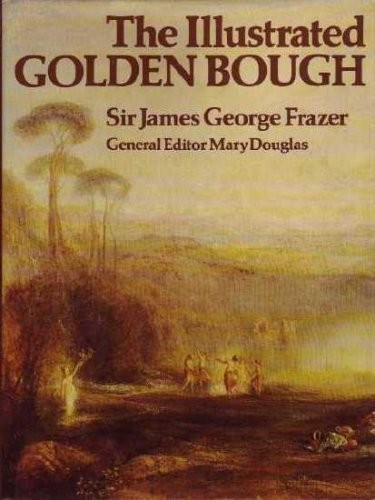
James George Frazer’s 1890 study of magic and religion is the nonfiction entry, and it belongs here because it is the source aquifer. The dying-and-reviving god, the sacred king killed at the end of his term, the fertility sacrifice, the harvest effigy: Frazer catalogued the ritual patterns, and folk horror has been drawing on the catalogue ever since. Anthony Shaffer worked from it for The Wicker Man’s screenplay, and Midsommar’s ritual logic, the nine sacrifices, the May Queen, the cycle of the commune’s calendar, runs on Frazer’s engine.
Modern anthropology has walked back many of Frazer’s claims, and you should read it as a Victorian synthesis rather than settled fact. Read it anyway, in an abridged edition. What you get is the uncanny experience of recognizing the skeleton of half the horror you have ever watched, and understanding why the Hårga feel coherent rather than invented. Aster did the reading. This is the reading.
The Films That Sit Beside It
Three films belong on this list, because the conversation Midsommar is having runs through cinema as much as fiction.
The Wicker Man
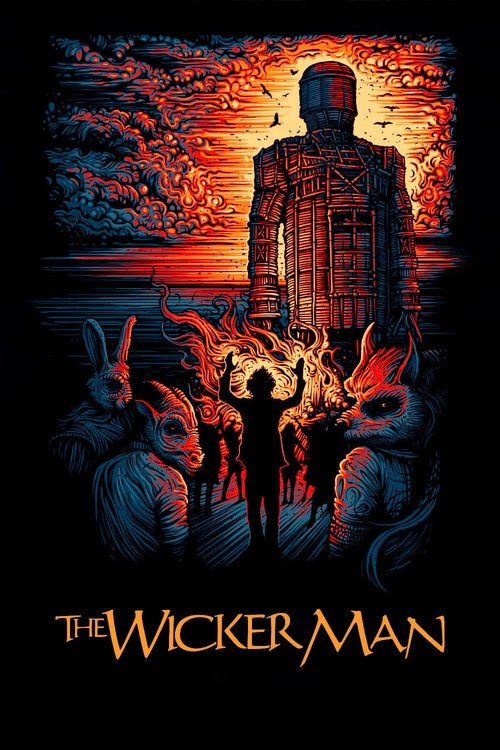
Robin Hardy’s 1973 original is the film Midsommar is in open dialogue with. A devout Scottish policeman investigates a missing child on a remote Hebridean island where the locals have returned to the old religion. The horror happens in daylight, the community sings, and the ending is one of the genre’s permanent images. Where Midsommar centers the person the community absorbs, The Wicker Man centers the person it burns. Watching them as a pair shows you exactly what Aster changed and why it matters.
The Witch
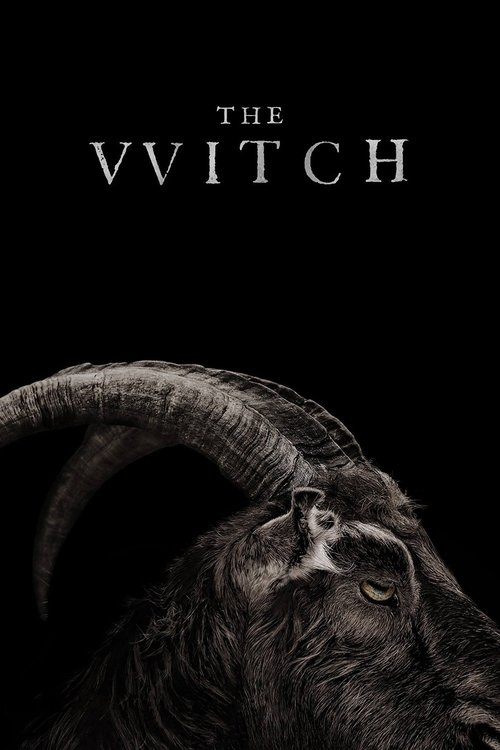
Robert Eggers’s 2015 film is the other great “a woman chooses her people” horror ending. A Puritan family exiled from their plantation unravels at the edge of a New England wood, and the eldest daughter, blamed for all of it, is finally offered a different life by the thing in the forest. The film’s last ten minutes are Midsommar’s ending in a darker key: liberation and damnation served as a single dish.
Men
Alex Garland’s 2022 film is the most direct thematic neighbor. A widow retreats to the English countryside to recover from her husband’s death and finds every man in the village wearing a version of the same face. Garland pulls Green Man and Sheela na gig imagery straight from the British folk record and aims all of it at grief and male entitlement. It is messier than Midsommar, and its imagery stays with you the same way.
Track the Thread in Achriom
This list crosses formats on purpose. Midsommar leads to Tartt and Han Kang, who lead back to Eggers and Garland, and the whole web rests on a book of Victorian anthropology. That is how taste actually works, and it is exactly what a books-only or films-only tracker cannot see.
Achriom keeps the film, the novels, and the rewatches in one library, and your AI librarian can trace the line between them: what the folk horror shelf shares, which grief narratives you keep returning to, what to pick up next based on all of it together.
The film sent you to the bookstore. Keep the whole trail in one place. Achriom is one library for your shows, films, books, albums, and anime, with an AI librarian that connects them, and full export back out any time. Free to start, no card.
Import your library →How These Works Compare
| Work | Format | Grief as Entry | Female Center | Folk Ritual | Closest to Midsommar |
|---|---|---|---|---|---|
| The Vegetarian | Book | Partial | Yes | No | Highest (Dani’s arc) |
| The Secret History | Book | No | No | Yes | Highest (the seduction) |
| White is for Witching | Book | Yes | Yes | Partial | High (embrace as trap) |
| The Power | Book | No | Yes | Yes | High (the ending’s charge) |
| The Golden Bough | Book | No | No | Yes | Medium (the source code) |
| The Wicker Man | Film | No | No | Yes | Highest (the template) |
| The Witch | Film | Yes | Yes | Yes | High (the choice) |
| Men | Film | Yes | Yes | Yes | High (grief and imagery) |
Which to Read First
For the seduction of the Hårga: The Secret History. The enclosed, beautiful community with a monstrous core, and the slow discovery that you were charmed by it too.
For Dani herself: The Vegetarian. A woman everyone interprets and no one hears, transforming into something outside their categories. Short, controlled, and the most haunting book here.
For the ending’s feeling: The Power. The full inversion, played out at world scale, with the triumph and the horror deliberately left fused.
For the strangest read: White is for Witching. Fragmented, gorgeous, narrated partly by a house that loves too much.
For the roots: The Golden Bough, abridged. The ritual patterns underneath Midsommar, The Wicker Man, and most of the folk horror canon, straight from the source.
The Honest Answer
Midsommar is a breakup movie staged as a sacrifice, and the reading list that serves it has to honor both halves. The folk ritual matters: the runes, the cycle, the coherence of the Hårga’s world, and Frazer plus The Wicker Man will give you that lineage in full. But the film’s staying power comes from Dani, a woman hollowed out by loss, dating a man who cannot hold any of it, offered belonging by a community whose warmth and whose violence come from the same place.
That is why the two strongest recommendations here are not horror novels at all. The Secret History recreates the seduction of the closed world, and The Vegetarian recreates the woman at the center of it, transforming past the point anyone can follow. Read either and the film’s ending gets richer. Read both and the flower crown starts to look like what it always was: a beautiful thing that requires a body underneath.
Common Questions
Is Midsommar based on a book?
No. Ari Aster wrote the screenplay as an original work, drawing on Scandinavian folklore and ritual anthropology rather than a novel. The closest thing to a source text is The Golden Bough, the 1890 study of ritual and sacrifice that shaped the whole folk horror tradition the film belongs to.
What happens at the end of Midsommar?
Dani is crowned May Queen and given the choice of the final sacrifice. She chooses Christian, who is burned alive in the temple with the other offerings. The film ends on her face as the temple burns: grief, horror, and something the Hårga would call belonging, all at once. Aster has described it as a breakup movie, and the ending is the breakup.
Is Midsommar or The Wicker Man better?
The Wicker Man came first and built the template: an outsider lured to a pagan community, horror in full daylight, a sacrifice the community treats as celebration. Midsommar keeps that structure but replaces the righteous policeman with a grieving woman, which changes what the ending means. Watch The Wicker Man for the blueprint and Midsommar for what a director can do with it when the protagonist has a reason to stay.
Is The Secret History a horror novel?
No, it is literary fiction, usually shelved as a campus novel. It earns its place on this list because it runs on the same machinery as the film: a beautiful, enclosed community organized around ritual, a murder the group absorbs and rationalizes, and the reader’s slow realization that the aesthetic seduction was the trap.
Is the Hårga a real cult?
The commune is fictional. The name comes from Hårga in Sweden and the legend of the Hårga dance, in which the devil fiddles a village’s young people into dancing themselves to death. The rituals are composited from real Scandinavian midsummer traditions, folklore, and patterns catalogued in works like The Golden Bough. The cliff ceremony draws on the ättestupa, a legend about ritual senicide with no solid historical documentation behind it.
Which of these books should I read first?
Start with The Secret History if you want to be seduced by a community the way the film seduces you with the Hårga. Start with The Vegetarian if the part of Midsommar that stayed with you was Dani herself. It is the shortest book on the list and the most unsettling.