What to Read After Widow's Bay
Seven books about cursed communities, old evils returning, and the dark humor of small towns that should have listened. The reading list for fans of Widow's Bay on Apple TV+.

Some links below are affiliate links. As an Amazon Associate, Achriom earns from qualifying purchases. For books we prefer Bookshop.org, which supports independent bookstores.
If Widow’s Bay left you wanting more, these seven books are the closest the shelves get: Hex by Thomas Olde Heuvelt, Salem’s Lot by Stephen King, The Shadow Over Innsmouth by H.P. Lovecraft, My Best Friend’s Exorcism by Grady Hendrix, Mexican Gothic by Silvia Moreno-Garcia, The Fisherman by John Langan, and The Only Good Indians by Stephen Graham Jones.
All seven are about communities that have been living alongside something they shouldn’t. What connects them to the show goes beyond the supernatural premise to the structure: old wrong, collective denial, reckoning that arrives on its own schedule.
Below is what each book is, why it fits, and how to choose where to start.
What Makes a Book Feel Like Widow’s Bay
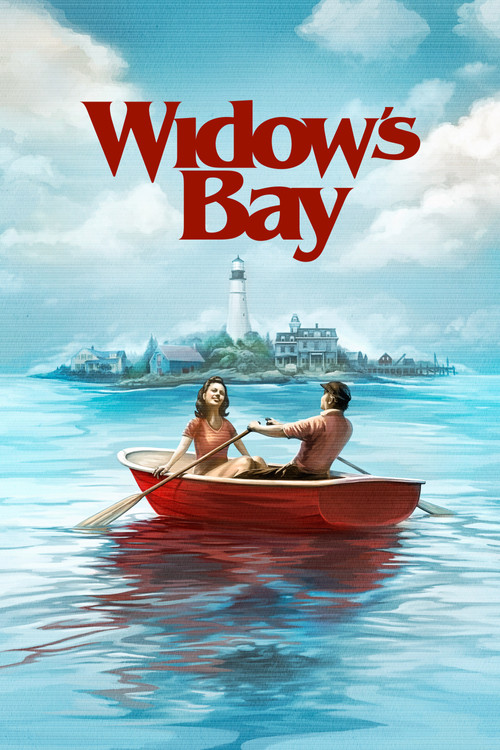
The Apple TV+ series is a comedy-horror about a skeptical mayor trying to revive a supposedly cursed New England island as a tourist destination. The locals know better. The show finds both its humor and its horror in the same place: the gap between what the mayor insists is true and what the island actually is.
That setup has a few moving parts, and the books that match it tend to share them.
The curse has a history. Something happened long before the story begins, and the community organized itself around accommodating it. Residents might call it local legend or tradition or just the way things are. The point is that the threat and the town have reached an equilibrium. The story starts when that equilibrium ends.
The horror is communal. This is not a monster hunting individuals. The threat in these books is tied to the place itself and to everyone in it. The residents are part of the problem even when they don’t know it.
There is some dark humor. Not every book on this list is a comedy, but the ones that fit Widow’s Bay most closely have at least an absurdist streak. The horror of a community living with the unacceptable is partly funny: people keep doing ordinary things in extraordinary circumstances, and the gap between those two facts is where the comedy lives.
The setting does work. Islands. Decayed coastal towns. Small communities where everyone knows each other and leaving is harder than it looks. The geography in these books is not backdrop. It is part of the threat.
Salem’s Lot
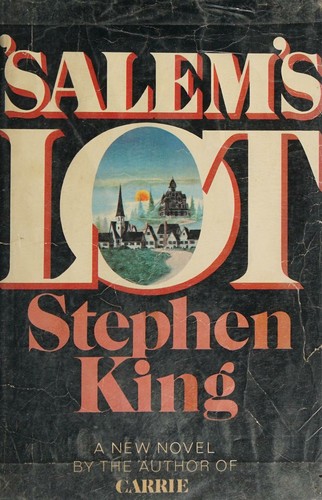
Stephen King’s second novel follows a writer named Ben Mears who returns to the small Maine town where he grew up, hoping to use the old Marsten House as material for a book. The house has just been purchased by a man nobody knows. Things go wrong slowly, then all at once.
What makes Salem’s Lot feel like Widow’s Bay is less the New England setting than the sociology. King is interested in how a town enables its own destruction through ordinary social mechanisms: the priest who struggles with doubt, the doctor who diagnoses what he doesn’t want to diagnose, the sheriff who hears reports and doesn’t follow up. The vampire is almost secondary. The subject is the community’s capacity to look away.
The tone is slower and darker than the show, with none of its comedy. But the structure is the same. An old house with a history, a town that has lived near it without incident, and then the equilibrium breaks.
Hex
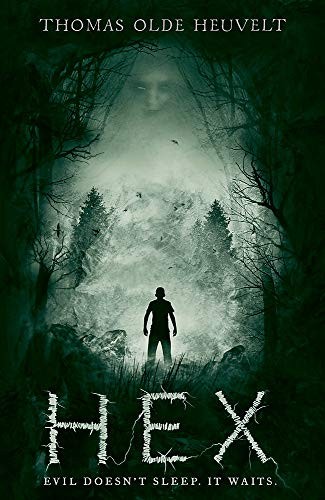
Thomas Olde Heuvelt’s novel (translated from Dutch by Nancy Forest-Flier) is the book on this list that most closely matches Widow’s Bay in tone. The fictional town of Black Spring has been cursed since colonial times by the Black Rock Witch, a woman executed in the seventeenth century who now wanders the streets with her eyes and mouth sewn shut. The residents have adapted. They track her on a community app. They call a county hotline if she enters their homes. They have agreed, collectively and unofficially, never to leave.
That detail about the app is the whole mood. Heuvelt is writing about the modern small town’s capacity to bureaucratize the unbearable, and he is very funny about it before he stops being funny about it. The humor makes the horror land harder when it arrives.
Hex is the closest structural match to Widow’s Bay on this list. Community in equilibrium with a very old threat. Civic mechanisms deployed to manage the supernatural. Then someone breaks the rules, and everything that follows is a consequence of that decision.
If you only read one book from this list, start here.
The Shadow Over Innsmouth
Lovecraft’s 1936 novella is shorter than the others, and it belongs here as a foundational text rather than a direct tonal match. A traveler passes through a decaying Massachusetts coastal town called Innsmouth and cannot leave fast enough. The buildings are wrong. The residents are wrong. The smell is wrong. He does not understand why until it is too late to benefit from understanding it.
The horror is accumulative. You feel the wrongness before the narrator does, and the gap between his dawning realization and yours is where the dread lives.
Two things are worth saying clearly. First, this novella provided the template for the isolated coastal community with a secret, and nearly every book on this list is in some dialogue with it. Reading it helps you understand what Hex and Salem’s Lot are working with and working against.
Second, Lovecraft’s xenophobia is not subtext. It is the explicit frame of the story. Read it knowing that, and read the subsequent books on this list to see what the tradition looks like when that ugliness is gone.
At roughly sixty pages, it is the shortest entry here, and the strangest.
My Best Friend’s Exorcism
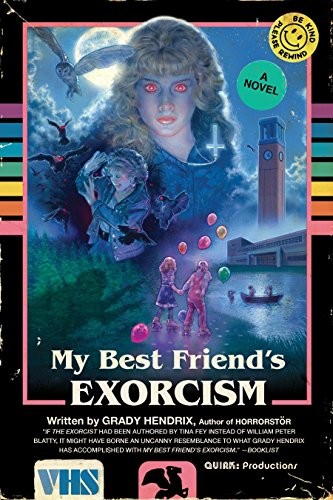
Grady Hendrix’s 2016 debut is set in 1988 South Carolina and follows two best friends through the events that follow one of them being possessed. It is the most comedic book on this list after Hex, and the most explicitly interested in the tonal balance that Widow’s Bay is going for.
The horror is real and built on something specific: the particular cruelties of high school, the way girls are disbelieved, the social damage that accumulates around someone who is behaving strangely and whose friends don’t yet have the words for why. The demonic possession is the shape the story takes, but the actual subject is friendship and the things that erode it.
Hendrix’s control of tone is what earns its place here. He knows when to be funny and when to stop, and he does not telegraph the transitions. The show works the same way: comedic until it isn’t, and the shift happens without announcement.
If you are drawn to Widow’s Bay primarily for the comedic register, start here.
Mexican Gothic
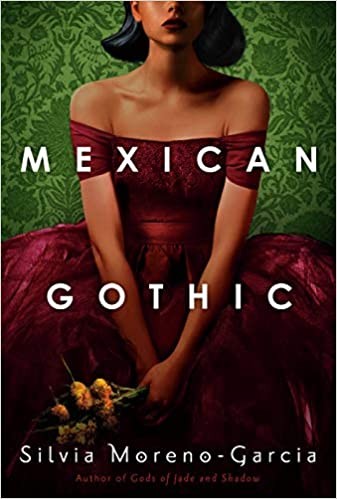
Silvia Moreno-Garcia’s 2020 novel sends a glamorous Mexico City socialite named Noemí Taboada to a decaying mansion in rural Mexico in the 1950s, summoned by a disturbing letter from a recently married cousin. The house is old, fungal, and wrong in ways she cannot quantify.
The folk horror here operates through accumulation. The house’s history seeps in through dreams, through the rot in the walls, through the behavior of the family that has lived there for generations. The threat is colonial in structure: a house built on extracted wealth and extracted lives, and those things have not stopped existing simply because they are not acknowledged.
The connection to Widow’s Bay is structural: a place that has always been wrong, a protagonist who insists on rational explanations longer than is safe, and an old arrangement between a community and a secret that is finally running out of time. The tone is darker and less comedic than the show. It earns its place on the list through craft rather than tonal proximity.
The Fisherman
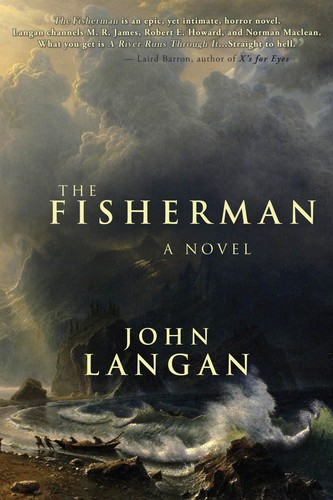
John Langan’s 2016 novel opens with two widowers in upstate New York who bond over fishing, then hear a story about a body of water called Dutchman’s Creek and the thing that lives there.
The structure is nested: a story inside a story inside a story, each layer moving further back in time. The folk horror is built on deep time rather than recent history. The threat at Dutchman’s Creek has been there since before the town, before the country. You do not fight something that old. You make a deal with it, or you don’t, and the consequences take generations to become clear.
The Fisherman is the most literary book on this list. The prose is careful and deliberate, and the pace reflects that. It is also the most interested in grief as a subject: both men are processing loss, and the water becomes a figure for the impossibility of recovering what is gone.
If Widow’s Bay made you want something bigger and stranger than what the show’s comedic frame allows, start here.
The Only Good Indians
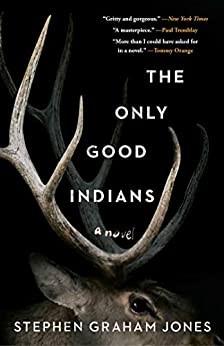
Stephen Graham Jones’s 2020 novel follows four Blackfeet men in Montana who made a mistake during a hunting trip ten years earlier. They broke a rule they knew they were breaking. Something noticed. Now it is coming to settle the account.
The reckoning structure is identical to Widow’s Bay: an old wrong, a group of people who tried to move on, a threat that does not accept that moving on is possible. The horror is tied to specific cultural context, which gives it a different texture than the New England Gothic of most of this list. The justice being administered here is not supernatural in the abstract sense. It is connected to what was taken and from whom.
The Only Good Indians is the fastest book on this list. Jones does not let you rest. The dread builds through action rather than atmosphere, and the pacing never slackens once the threat begins to materialize.
Track the Thread in Achriom
These seven books belong to a tradition: horror built around place, community, and what happens when the things a group of people agreed to forget refuse to be forgotten. Widow’s Bay is in that tradition. So is Hereditary, so is The Wicker Man, so are the folk horror films of the 1970s and the ghost stories of Shirley Jackson.
Achriom tracks all of it in one library. Add a book after you finish it, log the show that sent you to the shelves, and your AI librarian can surface the thread running between them. That cross-format connection is exactly what a single-medium tracker misses.
Want all of it in one place? Achriom tracks your books alongside your films, TV shows, music, and anime, with an AI librarian that finds the threads between them. That is the part no single-format tracker can do.
Try Achriom free →How These Books Compare
| Book | Setting | Old Evil | Dark Humor | Community Curse | Closest to Widow’s Bay |
|---|---|---|---|---|---|
| Hex | Upstate New York | Yes | Yes | Yes | Highest |
| My Best Friend’s Exorcism | South Carolina | Yes | Yes | No | High (tone) |
| Salem’s Lot | Maine | Yes | No | Yes | High (setting) |
| The Only Good Indians | Montana | Yes | No | Yes | High (reckoning) |
| The Shadow Over Innsmouth | Massachusetts coast | Yes | No | Yes | Medium (foundational) |
| The Fisherman | Upstate New York | Yes | No | No | Medium (water/dread) |
| Mexican Gothic | Rural Mexico | Yes | No | Partial | Medium (atmosphere) |
Which to Read First
For the closest tonal match to the show: Hex. The dark humor, the bureaucratized supernatural, the community that adapted to something it shouldn’t have. It mirrors Widow’s Bay most directly, and the moment when the equilibrium breaks is as effective as anything in the series.
For the New England setting: Salem’s Lot. Maine, an old house, a town that looks away until it can’t. The tone is more serious, but the geography and the sociology are right.
For something you’ll finish in a weekend: My Best Friend’s Exorcism or The Only Good Indians. Both move fast, both earn their horror through character, and both have a clear grip on their own tone.
For the literary end of the genre: The Fisherman. The prose is careful, the pacing is slow, and the payoff is proportional to the patience it requires.
For a look at where this subgenre came from: The Shadow Over Innsmouth. Sixty pages, foundational, and strange in ways that still feel unresolved.
The Honest Answer
Widow’s Bay is doing something specific. It is a comedy-horror about civic denial. The mayor is trying to solve an image problem, and the image problem turns out to be a fact problem. The comedy comes from the gap between institutional confidence and actual reality, and the horror comes from how long that gap can persist before it collapses.
The books that match it most closely are the ones that take the community dimension seriously. Hex has the same relationship to modernity: a town that developed systems and procedures for managing something that cannot actually be managed. Salem’s Lot gets the New England geography right and the social mechanics of denial right. My Best Friend’s Exorcism gets the tonal balance right.
The others are there because folk horror is a tradition with a history, and Widow’s Bay is in conversation with it whether or not the creators named their influences. You don’t need to read all seven. But if you want to understand what the show grew out of, the list gives you a path.
Common Questions
Is Widow’s Bay based on a book?
Not as far as is publicly known. The show was created by Katie Dippold, known primarily as a screenwriter and showrunner. The cursed-island premise draws on a long tradition of New England folk horror in fiction and film, but no specific source novel has been identified.
What genre is Widow’s Bay?
Comedy-horror. The show has genuine scares, but the comedic framing is central to how those scares work, not incidental to them. The closest genre comparison is folk horror with a Parks and Recreation sensibility: civic dysfunction, community politics, and supernatural consequences.
What is folk horror?
Folk horror is a subgenre built around the idea that specific places carry specific threats, usually rooted in history, ritual, or the land itself. The danger is tied to where you are and what happened there. Films like The Wicker Man and Hereditary, and books like Hex and The Only Good Indians, are canonical examples.
Are these books scary or more comedic like the show?
Most lean toward horror rather than comedy. Hex and My Best Friend’s Exorcism are the two entries with dark humor woven meaningfully through them, which is why they match the show’s register most closely. The others are primarily horror, though several have a dark absurdist edge. For the comedic register, start with Hex.
What is Salem’s Lot about?
Stephen King’s 1975 novel follows a writer who returns to the small Maine town where he grew up, hoping to use the local Marsten House as material for a book. The house has recently been purchased by a stranger. The town deteriorates around that fact. It is widely considered one of the strongest vampire novels in the genre and one of King’s best books from that period.
Why include The Shadow Over Innsmouth given Lovecraft’s documented racism?
Because the subgenre has a history, and Lovecraft is part of it. The novella gave subsequent writers the template for the decayed coastal community with a secret that defines its residents, and understanding it helps you see what books like Hex and Salem’s Lot are in dialogue with and what they chose to leave behind. The xenophobia is explicit and not separable from the narrative, which is worth knowing before you start.