What to Watch After Project Hail Mary: Films and Shows
Seven films and shows for people who loved Project Hail Mary and want the next great optimistic hard sci-fi experience. What each one shares with it, and what it does differently.

Some links below are affiliate links. As an Amazon Associate, Achriom earns from qualifying purchases. For books we prefer Bookshop.org, which supports independent bookstores.
If Project Hail Mary left you wanting more, these are the closest things on screen: Arrival, Contact, The Martian, Interstellar, and Moon on the film side, plus For All Mankind and Severance on television.
What connects them is a specific emotional register rather than a genre. Space appears in most of them, but space is incidental. The real shared quality is that intelligence is treated as the thing that saves people, and the story trusts you to enjoy watching someone think.
Below is what each one is, what it shares with Project Hail Mary, and where it goes somewhere the film does not.
What Makes a Film Feel Like Project Hail Mary
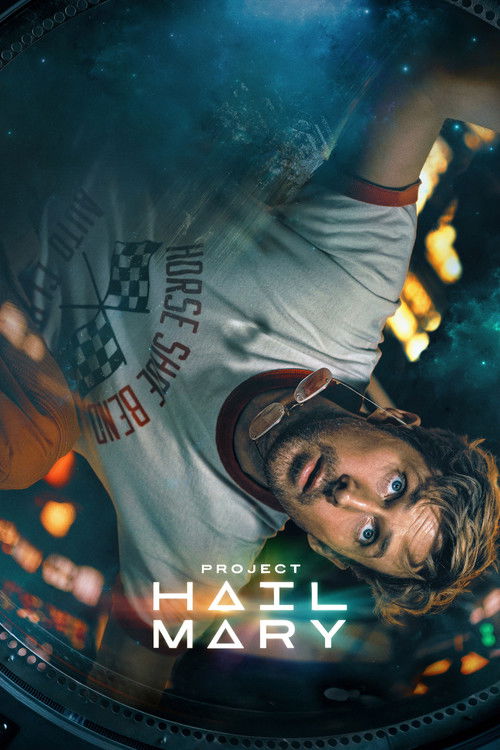
The Phil Lord and Christopher Miller adaptation of Andy Weir’s novel puts Ryan Gosling on a ship he did not volunteer for, with no memory of how he got there, facing a problem that will end life on Earth if he fails. Then it does the thing that made the book spread by word of mouth: it gives him company, and the company is not human.
That combination is rarer than it should be. Four qualities define it, and the recommendations below are sorted by how many of them they have.
Competence is the plot. The scenes you remember are people working. Measuring, testing, failing, adjusting. The tension comes from whether the method holds, not from whether someone is lying.
The problem is enormous and still solvable. Extinction level stakes, addressed with equipment, arithmetic, and time. Nothing is resolved by a speech or a sacrifice that skips the work.
Contact goes well. When something else shows up, curiosity beats fear. This is the rarest quality of the four and the one that separates Project Hail Mary from most of the genre.
The payoff is connection. The ending earns its feeling from a relationship rather than from a victory. You leave moved, not triumphant.
Optimistic hard science fiction stays rare because those four things are difficult to hold at once. Give up the antagonist and you give up your easiest source of tension. Keep the science honest and you lose the shortcut of inventing a solution in the third act. The films that manage it tend to be the ones people rewatch for years.
Arrival
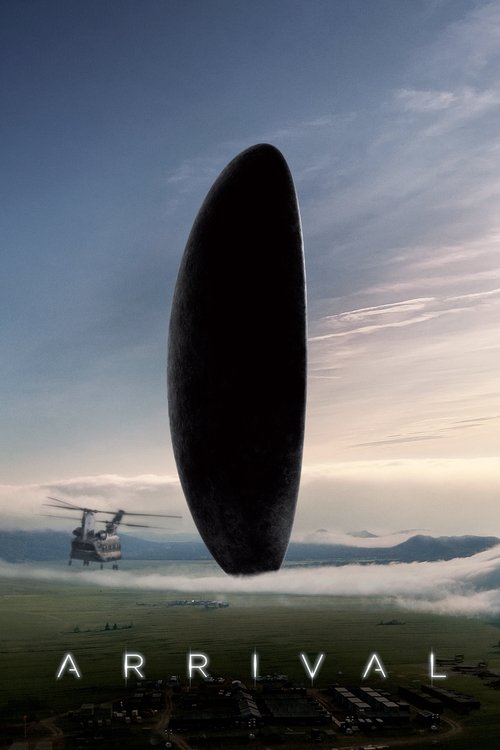
Denis Villeneuve’s 2016 film, adapted from Ted Chiang’s novella Story of Your Life, puts a linguist named Louise Banks in a tent outside an alien vessel with a whiteboard and a question: how do you say hello to something that does not experience time the way you do.
This is the closest match on the list for the part of Project Hail Mary that people actually talk about afterward. Both films treat first contact as a translation problem, and both find enormous feeling inside the technical work of solving it. Louise’s breakthroughs come from noticing structure in something that looked like noise. So do Ryland Grace’s.
The register differs in one important way. Arrival is melancholy where Project Hail Mary is warm. Villeneuve is interested in what understanding costs you, and the film’s emotional weight sits in grief rather than in friendship. You will recognize the intelligence and the patience immediately. The temperature is about fifteen degrees cooler.
If you want one film after Project Hail Mary, make it this one.
Contact
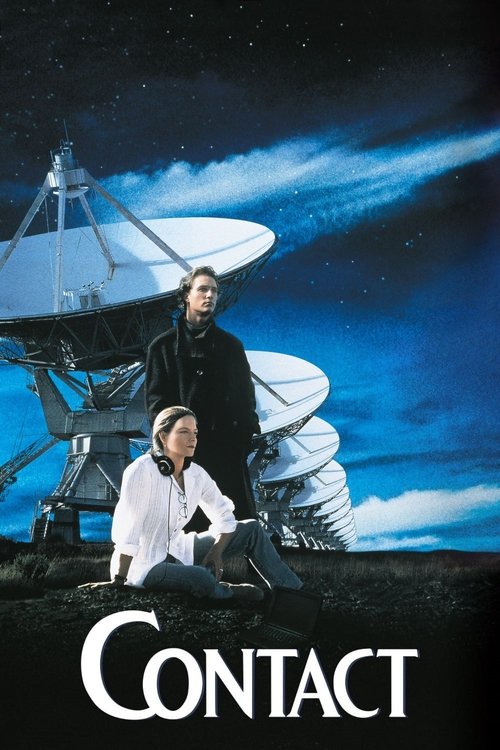
Robert Zemeckis adapted Carl Sagan’s novel in 1997, and Jodie Foster plays Ellie Arroway, a radio astronomer who spends years listening to static because she believes the signal is out there. When it arrives, the film becomes something better than a first contact story: an argument about who gets to speak for the species, conducted mostly in committee rooms.
The connection to Project Hail Mary is the shape of the protagonist. One scientist, an outsider inside her own field, carrying an assignment that belongs to all of humanity and having to be personally good enough to complete it. Ellie’s obsession is the same obsession, expressed through decades of patience rather than through a single desperate mission.
Contact is also honest about the institutional reality that Project Hail Mary compresses into its opening act. Funding fights, political theater, credit stolen by people with better titles. The film is nearly thirty years old and the middle hour still feels accurate about how big projects actually get built.
The last twenty minutes divide people. Sagan’s ending asks you to sit with an experience that cannot be verified, which is a strange note for a film this rigorous to close on. It is worth the disagreement.
The Martian
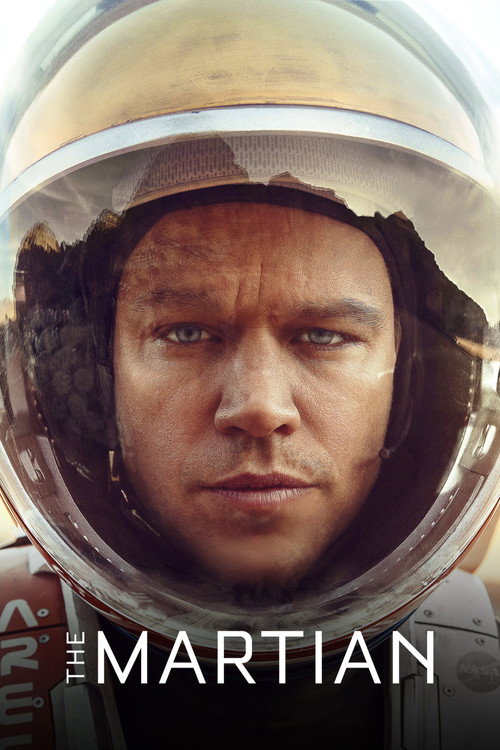
Ridley Scott’s 2015 adaptation of Andy Weir’s first novel is the obvious recommendation, so the useful question is what Project Hail Mary does that this one does not.
Both films share a writer, a sense of humor, and the same faith in procedure. Mark Watney grows potatoes in Martian regolith the way Ryland Grace runs experiments on his own blood, with visible pleasure in the method. Both films let a scientist narrate his own reasoning without apologizing for it.
The difference is where the feeling comes from. The Martian is a rescue story, and its emotional engine is the world below organizing itself to bring one man home. Every satellite reassignment and every JPL all nighter is a form of love expressed as logistics. Project Hail Mary has no rescue. Grace is going to stay out there, and the film’s warmth comes instead from a relationship built across a species barrier by two beings who cannot breathe the same air and who work out how to be friends anyway.
Watch this one if you want the pure competence pleasure without the ache. It is the funnier film and the lighter one.
Interstellar
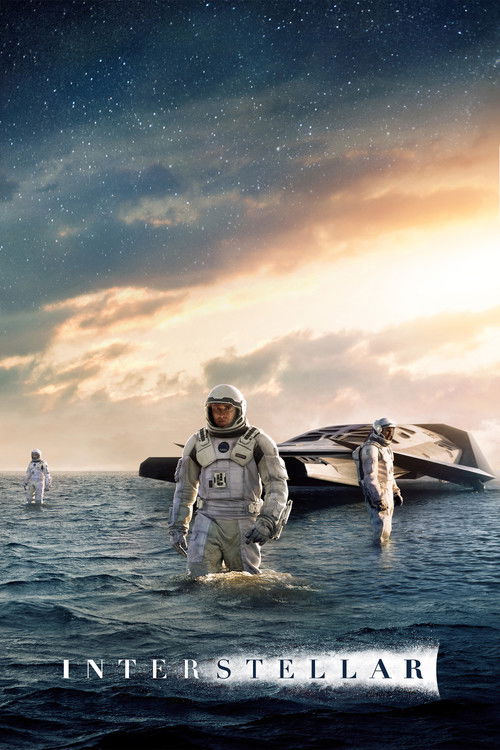
Christopher Nolan’s 2014 film sends a former pilot through a wormhole to find humanity a new home while the Earth chokes on dust behind him. Kip Thorne worked on the physics, and the black hole simulation was rigorous enough to generate published research.
The science holds in places and bends badly in others, and that gap is exactly why this film belongs here as a mood match rather than a method match. Where Project Hail Mary asks you to enjoy the reasoning, Interstellar asks you to feel the scale: the distance between a father and a daughter measured in relativistic time, the cost of the mission counted in years he cannot get back.
What it shares with Project Hail Mary is the size of the assignment. Both are about someone accepting a job that means leaving everyone, taken on because the alternative is extinction and because he was the one standing there. Both build their ending on the idea that human attachment survives distances that should erase it.
Come for the emotional scale. Do not come expecting the arithmetic to survive scrutiny.
Moon
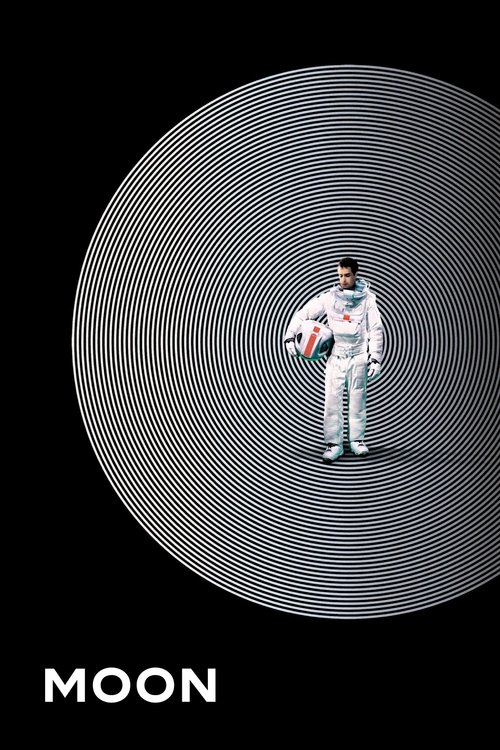
Duncan Jones’s 2009 debut gives Sam Rockwell a three year contract mining helium on the far side of the Moon, a base built out of practical sets and models, and a computer companion named GERTY voiced with unnerving calm by Kevin Spacey.
The match here is the first act of Project Hail Mary specifically. A man alone in a small machine, working out what his situation actually is from the evidence available to him, with a non human presence for company. Both films understand that isolation gets interesting when the isolated person starts asking good questions.
Moon is sadder and smaller than anything else on this list. It cost almost nothing, runs ninety seven minutes, and does more with a single performance than most space films manage with a fleet. If the Hail Mary appeal for you was watching a smart man reconstruct the truth from the inside of a sealed room, this is the purest version of that pleasure on film.
For All Mankind
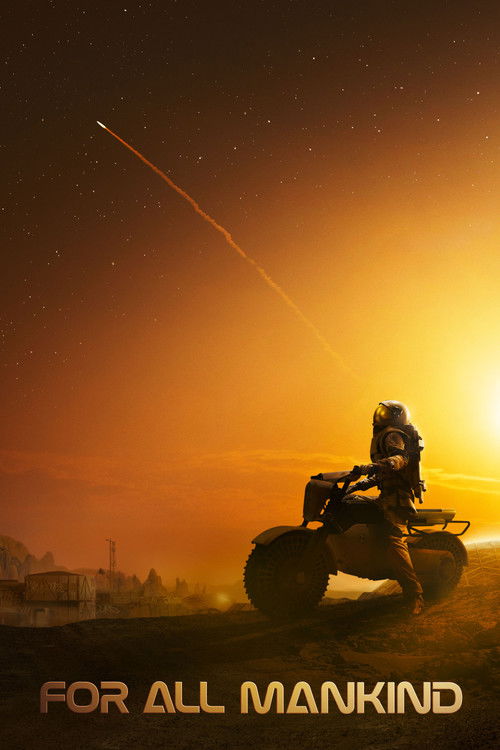
Ronald D. Moore’s alternate history starts with a single change: the Soviets land on the Moon first, so the American space program never gets to declare victory and go home. Each season jumps forward roughly a decade, and the space race simply keeps running.
This is the strongest television match for the Project Hail Mary register. The show is fundamentally about engineers refusing to accept a constraint, then arguing about how to route around it, then living with the consequences of the route they chose. Whole episodes are built around a hardware problem and the people who will not go to bed until it is fixed.
It also captures something the film only gestures at: what a species wide effort feels like from the inside, across careers and marriages and funerals. Grace gets a few flashback scenes of Earth mobilizing. For All Mankind gives you seventy hours of it.
Start at the pilot and give it four episodes. The first season is deliberately slow because it is building the alternate timeline underneath you.
Severance
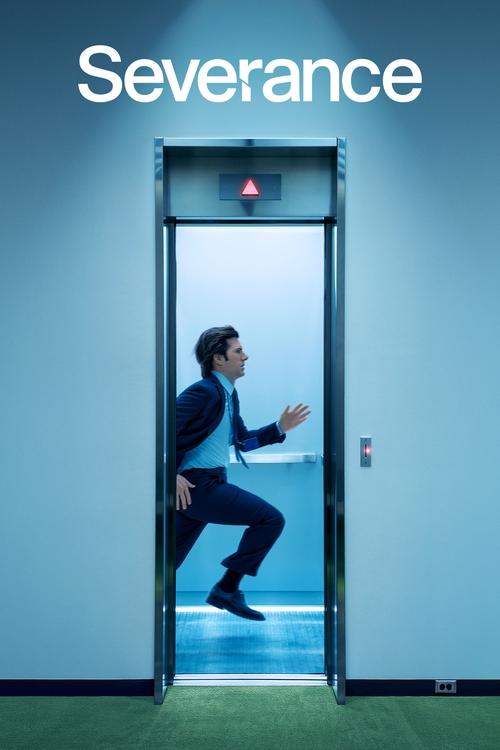
Dan Erickson’s series, directed largely by Ben Stiller, follows office workers whose memories are surgically split between their work selves and their home selves. It is not optimistic, and it is not hard science fiction. It earns its place here for a narrower reason.
The opening of Project Hail Mary is a consciousness waking into a situation it did not consent to, with no memory, forced to establish basic facts about itself before it can do anything else. That is also the opening of Severance, and the show sustains that condition for two seasons. If the part of the film that hooked you was the amnesia and the slow accumulation of self knowledge, this is where that feeling lives at length.
The tone is the opposite of the film’s. Where Grace’s discoveries are warm and useful, Mark’s are cold and worsening. Treat this as the dark counterweight rather than the companion piece. If you want the reading list version of that same feeling, we covered it in what to read after Severance.
Track the Thread in Achriom
These seven belong to one lineage, and the lineage crosses formats. Andy Weir’s novels sit on one side of it. Carl Sagan’s Contact and Ted Chiang’s Story of Your Life sit next to them. The Apple TV+ shows extend the same argument across seasons instead of runtimes, and the film scores by Jóhann Jóhannsson and Hans Zimmer carry it into music.
A film tracker sees the films. A book app sees the books. Neither can tell you that the reason Arrival landed for you is the same reason a Ted Chiang collection will. That connection is what your AI librarian is for: it reads across everything you have logged and names the pattern you have been following without describing it.
The next thing you want after this film is probably not another film. Achriom keeps your shows, films, books, albums, and anime in one library, with an AI librarian that finds the threads running between them, and a full export back out any time. Free to start, no card.
Build one library →How These Compare
| Title | Format | Optimism | Science accuracy | Emotional payoff | Closest to Hail Mary |
|---|---|---|---|---|---|
| Arrival | Film | High | Medium | Grief and acceptance | Highest (contact as translation) |
| The Martian | Film | Highest | Highest | Rescue and relief | High (same author, same method) |
| Contact | Film | High | Medium high | Belief and vindication | High (the solo scientist) |
| For All Mankind | TV | High | High | Legacy across decades | High (problem solving register) |
| Moon | Film | Low | Medium | Loneliness and identity | Medium (the sealed room) |
| Interstellar | Film | Medium | Mixed | Love across distance | Medium (scale and sacrifice) |
| Severance | TV | Low | Not applicable | Dread and self discovery | Medium (waking with no memory) |
Which to Watch First
For the closest overall match: Arrival. Same intelligence, same patience, same belief that understanding another mind is the hardest and most worthwhile thing a person can attempt. Bring tissues for a different reason than the film gave you.
For more of the same author: The Martian. Weir’s voice survives the adaptation, the humor is intact, and the problem solving is even more granular.
For the scientist you want to be: Contact. Thirty years old and still the best film about what it costs to be right early.
For a full weekend or a full month: For All Mankind. Four seasons of engineers refusing to accept a limit, with the space program that should have happened.
For something short and sad: Moon. Ninety seven minutes, one actor, one of the best low budget science fiction films of this century.
For the opposite of comfort: Severance. Same premise of a mind waking up without context, taken somewhere much colder.
The Honest Answer
Optimistic hard science fiction is a small shelf because it makes filmmaking harder. Take away the villain and you take away the easiest engine of tension. Keep the physics honest and you lose the ability to invent an escape. What remains is a person, a problem, and a deadline, and the film has to make that gripping using nothing but the quality of the thinking on screen.
Project Hail Mary works because it adds one more thing on top of that: it decides that meeting another intelligence is good news. That decision is the actual rarity. Most of the genre treats contact as invasion, and the small number of films that treat it as an opportunity end up carrying enormous emotional weight because so few others do.
Arrival and Contact are the two that share that decision most fully. The Martian and For All Mankind share the competence and the humor without the contact. Interstellar shares the scale. Moon and Severance share the sealed room and the missing memory, and both take it somewhere darker.
None of them will give you Rocky back. That relationship is specific to the book and to the film, and it is the reason both have the reputation they do. What these seven can do is keep you in the register a while longer, and the register is worth staying in.
If you want the print version of this list, we put together what to read after Project Hail Mary as a companion.
Common Questions
What is Project Hail Mary similar to?
The closest films are Arrival, Contact, and The Martian. Arrival shares the treatment of first contact as a translation problem solved through patience. Contact shares the lone scientist carrying humanity’s side of the conversation. The Martian shares the author, the humor, and the pleasure of watching survival problems solved in order.
Is Project Hail Mary just The Martian again?
They share Andy Weir and a register, but the emotional engines differ. The Martian is about one man staying alive until rescue arrives, and about the world below organizing to bring him home. Project Hail Mary has no rescue coming, and its warmth comes instead from a friendship built across a species barrier. One is a survival story. The other is a story about contact going well.
Do I need to read the book first?
No. The film works cold, and going in without the novel preserves the turn in the first act, which lands hardest when you do not see it coming. The book is worth reading afterward because so much of it happens inside the narrator’s head, which is territory film can only partly reach.
What are the best optimistic sci fi films?
Arrival, Contact, The Martian, and Project Hail Mary are the modern core. Going further back, Close Encounters of the Third Kind and 2010: The Year We Make Contact belong in the same conversation. The shared quality is that cooperation and intelligence are the tools that resolve the story rather than the things that fail.
What TV shows feel like Project Hail Mary?
For All Mankind is the strongest match, since it is a decades long procedural about engineers who will not accept a constraint. Severance matches a narrower part of the film: a consciousness waking into a situation it did not agree to and reasoning toward the truth. The Expanse is worth adding if you want the same respect for orbital mechanics with a much harder political edge.
Why is optimistic hard science fiction so rare?
Most film tension comes from antagonism, and this register gives up the antagonist. The obstacle is physics, distance, or time, and none of those can be beaten in a confrontation. Suspense has to come from the problem itself and from the real possibility of failure, which is harder to structure, more expensive to shoot, and easier to get wrong.